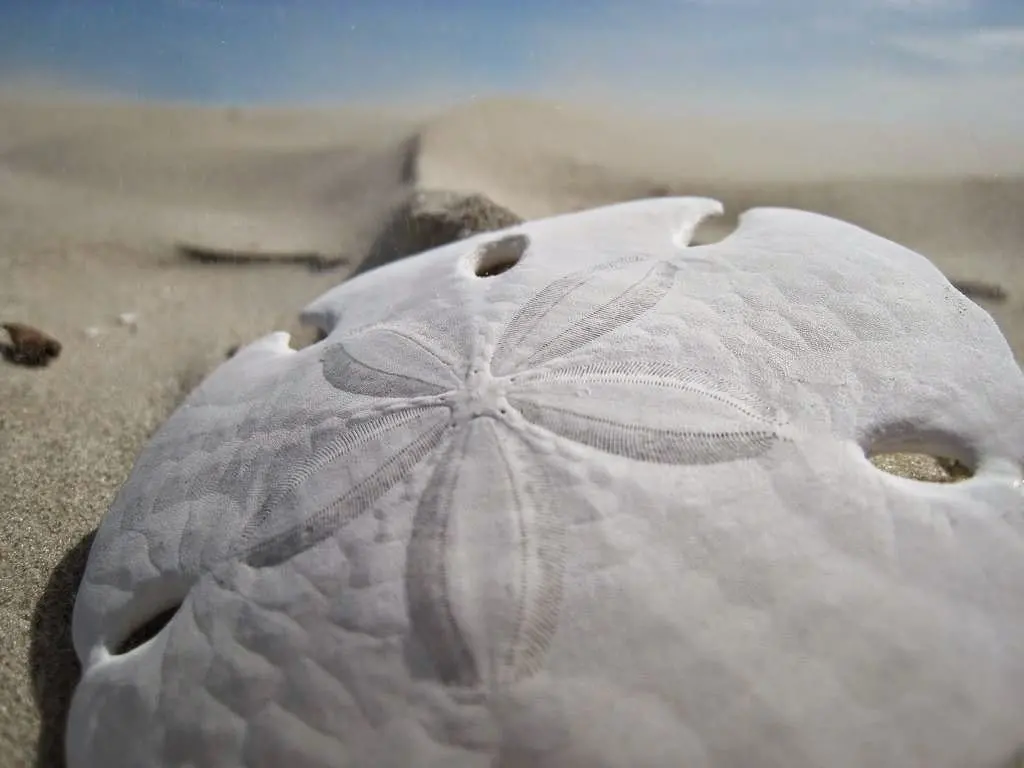
If you've ever picked up a pale, perfectly flat disc on the beach and admired its flower-shaped pattern, you were holding a sand dollar — and, more often than not, a dead one. These intriguing creatures are actually a type of burrowing sea urchin, belonging to the order Clypeasteroida. The name is pure common sense: the skeleton, or 'test', looks remarkably like a large coin. Recent coverage over at Kuriositas, drawing on their sibling nature site the Ark in Space, highlights one of the sand dollar's stranger talents — it can clone itself, producing what is essentially a perfect copy of its own body.
That cloning ability isn't a party trick for its own sake. Larval sand dollars have been observed splitting into two, a form of self-replication scientists think helps them escape danger or spread their chances of survival in unpredictable coastal waters. It's an odd thought next time you spot one: the specimen in your palm comes from an animal lineage with a built-in photocopier.
For holidaymakers, the real draw is simpler. Live sand dollars are nothing like the bleached white discs sold in souvenir shops. In the water they're a deep purple or reddish-brown, covered in tiny velvet-like spines, and they burrow just under the sand in shallow, calm seabeds. The white 'coins' you find washed ashore are skeletons of animals that have died, with the sun and salt doing the bleaching. A genuinely live one found stranded on the sand should be gently returned to the water rather than taken home.
The flower motif on the test isn't decoration either — those five petals are pores through which tube feet extend, used for breathing and moving food to the mouth. Sand dollars feed on tiny particles they sift from the sand, often positioning themselves edge-on in the current like little standing coins. That behaviour is visible in very shallow water in plenty of holiday destinations, from the Gulf of Mexico beaches of Florida to sheltered bays in Australia and parts of the Pacific Northwest.
Why should a traveller care? Because sand dollars turn an ordinary beach walk into a small wildlife safari. Knowing the difference between a live animal and an empty skeleton changes how you behave on the shore, and spotting a bed of them feeding in ankle-deep water is a genuinely memorable moment on a family holiday. Beachcombing destinations with calm, sandy shallows — think Sanibel Island, the Outer Banks, or parts of Baja California — offer some of the best odds of a sighting, particularly after gentle tides rather than rough storms, which tend to smash the fragile tests before they wash up intact.
If you do collect an empty one, check local rules first: some parks and protected beaches restrict taking shells and marine souvenirs. And clean your find properly — soaking in fresh water then a weak bleach solution removes the smell and the leftover organic material.
Story via Kuriositas.