Somewhere on the Appalachian Trail in western Maine, hikers rolling into Piazza Shelter are greeted by an odd piece of backcountry engineering: a double privy — two seats side by side. It has become a small legend among thru-hikers, and one couple's recent account of their stretch through the state shows why this section keeps drawing long-distance walkers.
The story, told by a pair of northbound thru-hikers, begins with a near-zero day at the Om Dome Hostel. After a pre-dawn three-mile push to make a 7:30am shuttle, they crammed into a van alongside 16 other hikers — more like a clown car than a shuttle, they admitted — and headed into town. A stop at the local general store handled resupply, though they noted Maine's remote towns have fewer options and steeper prices than states further south on the trail.
The Om Dome turned out to be worth the splurge. Outdoor showers with hot water, strong pressure and a view of the Baldpate mountains, laundry, board games, couches and a home-cooked dinner made for a proper rest day. That mattered, because the following days brought real work: a climb up Old Blue Mountain (a PUD — pointless up and down — with no views, they joked), then the Bemis Mountain ridge, where wild blueberries grew so abundantly they nearly filled their cooking pot with foraged snacks.
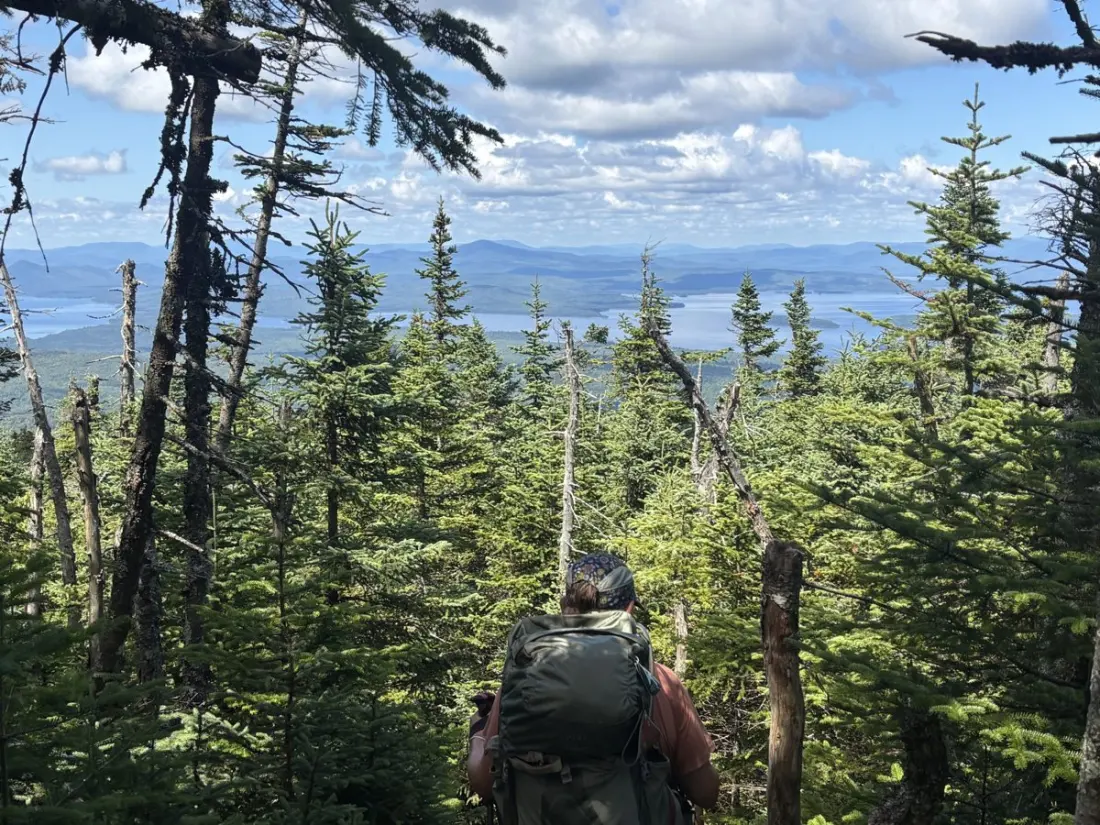
Trail magic appeared twice in short order — a snack bag tied to a tree on the descent from Bemis, and a local with a cooler of cold drinks near ME Route 4. Both are reminders of how supportive communities along the Appalachian Trail are, especially in Maine, where the hikers say the lake-and-pond-studded views rank among their favourites of the entire trail.
Their final push was a 16-mile day timed to beat an afternoon thunderstorm, ending at Piazza Shelter just as the rain arrived — and just in time to meet the fabled double privy. The shelter filled up with hikers that night, everyone glad to have a roof instead of a soggy tent.
Why does this matter to a traveller? It's a genuine window into how Appalachian Trail culture works: hostels like the Om Dome shuttle hikers to and from road crossings, small general stores keep long-distance walkers fed, and strangers leave snacks in the woods for whoever comes next. Even if you're not attempting a 2,190-mile thru-hike, western Maine offers a taste of it — day hikes up Old Blue or along the Bemis ridge, berry-picking in late summer, and lakeside views that punch well above their effort. Section hikers can book a night at a hostel, use its shuttle, and walk a few miles of the legendary trail without committing to six months in the woods.
Story via The Trek.