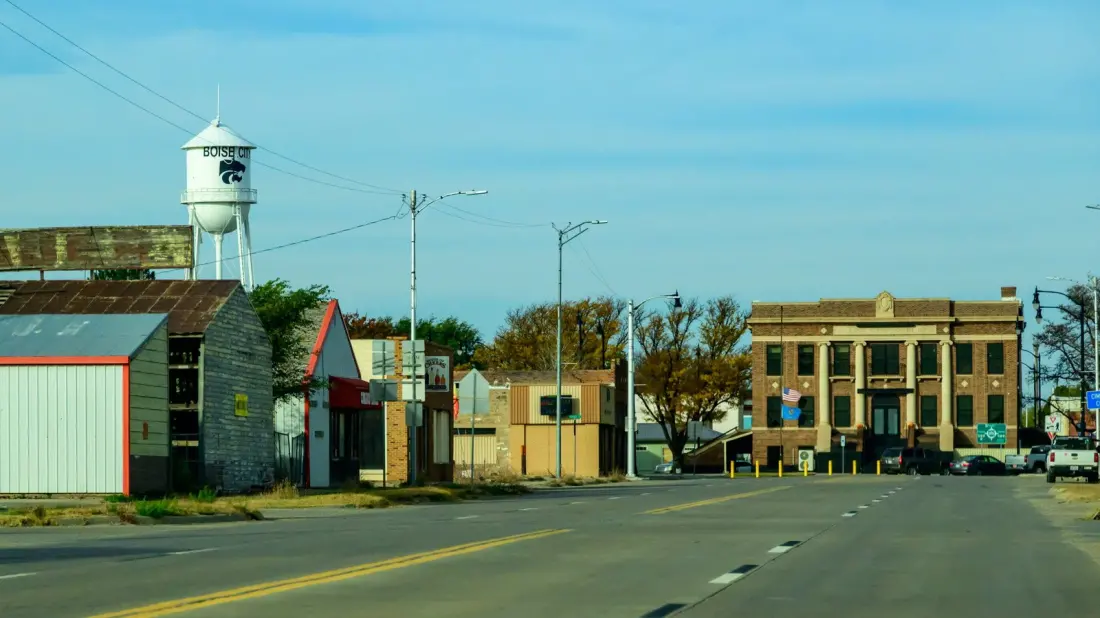
Barely 1,000 people live in Boise City, Oklahoma, but nearly everyone heading to Black Mesa passes through it. The town sits in Cimarron County — the only county in America touching four states — at the junction of five U.S. highways, making it the natural pit stop for anyone driving to Oklahoma's highest point.
Its backstory is stranger than most. The town was founded in 1908 by developers who sold plots of land they didn't even own, using brochures that promised a polished, prosperous city that simply didn't exist. Two of them went to prison for mail fraud. Decades later, a B-17 crew on a WWII practice run mistook the area for their bombing target and dropped practice bombs around the town square. No one was hurt, but the story stuck.
Today the draw is simpler: food and outdoor adventure. Guera's Tacos is the local standout, with street tacos in al pastor, asada, carnitas and barbacoa, plus Baja-style fish and shrimp versions, quesadillas, tortas and a salsa bar — good enough for a 4.8 rating on Yelp. HayHay's Kitchen, a food truck, does pancakes, breakfast burritos and biscuits in the morning, then rotates through specials like lasagna, fried pork loin and fry bread tacos, a mashup of the Oklahoma Native American staple with classic taco toppings. MJ's Bar & Grille covers the comfort-food base with burgers, chicken sandwiches and mac 'n' cheese. History buffs can dig into the Dust Bowl years at the Cimarron Heritage Center.
The main event, though, sits about 26 miles away. Black Mesa State Park and Nature Preserve hold Oklahoma's highest point, Lake Carl Etling — stocked with largemouth bass and walleye — and a designation as an International Dark Sky Park, meaning the stargazing is genuinely remarkable. Camping is popular, and Boise City is the closest town to fill the tank and grab dinner.
Closer to town, Autograph Rock preserves more than 200 names carved by 19th-century Santa Fe Trail travellers; it's on private land, but visits can be arranged through the Cimarron Heritage Center. That museum has its own mascots: Cimmy, an 18,000-pound iron apatosaurus standing 35 feet tall and 65 feet long — a nod to the dinosaurs that roamed the area 150 million years ago — and a 13-foot Tin Man keeping watch nearby.
Who's this for? Road-trippers chasing dark skies, anglers, hikers and anyone who likes their small towns with a side of genuine weirdness. It's a functional stop, not a destination resort town — which is exactly the point. Bring a car, bring an appetite, and don't leave without a photo under the dinosaur.