Yellowstone might be America's oldest national park — it was founded in 1872 — but beyond the boardwalks around Old Faithful and Grand Prismatic, it's still very much wild country. The park's trail network includes dozens of routes where falls, geothermal burns, lightning, and large animals are genuine risks, and help can be hours away. Here's what makes ten of its toughest hikes worth knowing about — and respecting.
Wildlife is the defining hazard on several of them. The 14-mile Howard Eaton Trail runs through bison territory between the Yellowstone River and Hayden Valley, and carcasses there draw bears and wolves. The 12-mile Sepulcher Mountain loop starts innocently at Mammoth Hot Springs but adds a 3,400-foot climb to nearly 10,000 feet, with lightning exposure near the summit. The 14-mile Hellroaring Creek Trail opens with a brutal 600-foot drop in a single mile before a suspension bridge crossing over the Yellowstone River, with grizzlies and bull elk in the meadows beyond.
Geothermal danger makes the Seven Mile Hole Trail stand out: roughly 10 miles along a precarious canyon rim near Inspiration Point, it drops 1,000 feet in 1.5 miles and passes hot springs that can badly burn anyone who strays too close. In the remote southwest Bechler Region, the nearly 16-mile Union Falls Trail reaches Yellowstone's second-tallest waterfall (250 feet) via creek crossings prone to flooding and slippery rock.
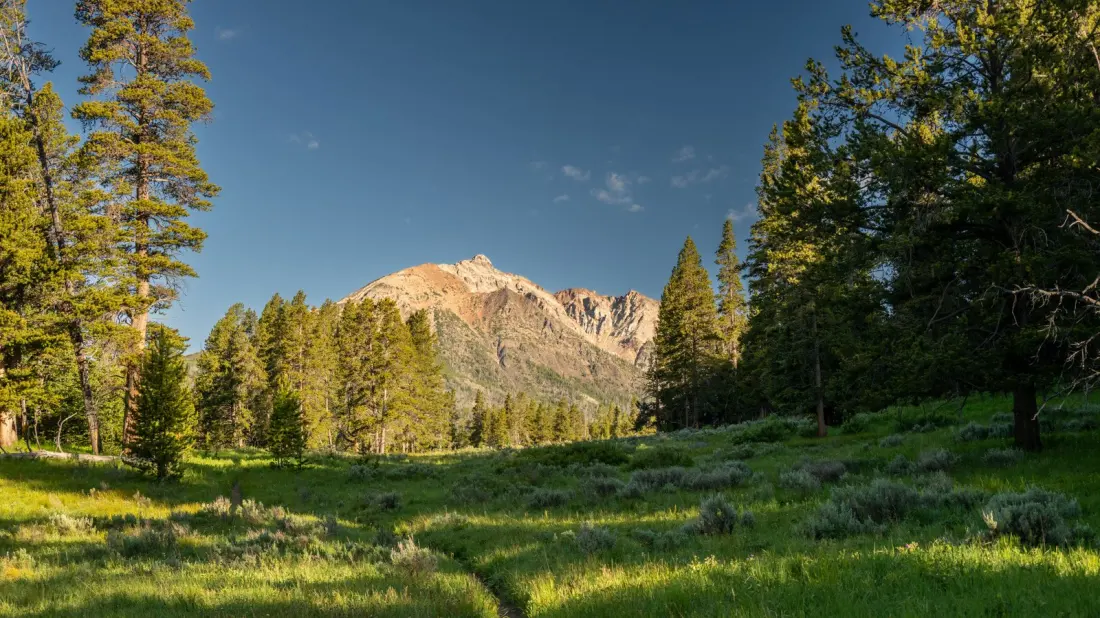
Altitude and weather dominate the high routes. The Dunraven Pass to Mount Washburn hike packs a big elevation gain into 7 miles to a 10,219-foot summit — autumn grizzlies climb it for whitebark pine nuts. The 18-mile Specimen Ridge Trail gains nearly 4,000 feet across high, exposed backcountry. Sky Rim covers a 20-mile loop to 9,851-foot Bighorn Peak with over 4,000 feet of gain on steep, rocky ground. Avalanche Peak, despite being just 5 miles, scrambles 2,000 feet up loose rock to 10,568 feet and often holds snow into July. And Electric Peak via the Bunsen Trailhead — nearly 20 miles to 10,969 feet — is ranked the park's most strenuous hike on AllTrails; its name comes from the fierce thunderstorms that impressed the 1872 expedition, and the summit rewards with 100-mile views.
Why should a traveller care? These routes offer some of the finest scenery in the American West — canyon overlooks, waterfall plunges, Lamar Valley panoramas — but they demand serious preparation. That means carrying bear spray and knowing how to use it, keeping distance from bison and elk, starting early to avoid afternoon lightning, checking snow and river conditions, and telling someone your route before heading into the backcountry. If that list sounds like your kind of holiday, Yellowstone's wildest corners are ready — just don't treat them like the boardwalks.