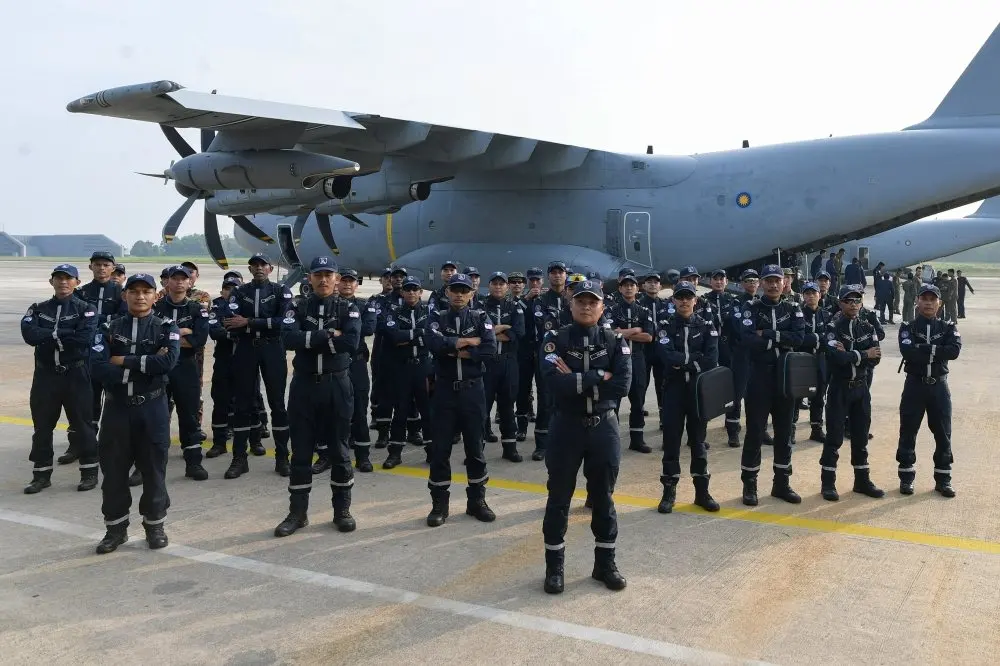
On 11 December 1993, Block 1 of the Highland Towers Condominium in Ulu Klang, Selangor collapsed, killing 48 people. Out of that disaster came a lesson Malaysia took seriously: the country needed a dedicated, world-class urban search and rescue capability. The result was the Special Malaysia Disaster Assistance and Rescue Team — SMART — formed on 1 August 1995.
Three decades on, that team has become something of a quiet success story. SMART holds Heavy Urban Search and Rescue status under INSARAG, the United Nations' international advisory framework for rescue teams. It first earned that classification in 2016, and on 22 September it successfully defended it through a reclassification exercise — a process that has grown tougher. Where the 2016 assessment ran to around 130 checklists, this year's covered 173 elements across five areas: management, search, rescue, logistics and medical.
What makes the story interesting is that Malaysia is no longer just the student. Seven of SMART's own practices were flagged as global best practices by 11 international assessors during the latest review, spanning medical care, logistics management and operations. These will now be fed into the UN system and shared with rescue teams worldwide. Safrizan Suhaini, who heads the team's logistics section and serves as an INSARAG assessor, has judged classification exercises in Japan, Oman, Hong Kong, New Zealand, France and Russia — and says seeing how other countries operate is what stops a team from complacency.
The reclassification was also harder than a first assessment because it judged the team's actual two-year track record: real operations, training logs, equipment and medical readiness, not just a staged exercise. And the bar keeps moving — INSARAG rewrites its methodology every five years, so standing still means falling behind. Technology is part of the answer, with high-capacity drones carrying thermal imaging now used to locate victims faster before rescuers move in.
Why should a traveller care? If you're headed to a part of Southeast Asia where earthquakes, floods or landslides are a genuine risk — and much of Malaysia and its neighbours qualify — it's reassuring to know the country can field a rescue team certified to UN Heavy USAR standards, one capable of deploying to and learning from major disaster zones abroad. Malaysia shifted from importing rescue know-how to exporting it, and that only happens when a team is genuinely good.