Boston packs more revolutionary-era history into a walkable core than almost any American city, and its hotel stock is no exception. A recent roundup from TravelAwaits highlights eight properties where the building itself is half the attraction — from a former prison to the birthplace of the Boston Cream Pie.
The most dramatic conversion is The Liberty, a Marriott Luxury Collection hotel set inside a jail that opened in 1851 and only closed in 1990. Famous inmates once included Malcolm X and Whitey Bulger, and the renovation kept the original cell doors and iron catwalks, so you'll sleep in a cell block with far better bedding than the last tenants had.
For sheer longevity, nothing beats the Omni Parker House, running continuously since 1855 — the oldest operating hotel in the United States. It pioneered the European plan of charging separately for meals and lodging, hosted literary gatherings with Hawthorne and Emerson, and claims the Boston Cream Pie among its inventions.
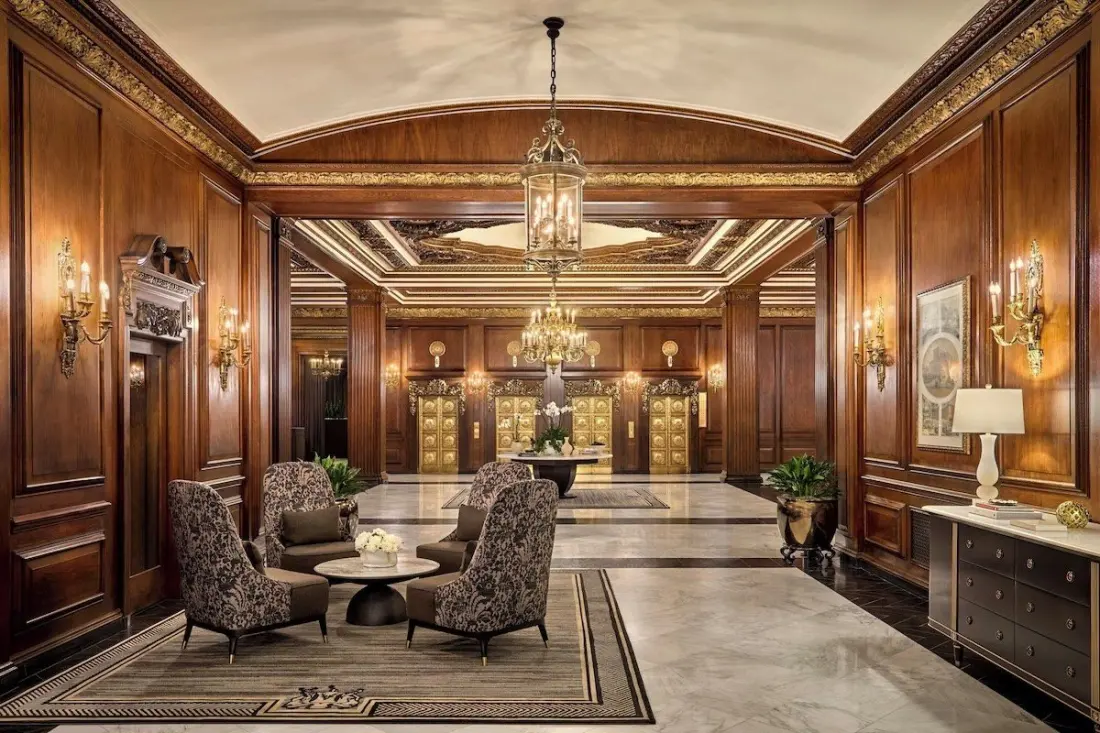
A few others stand out for firsts and connections. The Fairmont Copley Plaza, opened in 1912 by Boston's mayor (John F. Kennedy's grandfather), built on the former site of the Museum of Fine Arts and went on to become the first Boston hotel with air conditioning — and the first hotel anywhere to accept credit cards. The Omni's Gilded Age grandeur is matched at The Dagny, an Art Deco skyscraper finished in 1928 and landmarked in 1995, while the Hilton Boston Park Plaza, also from 1928, was once the world's eighth-largest hotel, complete with its own hospital and broadcasting station, and has hosted nearly every US president since FDR.
Smaller-scale history fans have options too. The Eliot Hotel began life in 1925 as a Harvard guesthouse for visiting lecturers before the Depression forced its sale to the Ullian family, who still run it as an intimate sub-100-room boutique property. XV Beacon occupies a 1903 Beaux-Arts building that previously housed the Rapid Transit Commission and Boston School Committee, on land whose foundations date to a pre-Revolutionary merchant's mansion — now reworked into a five-star stay with bold contemporary art. And The Lenox, built in 1900 in the then-brand-new Back Bay, was among the city's tallest buildings, boasting fireproof construction, electric lights and ensuite bathrooms; it still offers fireplaces in some rooms for winter stays.
Practical takeaway: several of these hotels (Fairmont Copley Plaza and XV Beacon among them) belong to Historic Hotels of America, the National Trust for Historic Preservation programme, which means original features are actively preserved — a genuine time-capsule stay rather than just period styling. Rates vary widely: the Park Plaza tends to be the most affordable of the bunch, while XV Beacon and The Liberty sit firmly in luxury territory. Anyone pairing a stay with the Freedom Trail, Boston Common or the museums will find most of these properties within easy reach of downtown sights.