
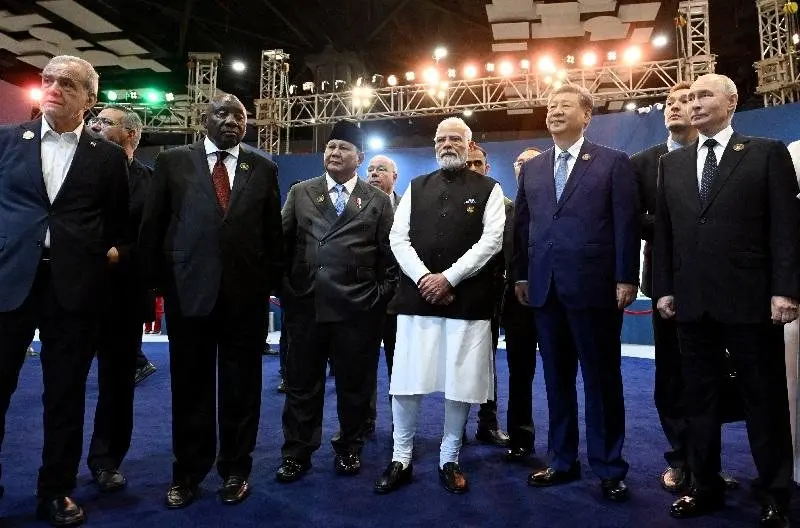
New Delhi hosted the BRICS summit this weekend, and the biggest headline wasn't on the official agenda. Chinese President Xi Jinping travelled to India for the first time in seven years, using the gathering to push two messages: that the BRICS bloc should act as a peacemaker in the Middle East conflict, and that Beijing wants a warmer relationship with New Delhi.
In his address to member states, Xi argued the war in the Middle East "does not serve the common interests of the international community" and said China would work alongside its BRICS partners in a mediating role. He also confirmed that China takes over the bloc's chairmanship next year and will host the 19th BRICS summit.
The bloc itself is now a genuinely global club. What began in 2009 as a five-member grouping — Brazil, Russia, India, China and South Africa — has grown to include Egypt, Ethiopia, Indonesia, Iran and the United Arab Emirates. Together its members represent more than 40% of the world's population and nearly a quarter of the global economy. That scale matters for travellers even if the summit communiqués feel distant: BRICS countries cover some of the world's fastest-growing and most rewarding destinations, from Rio's beaches to Iran's historic cities and Indonesia's islands.
The more interesting moment for anyone watching the region came on the sidelines. Xi met Indian Prime Minister Narendra Modi and described the relationship as something Beijing views from a "strategic, long-term perspective", according to state media. The two countries have plenty of history to work through — a 1962 war, and a deadly 2020 border clash that killed 20 Indian and four Chinese soldiers — but ties have steadily improved, particularly since Modi visited China last year. Both giants are also managing prickly relationships with the United States, which gives them an incentive to get along.
Analysts quoted around the summit were cautious about how much changes in practice, especially on trade. A diplomatic thaw between two nations home to nearly three billion people, however, is the kind of thing that eventually filters down to easier visa rules, restored flight routes and renewed tourism flows. Direct flights and group travel between China and India have been among the casualties of the frozen relationship; a genuine reset would be welcome news for overland travellers and business visitors alike.
For now, the practical takeaway is simple: India remains very much open and eager for visitors, and the capital that hosted this summit is one of its best entry points. If you've been putting off a trip because of regional headlines, New Delhi — with its Mughal-era monuments, sprawling bazaars and unbeatable street food — is as good a place as any to start, with Agra's Taj Mahal an easy add-on.