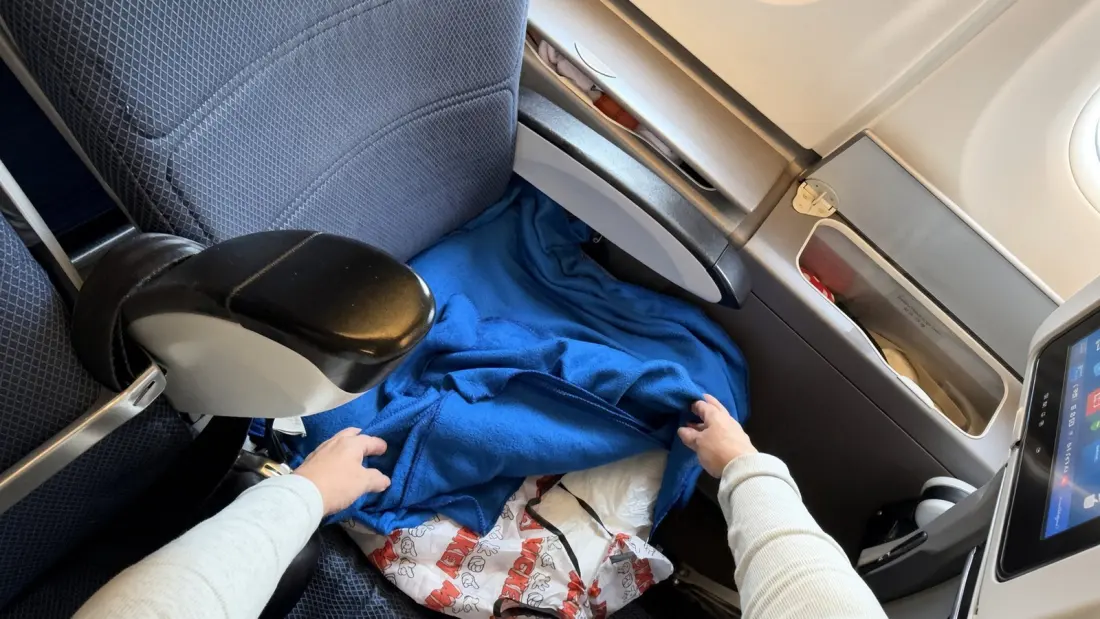
A passenger flying British Airways from Miami to London Heathrow says she sat down for the eight-hour flight and quickly realised something was very wrong: her seat was soaked in urine, and the smell hit before she even reached the row. Wet trousers, a foul odour, and nearly a full day of travel ahead — and the cabin crew's response, she says, was a handful of paper towels and a 15ml bottle of antibacterial cleaning spray.
She shared the experience on social media on November 1, posting a video the next day. Her post has now been viewed more than 1.6 million times. According to her account, staff said there were no empty seats to move her to, no spare blankets to put over the seat, and nothing more they could do. She ended up layering paper towels, her own bag and her blanket over the cushion for the whole flight. She also worried that everyone around her assumed she was the one who had the accident.
British Airways' response didn't help matters. The first reply came more than five hours after her tweet, apologising and pointing her to the formal complaint form on the website. A second message the next day asked her to send booking details and navigate a chatbot menu to reach an agent.
There's a pattern here. This is at least the fourth similar BA story in recent years. In 2017, a passenger flying London to Cape Town found his seat drenched in urine and was handed wipes to clean it himself — he sat on a plastic bag for eleven and a half hours, and BA initially offered just 5,000 Avios before upgrading that to a £435 voucher after he pushed back. In 2018, a business class passenger heading to Jamaica found his seat, pillow and trousers wet; he was compensated with 40,000 Avios but separated from his wife in the move. Last year, another Heathrow-bound passenger reported a urine-soaked premium economy seat.
The underlying issue is simple and worth understanding as a flyer: when a passenger has an accident on an earlier flight, the turnaround time between sectors is the window to swap out or deep-clean the cushion. If that doesn't happen and the mess is discovered after boarding, the realistic options are a seat swap, a cushion replacement, or taking the seat out of service — even if that means a delay. The argument airlines sometimes make, that the flight is full so nothing can be done, doesn't really hold up: a seat that can't be cleaned isn't a sellable seat, and passengers who can't be accommodated may be entitled to denied-boarding compensation rather than paper towels.
For travellers, the takeaways are practical. Check your seat as soon as you board and report problems before the doors close, while ground staff and options are still available. Document everything with photos, and push for compensation through the formal channel rather than accepting gesture-level offers. And if an airline's first instinct is to hand you a spray bottle and move you along, it's reasonable to ask why the seat wasn't taken out of service — and to escalate.
View from the Wing