Tides on the Bay of Fundy rise up to 53 feet — roughly 50 feet higher than the global average — and with each cycle, 176 billion tons of seawater surge through the bay. That's enough to fill the Grand Canyon twice. This single natural quirk shapes nearly everything worth doing along New Brunswick's coast, which is why the area keeps earning a spot on Atlantic Canada itineraries.
The best place to grasp the scale of it is Hopewell Rocks Provincial Park. Paddle a kayak between towering sandstone sea stacks at high tide, then return six hours later to walk the same spot on the exposed ocean floor beneath the famous flowerpot rocks, named for the trees perched on top. On select summer evenings, the park runs Taste the Tides, a multicourse dinner with wine pairings served right on the seabed, timed around the tide schedule. And if warm swimming is your thing, the province's other coast delivers: the Northumberland Strait has the warmest saltwater beaches north of Virginia, hitting around 84 degrees in summer.
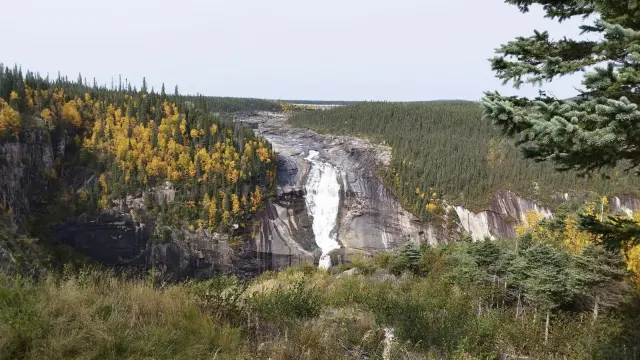
Inland from the shore, Fundy National Park protects more than 50,000 acres of forest, waterfalls and rocky coastline, laced with over 60 miles of trails. The Coastal Trail is the headliner — about 12.5 miles round-trip with demanding sections and big views across the bay — while the 0.9-mile Dickson Falls Trail offers an easy boardwalk loop through a fern-filled ravine. The Fundy Trail Provincial Park lets you sample similar scenery by car, with pull-offs at lookouts and waterfalls.
The nutrient-rich water also makes this one of Atlantic Canada's top whale-watching zones. Boats leave from Saint Andrews, Grand Manan Island and Campobello Island in search of humpback, minke and fin whales, with August typically the strongest month. Birders get a spectacle of their own: in late summer, up to 74 percent of the world's semipalmated sandpipers stop at Fundy's mudflats to double their weight before a three-day nonstop flight to South America. Johnson's Mills Shorebird Reserve near Dorchester, in July or August, is the place to watch thousands of them lift off in shifting clouds as the tide comes in — bring binoculars and stick to the viewing areas.
Saint John, Canada's first incorporated city (chartered in 1785), anchors the region with a walkable uptown of 19th-century buildings. The Saint John City Market — the country's oldest continuously operating farmers' market — runs beneath a distinctive ship-hull ceiling, and the Thursday night summer market adds food and craft stalls along the waterfront. Just outside town, the Reversing Falls Rapids show the tide's raw power as the incoming ocean literally pushes the Saint John River backwards; visit at different tidal phases to see both states.
Geology fans get a final bonus: Stonehammer UNESCO Global Geopark, Canada's first, spans roughly 965 square miles and more than 40 sites, from billion-year-old stromatolite fossils at Dominion Park to 315-million-year-old fossilized animal footprints near the falls at Lepreau Provincial Park.
In short: one compact stretch of coast combining record-setting natural phenomena, solid hiking, whale watching and a likeable small city. Ideal for outdoorsy travellers who want big scenery without big crowds. — Global Traveler