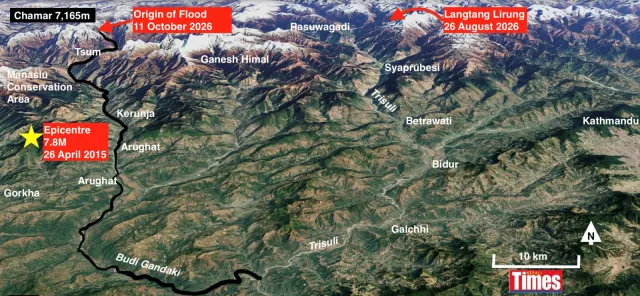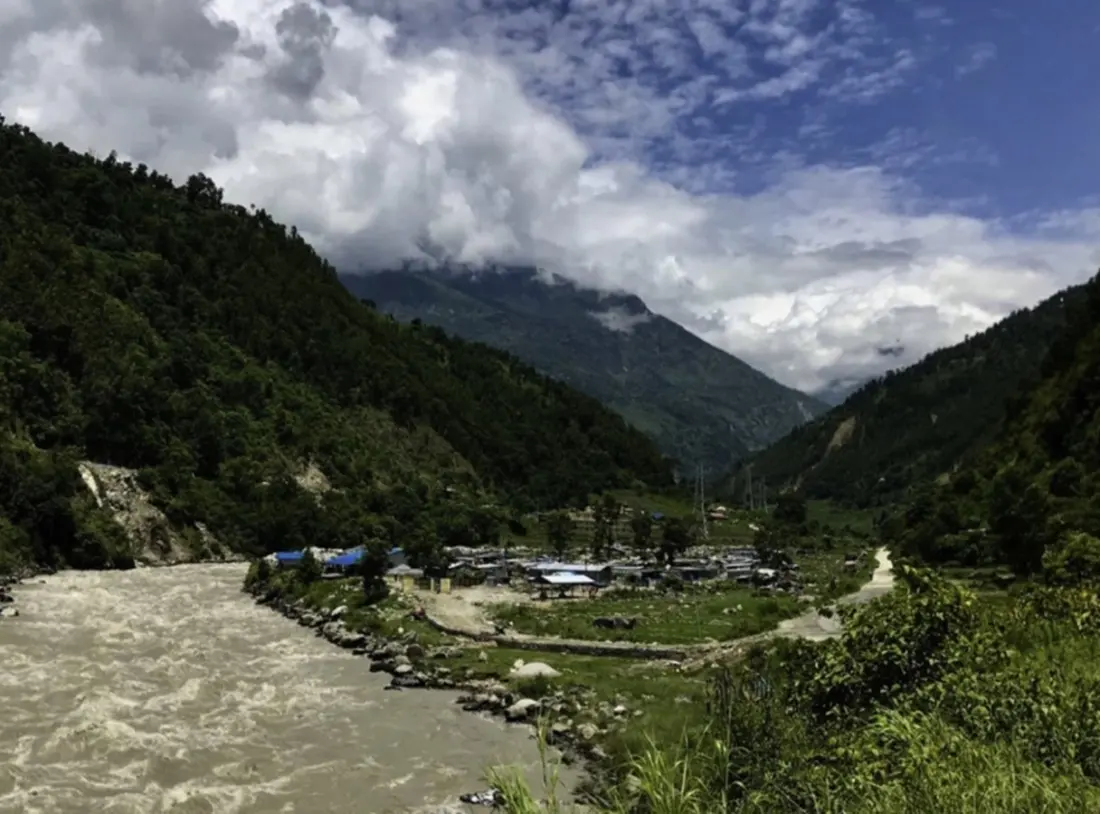
On 26 August, a wall of mud and debris roared down the Trisuli River in central Nepal and erased Khalte, a settlement of 257 households in Nuwakot district, in seconds. For the Tamang families living there, it was the second time in a decade they had lost everything.
The first loss came on 25 April 2015, when the 7.8-magnitude Gorkha earthquake destroyed the high villages of Tiru, Gogane, Haku and Mailung in Rasuwa district, north of Kathmandu towards the Langtang range. Landslides made the Tamang community's ancestral homeland unliveable, and roughly 250 households were moved down to Khalte on the riverbank. What began as temporary shelter became permanent.
Warnings were not in short supply. Research published as early as 2021 flagged Khalte as dangerous — convenient for roads and markets, but sitting beside a river prone to mountain floods. Elders said the same. Resettlement plans stalled in bureaucracy, land-broker scams and political drift. On 8 July 2025, a glacial lake outburst in China sent floodwater down the Trisuli and killed 18 people. Seven weeks later, the bigger flood arrived.
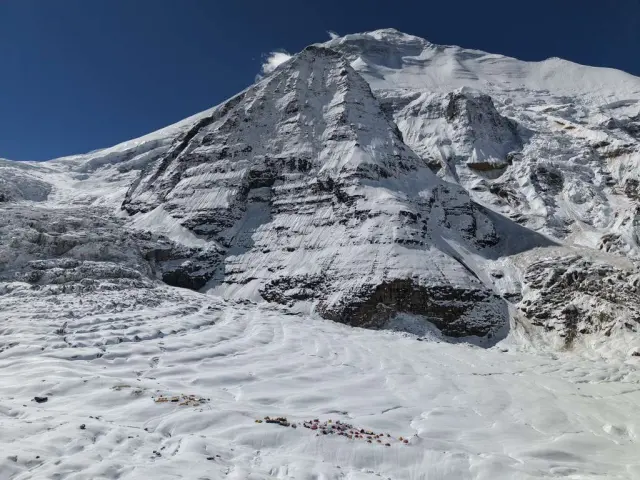
The writer, a disaster-risk-reduction practitioner with NSET-Nepal, argues the disaster was not natural. Warming melted permafrost and destabilised slopes on Langtang Lirung; the state placed an already-traumatised indigenous community on a floodplain and left them there despite clear evidence. Tamangs paid a disproportionate price in 2015 too — up to 34% of the nearly 9,000 earthquake deaths. Now displaced a second time, survivors in holding centres in Nuwakot say they refuse to return to Rasuwa and want to rebuild where they are, a choice the piece insists must shape any resettlement.
For travellers, the story is a reality check on a region many pass through. Rasuwa holds the Langtang trekking routes and the Kyirong border crossing to Tibet, and the Trisuli valley road is a main artery north from Kathmandu. Monsoon-season travel there — roughly June to September — carries genuine landslide and flood risk on these roads, and the 2025 floods disrupted access. Check local conditions before heading that way, and know that communities along the route are dealing with real loss, not scenery.