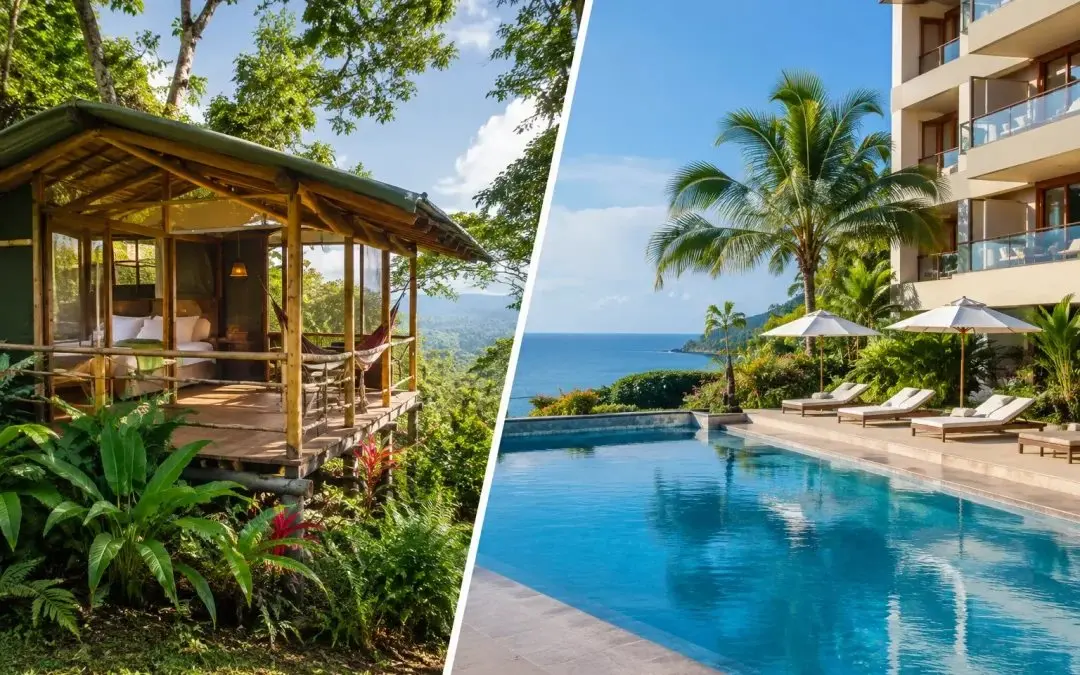
Wake to howler monkeys over the Pacific, or to an alarm by a resort pool with breakfast at a set hour? In Costa Rica both are real options, and the choice shapes your whole trip — how remote you'll be, how comfortable, and where your money lands.
A true eco lodge is more than a hotel with bamboo furniture. The good ones are built around their setting: low-density cabins in secondary forest, solar power, wastewater treatment, reforestation, and guides hired from nearby villages. Think Osa Peninsula, the Southern Caribbean coast, or the cloud forests around Monteverde. The reward is intimacy — rain on the roof, scarlet macaws at breakfast, lantern-lit paths to dinner. The trade-off is real too: humidity, insects, patchy internet, and roads that may demand a 4WD or a boat transfer.
Hotels, from family-run inns in Santa Teresa to full-service resorts in Guanacaste, win on consistency. Air conditioning, strong Wi-Fi, room service, kids' programming and a staffed front desk make them the safer bet for families, first-timers, remote workers, and anyone travelling in the wetter months. And the line blurs: some boutique hotels do serious conservation work, while some eco lodges have plunge pools and chef-driven menus.
Don't take "eco" at face value, though. Construction in sensitive zones, heavy water use — a genuine issue in dry Guanacaste — and imported food under a tropical leaf can all hide behind green branding. Ask pointed questions: how is wastewater treated, who employs the staff, where does the food come from? Costa Rica's official Certification for Sustainable Tourism is a useful starting filter. Scale cuts both ways: a small lodge may have a light footprint, but a larger hotel can afford solar arrays and structured waste programmes a small business can't. Location matters as well — a hotel near a park gate can beat a remote lodge requiring multiple private transfers.
Money is another lens. Independent lodges often buy from nearby farms and book local guides, keeping cash circulating in small communities. Big hotels can be strong employers too — unless they operate as enclaves, using local land and labour while shut out neighbouring businesses. Either way, simple moves help: eat one dinner off-property, hire a local guide, buy coffee and crafts directly from makers.
The practical verdict for most itineraries? Do both. Land late in San José or Liberia and check into a comfortable hotel, then decamp for several nights at a forest lodge or coastal eco retreat. Travel doesn't need to be a purity test — it should be a conscious pleasure. Before booking, scan recent guest reviews for honest mentions of road access, water pressure, Wi-Fi and wildlife, and compare full costs including transfers, meals and park fees.