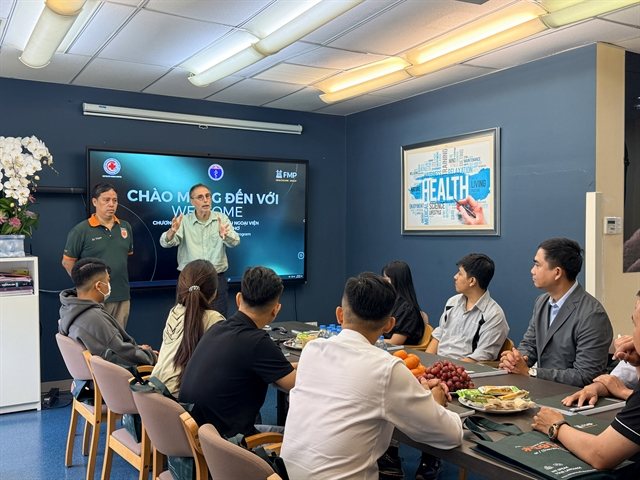
A four-week emergency care training programme is underway in Cần Thơ, the largest city in Việt Nam's Mekong Delta, where Family Medical Practice (FMP) is putting a delegation from Cần Thơ Hospital through combined clinical and dispatch training. It's run under the direction of the Ministry of Health and fits into a newly approved national project for 2026–2030 to overhaul how emergency calls are received, how dispatch is coordinated, and how emergency personnel are trained across the country.
The clinical side is led by Dr Bùi Nghĩa Thịnh, covering emergency response protocols and advanced pre-hospital care techniques — the skills needed to treat patients before they reach a hospital. Alongside that, the hospital team is learning dispatch protocols from the International Academies of Emergency Dispatch (IAED), using FMP's 9999 emergency dispatch system as the working example.
What makes the programme interesting is that it treats the whole chain as one system: the person taking the emergency call, the dispatcher coordinating the response, and the medics who arrive on scene. Training them together is meant to show how information gathered in the first minute of a call shapes everything that happens next.
At the welcome assembly, FMP founder and CEO Dr Raphael Kot and Cần Thơ Hospital director Lý Hồng Khiêm both framed the partnership as a step toward a more coordinated local emergency response. It's also a practical example of public and private healthcare providers pooling resources rather than working in parallel.
Why should a traveller care? Because the quality of the first response matters more than the hospital's front doors if something goes wrong on the road. Việt Nam's emergency infrastructure has historically lagged behind its tourism growth — you can motorbike the Ha Giang loop or cruise the Mekong Delta, but calling for an ambulance in a smaller city hasn't always meant a structured, rapid response. A government push running through 2030, with hospitals in cities like Cần Thơ training to international dispatch standards, points in the right direction. It's also a useful reminder for visitors to Việt Nam: know the local emergency number, note that private operators like FMP run dispatch systems of their own in some cities, and carry travel insurance that covers medical evacuation if you plan to be in rural areas. For longer stays or expat life in the Mekong Delta, a stronger pre-hospital system in Cần Thơ — the region's main urban hub — is genuinely good news.
The programme runs for four weeks, giving the delegation sustained time with FMP's emergency specialists on both the operational and hands-on clinical sides, with the results feeding into the wider national effort to make emergency response more consistent across communities. — Vietnam News Life