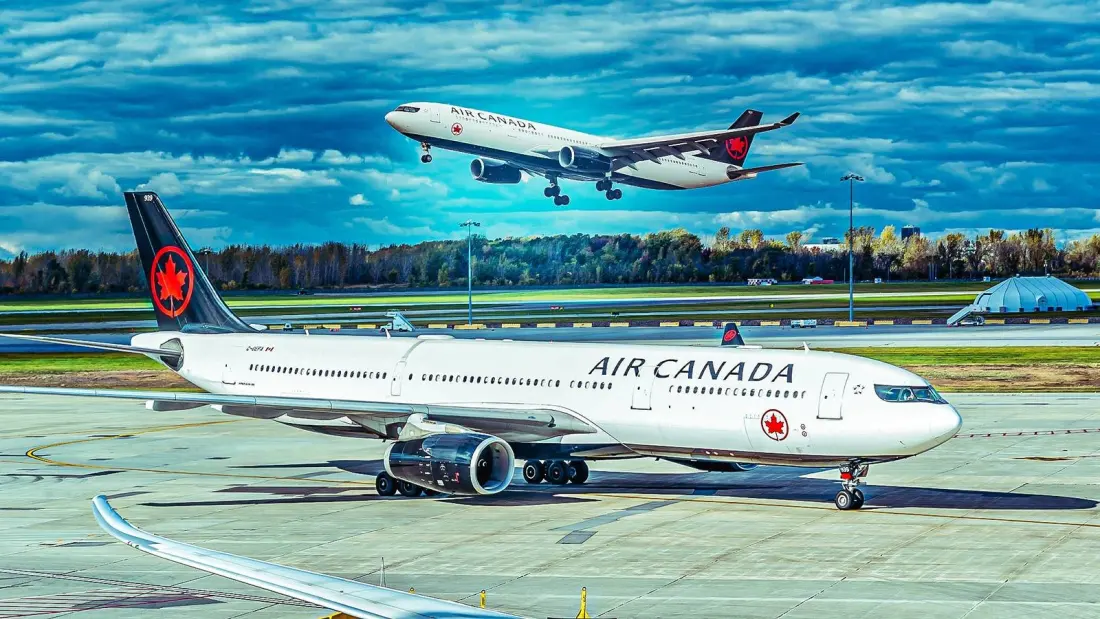
Air links between Canada and Côte d'Ivoire are set to expand sharply. Transport Canada has announced a widened air transport agreement that doubles the number of passenger flights permitted between the two countries, from seven to 14 per week for each nation. Cargo capacity is growing too, with up to 10 all-cargo flights per week now allowed, and flights can serve any relevant airport in either country rather than a fixed list.
The deal also carries a notable fifth-freedom clause: all-cargo flights may route through points in Africa, the European Union, the UK and the United States, as long as they begin or end in the carrier's home country. That opens the door to creative routing for freighters and, indirectly, more competition on transatlantic and intra-African flows.
Why Côte d'Ivoire? The West African nation is already Canada's fourth-largest bilateral trading partner in sub-Saharan Africa, with trade worth around $1.2 billion in 2025 and up 32% year on year. Canada's Transport Minister Steven MacKinnon framed the agreement as a growth and partnership play, while Trade Minister Maninder Sidhu pointed to the fast-rising trade figures. The new deal joins Canada's portfolio of air agreements covering 125 countries.
There's a bigger story here about Ivorian aviation itself. Flag carrier Air Côte d'Ivoire has been building momentum: it handled national teams, officials and equipment as official carrier of the 2024 Africa Cup of Nations, and launched its first long-haul route — Abidjan to Paris Charles de Gaulle on an Airbus A330-900neo in a premium-heavy 242-seat configuration — almost a year ago. What it doesn't yet do is fly to Canada or anywhere transatlantic beyond Paris. This agreement hands it the traffic rights to try.
The hub at the centre of it all is Abidjan's Félix-Houphouët-Boigny International Airport, which handled about 2.3 million passengers last year across more than 40 destinations served by 29 airlines. Those numbers rank modestly globally, which is exactly why the sector is seen as one with room to run in sub-Saharan Africa.
For travellers, the practical takeaway is simple: more capacity usually means more competition and better fares. Anyone flying between Canada and West Africa — whether visiting family, doing business or heading on to Ivory Coast's beaches and rainforest parks — could soon see more direct options and connections. And if Air Côte d'Ivoire decides to use its new rights, a Montreal or Toronto to Abidjan nonstop would be one of the more interesting long-haul launches to watch.