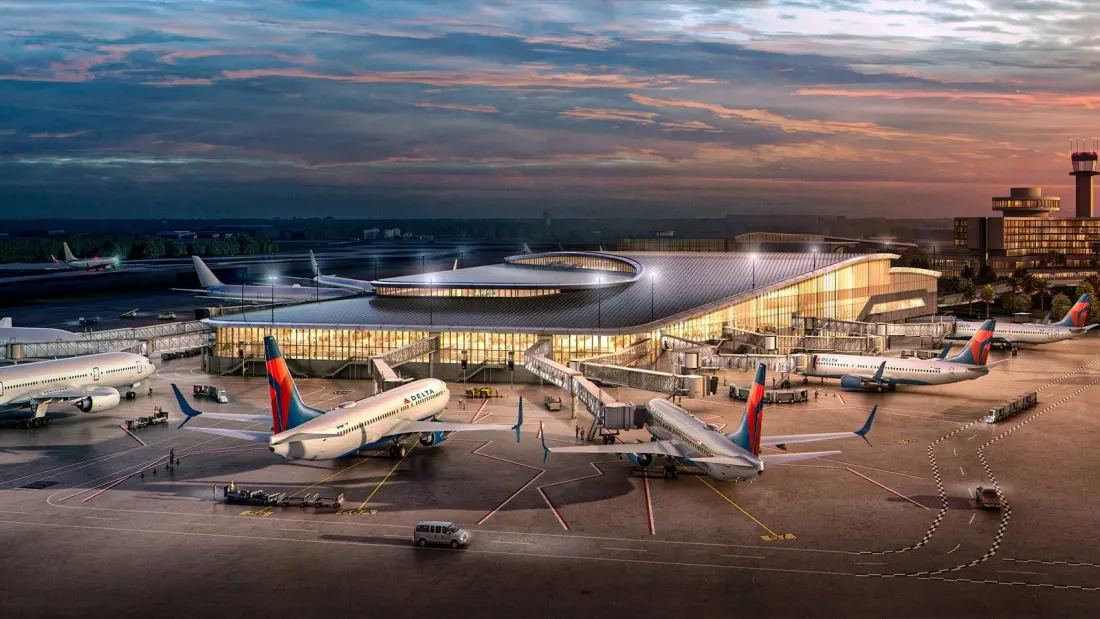
Tampa International Airport is about to get its first new airside terminal in almost 20 years, and Delta Air Lines has signed on for the long haul. The project, known as Airside D, carries a price tag of $1.528 billion and will add 16 gates, a dedicated customs and border facility for international arrivals, and an eight-lane security checkpoint. Steel is going up this summer, completion is targeted for late 2028, and the public opening follows in 2029.
Delta's involvement is the headline news for travellers. The airline signed a 20-year anchor lease covering at least six of those gates, plus a purpose-built Delta Sky Club — its first at Tampa. The lease runs roughly to 2049, essentially the life of the terminal itself. That's not a commitment Delta makes casually; long-term anchor deals typically only happen where the airline plans to build a serious operation over decades.
Why does this matter beyond aviation nerds? Tampa Bay is one of the fastest-growing metro areas in the US, now over 3.3 million people, and the airport is nearing capacity — it handled about 24.5 million passengers in fiscal year 2025 against a practical ceiling of 25 million. Airside D lifts capacity to 35 million annually by 2037.
The more interesting twist is international. Delta already flies year-round from Tampa to Amsterdam on an A330-900, alongside existing services like Edelweiss to Zurich and Avianca to Bogota. But the airport's current customs facilities can't handle much growth. The new Federal Inspection Services area inside Airside D changes that, giving Delta the infrastructure to add European routes — think London or Paris — without fighting for gate space or customs capacity.
There's a striking number in the airport's own route development materials: roughly half of Tampa Bay residents flying internationally currently drive to Miami, Orlando or Fort Lauderdale instead, because nonstop options from TPA are so limited. If Airside D works as planned, a big chunk of those car journeys could become Tampa departures instead.
To be clear, this doesn't make Tampa a Delta hub — Atlanta and Detroit hold that status, and Tampa won't become a connecting operation. It's more of a heavily invested focus city: dedicated gates, a premium lounge, and room to grow well beyond Delta's current 45 daily departures. Timing helps too — Delta's A350-1000 deliveries from late 2026 should free up older widebodies for routes from secondary cities like Tampa.
For travellers, the practical upshot: from 2029, expect a roomier Tampa airport, a new Sky Club, and a decent chance of more nonstop European flights that mean no more connecting through Atlanta or driving down the Florida peninsula to catch a plane.