Halfway through an 800-mile walk across Arizona, a thru-hiker's blog for The Trek captures what the trail's central stretch actually feels like — and it's a useful reality check for anyone eyeing a section hike.
The days covered here fall roughly between the 400-mile marker and the town of Superior, a stretch that swings from high ridges to the low Sonoran Desert. On paper it looks gentle. In practice: a 5,000-foot morning climb followed by hail and rain, an afternoon of those infamous PUDs (pointless ups and downs) that capped the group at barely 2 mph downhill, and a day in the Superstition Mountains where they gained 1,000 feet in just over a mile and ran out of water — the only time that happened on the whole trail. Seventeen miles took nine hours.
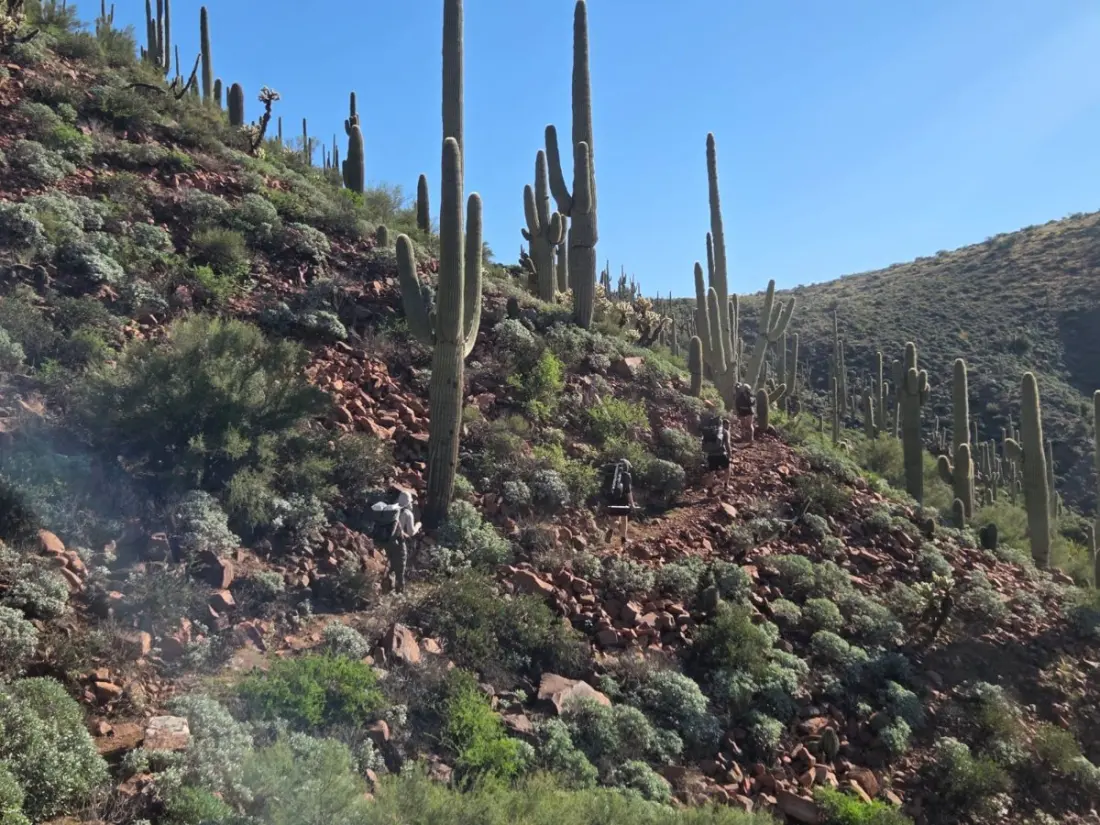
There are highlights too. Day 29 delivered the halfway celebration, complete with a rock-built 400-mile marker, and ended at what the writer calls her favourite campsite of the trail — a hillside perch under a sky that went orange to pink to purple, then to stars. Day 31 brought the first saguaro cacti, some of the oldest living things on earth, stretching to the horizon as the trail dropped into Four Peaks Wilderness. A trail angel at a road crossing blended fresh smoothies for passing hikers, and Lake Roosevelt Marina doubled as an improvised resupply — boater food standing in for hiker calories, plus a burger at the marina restaurant.
Weather is the real plot. An El Niño pattern was throwing multi-day storms at the desert: over four inches of rain forecast in three days, which in this terrain means flash flooding and thunderstorm exposure. The group's response was a fast town turnaround in Superior — laundry, Mexican dinner, Family Dollar resupply, motel, all done and asleep by 10 p.m. — followed by two big-mile days to outrun the storm. It's a decent case study in how hikers manage risk on remote desert trails, and a reminder that spring storms can be serious in the Superstitions.
For travellers, this stretch is very doable as a section hike without committing to the full 800 miles. The Superior area gives you saguaros, canyon washes and Superstition ridgelines in a few days, with a real town (motels, groceries, restaurants) at either end. The practical lessons from the diary carry over: carry more water than feels necessary in the Superstitions, expect cold snaps and hail even in spring, and know that the trail passes through genuine flash-flood country where checking the forecast matters.
It's also a nice window into thru-hike culture — trail magic from strangers, crowd-sourced campsite info on the FarOut app, and the odd camaraderie of squeezing a tent among eight others at 7 p.m. after a 21-mile day. If you've wondered what a long-distance desert hike is actually like day to day, this is the unglamorous, occasionally miserable, weirdly addictive truth.
The Trek