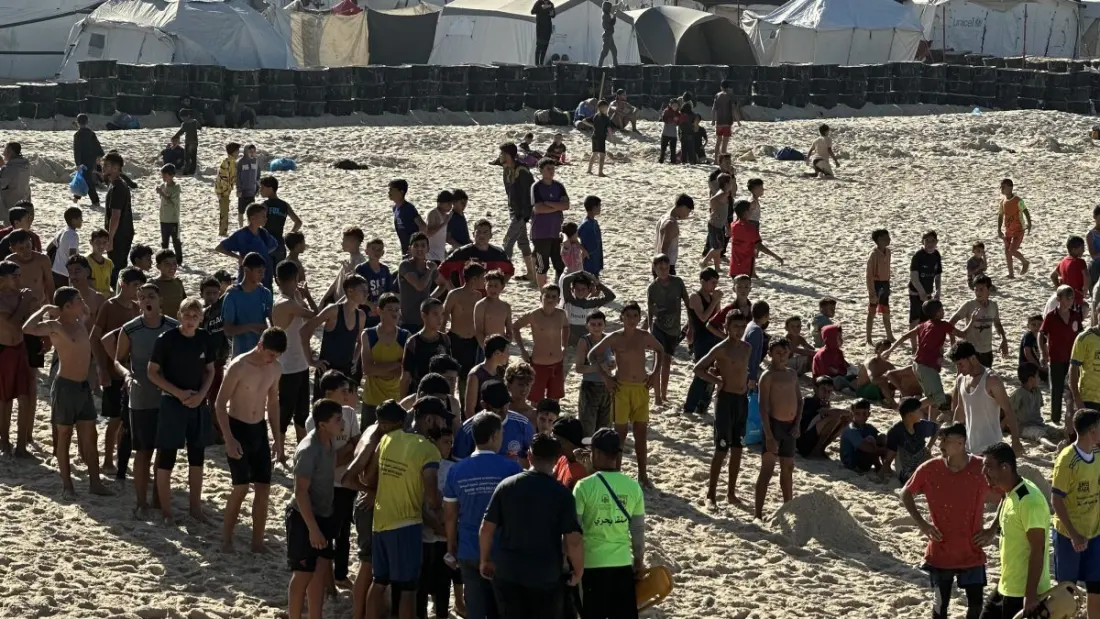
On a Friday morning in Khan Younis, southern Gaza, hundreds of children in swimming clothes lined up on the sand waiting for a whistle. When it blew, they surged into the Mediterranean — screaming, splashing, racing each other through the waves. For a few hours, the beach south of the Al-Qarara spit sounded like a place that had not been at war since October 2023.
The carnival was organised by the Tantish Swimming Academy to mark World Children's Day on Nov. 20, and around 3,000 Palestinian children took part. Most of them live in overcrowded tents after years of displacement, and Gaza's parks, sports grounds and playgrounds have largely been destroyed. That leaves the sea as one of the few open spaces left where kids can run, play and simply be children.
For the swimmers themselves, the day carried real weight. Fifteen-year-old Mohammed al-Masri, who trained off Beit Lahia in northern Gaza before the war, said reaching the coastline has often been dangerous because of gunfire from naval vessels. Still, he called the sea "our only outlet" and hopes to return north and resume training. Sixteen-year-old Shahd Yahya Salman, who also lives in a tent, used the carnival to practise rescue techniques — for her, swimming is less a hobby than a survival skill when children face the risk of drowning. Thirteen-year-old Rahaf Amid al-Radii has gone further still: after learning to swim, she now helps train younger children, and she took first place in a championship run by the academy.
Behind the children stands coach Najwa Abu Amra, who says the Tantish Swimming Academy has taught more than 3,000 kids to swim during the war, working through equipment shortages, harsh weather and constant security risks. Founded in 1999, the academy has produced thousands of swimmers and qualified over 100 coaches over the years, according to Jamil al-Saadouni of the Palestinian Olympic Committee, who called the wartime training effort an exceptional achievement given the blockade and destruction. Abu Amra's summary of what the children are saying is blunt: "We are here, and we deserve life."
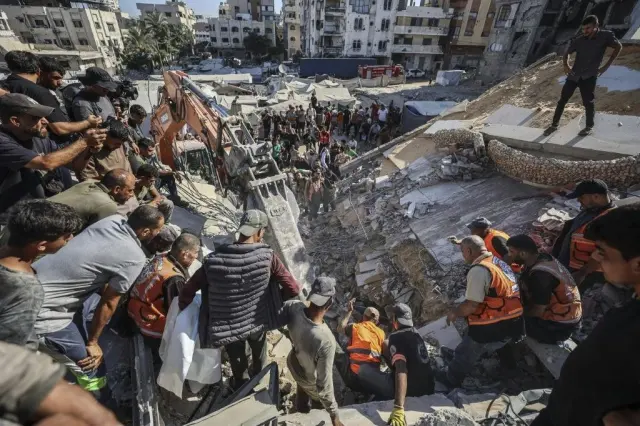
The backdrop is grim. Palestinian authorities say more than 21,000 children have been killed in Gaza since October 2023, with roughly 90% of the enclave's infrastructure damaged or destroyed. Against that, a beach carnival looks small — but for the children who swam, it was a few hours of normality, exercise and psychological relief in a place where those things have become rare.
This is not a story about booking a trip; Gaza is not a destination right now. It's a story worth reading because it shows what travel-adjacent spaces — a beach, a swim, a coach with a whistle — can mean to people who have lost almost everything else. For travellers moved by it, supporting organisations working with children in Gaza, or simply remembering that coastlines are lifelines as much as leisure spots, is the more useful response.