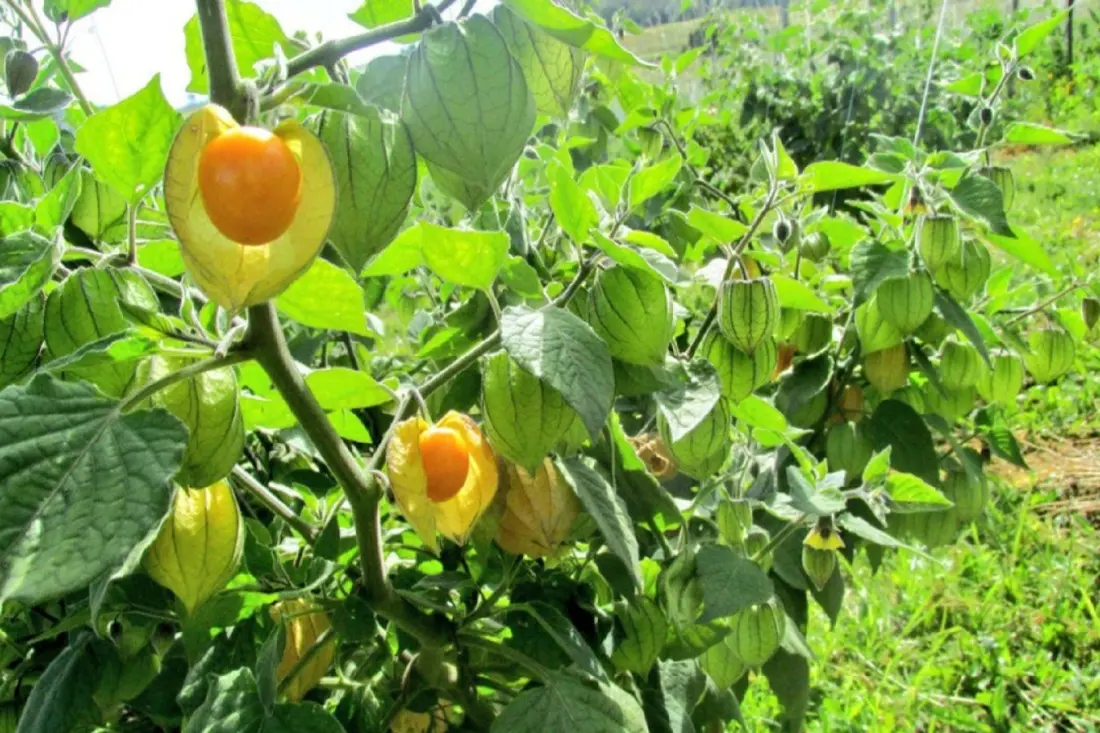
That bright orange fruit lurking in the physalis husk — goldenberry, or uchuva — is having a moment, and Colombia is behind most of it. The country is now the world's largest producer and exporter of the fruit, and 2024 marked a record year: exports passed US$43.5 million and 8,500 tonnes, shipped to roughly 25 markets including the Netherlands, Germany, the US and Canada. The sector has been growing at close to 9% a year, helped by traceability rules and international food-safety and sustainability certifications.
What's interesting is who grows it. An estimated 1,500-plus small-producer families supply the crop, mostly from farms of two hectares or less, spread across Cundinamarca, Boyacá, Antioquia, Nariño and the Santanderes. Around 45% of production costs go on labour — manual picking and post-harvest work — with women heads of household prioritised for jobs. Nearly 40% of the harvest never leaves the country at all: it goes into jams, dried fruit, pastries and restaurant kitchens, plus local fresh markets.
The fruit is also drawing scientific attention. An 85-gram serving covers about 35% of your daily vitamin A, a quarter of your vitamin C and a quarter of your fibre. Researchers at Agrosavia, the Industrial University of Santander and CIAT have studied goldenberry compounds and their interaction with insulin signalling pathways — early hints of a role in glucose regulation, though nobody is claiming the fruit prevents or treats diabetes. Since 2014, the Analdex Goldenberry Exporters Committee has worked with government agencies and US authorities to open seaports at Cartagena, Barranquilla and Santa Marta and establish plant-health protocols for foreign markets.
For travellers, this is a good excuse to eat something you probably can't get fresh at home. Goldenberries show up on breakfast tables in Bogotá hotels, in juices and desserts, and in highland markets where the fruit is grown. The growing regions — Cundinamarca and Boyacá especially — sit within easy reach of the capital, so a day trip through the Andean countryside puts you right in goldenberry territory. Expect a tart, tangy flavour closer to a citrus tomato than a sweet berry; locals eat it fresh, but it's excellent candied or in sauces.