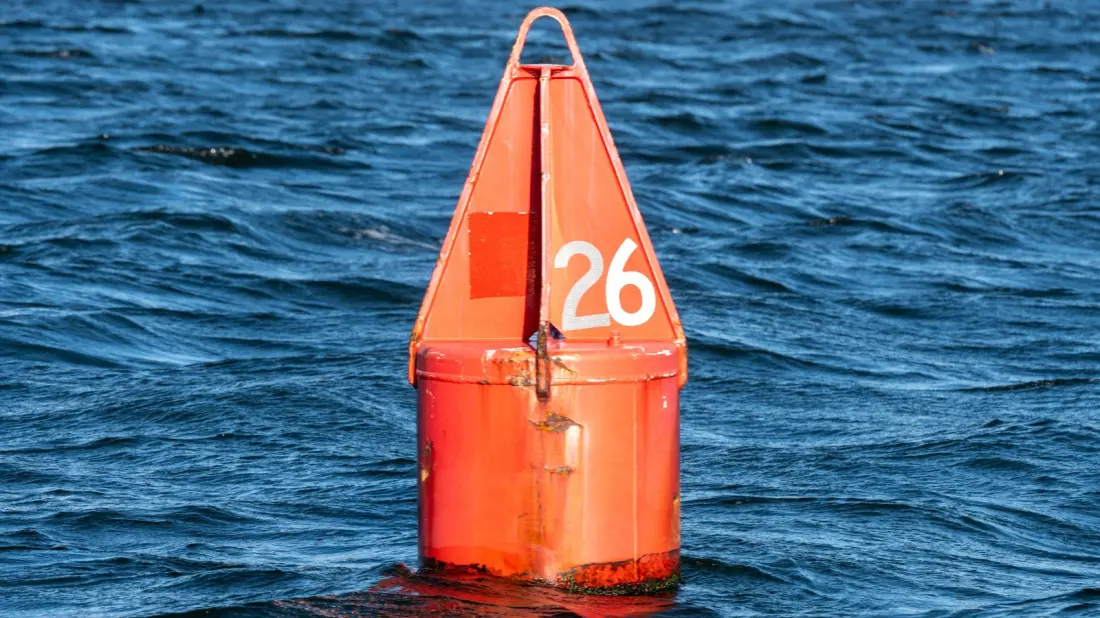
Buoys are meant to keep boaters safe — marking channels, crab traps and swimming zones — yet hitting one can end a holiday on the water very abruptly. The consequences depend on the type of buoy, but they range from a wrapped propeller to a damaged hull, injured passengers, and even fines or prosecution.
The sneaky part is that even a small foam buoy, the kind that marks a crab pot, can do real damage. Every buoy is tethered to the seabed by a rope or chain, and running over one can leave that line tangled around your propeller. A fouled engine needs to be cleared before you can go anywhere. Larger buoys — mooring balls or the red-and-green navigational markers — are harder objects entirely: a solid hit can crack a hull or throw passengers overboard.
There's a legal dimension too. If you damage a navigational aid maintained by the U.S. Coast Guard, such as a preferred channel marker, you can face fines, prosecution or restitution if you're found at fault. And don't assume this only happens to novices — even Coast Guard and U.S. Navy vessels have run over navigational buoys.
So what should you actually do? Treat it like any collision on the water. Kill the engine first, check everyone aboard, and assess damage. If anyone is hurt or the boat is taking on water, call 911 — or raise the Coast Guard on marine radio if you're in coastal waters — and activate a distress signal while you tend to injuries.
Paperwork follows. Under U.S. federal law, a boating accident report is mandatory if someone dies, is seriously injured or goes missing, if the boat is destroyed, or if property damage tops $2,000. Individual states layer on their own rules, and other countries have separate procedures — for instance, hitting a marker in the Abaco Islands, billed as the Boating Capital of The Bahamas, means following Bahamian reporting requirements instead.
For anyone renting a boat on holiday or chartering abroad, the takeaway is simple: give every floating marker a wide berth, even the small ones, and know the local reporting rules before you cast off.