
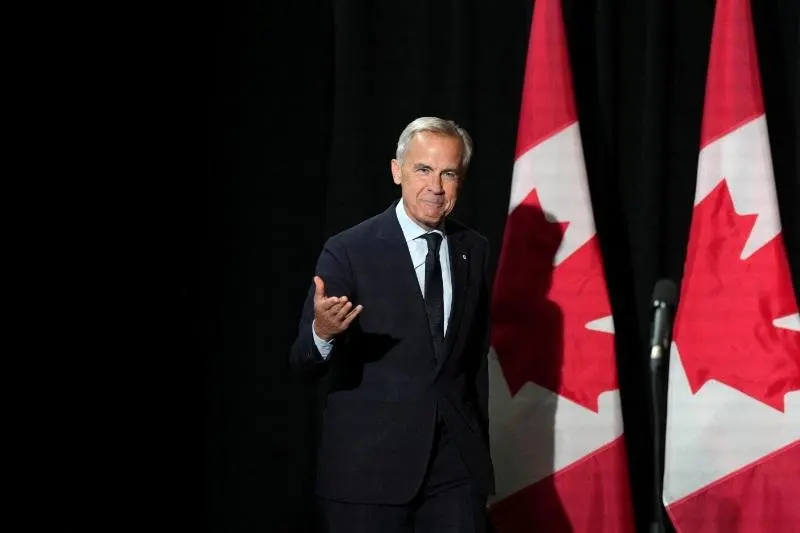
Canada is quietly negotiating one of the more unusual geopolitical experiments in years: a form of 'associate membership' in the European Union, a status that doesn't currently exist. According to a Wall Street Journal report carried by Japan Today, Prime Minister Mark Carney has been pushing the idea with Brussels, and EU officials — historically rigid about membership rules — are apparently open to creating it.
The driver is economics, not tourism. Canada's trade relationship with the United States has soured badly under President Trump, with tariffs hitting tens of billions of dollars in cross-border commerce and new duties on Canadian cars, trucks and auto parts set for January 1. Trump, for his part, called Canada 'the worst country to deal with' while suggesting the country was 'dying to make a deal.' Ottawa is clearly looking to diversify.
What's on the table goes beyond a trade deal. Canada and the EU are discussing free movement for goods, services and workers in strategic sectors — energy, AI, defence and critical minerals — plus joint underwater cables, data centres, cloud storage and satellite networks, and infrastructure to ship Canadian energy across the Atlantic.
The headline detail for travellers: Carney has reportedly discussed with EU leaders, notably French President Emmanuel Macron, the possibility of Canadians living and working visa-free across the EU. That would be a genuinely transformative perk — a Canadian passport suddenly functioning like a partial European one. Nothing is agreed, and even the more modest EU-Canada trade deal struck over a decade ago still hasn't been ratified by every EU member state, so temper expectations.
Meanwhile, the two leaders are meeting on September 20 in Saint Pierre and Miquelon — a small French archipelago just off Canada's Atlantic coast, and the first-ever official visit there by a Canadian prime minister. That's a reminder of a quirky travel fact many people miss: France has a land-and-sea border with Canada, and these islands are literally the EU's doorstep in North American waters.
Why should a holidaymaker care? Even a partial Canada-EU arrangement could eventually mean easier movement, looser roaming of work rights and closer cultural and transport links across the Atlantic. And in the here and now, Saint Pierre and Miquelon is having a moment — a slice of France where you can eat croissants, pay in euros and speak French, just a short ferry hop or flight from Newfoundland. It's exactly the kind of odd little territory that rewards travellers who like going somewhere genuinely different without a long-haul flight. Watch this space: if Carney's EU gambit gains traction, transatlantic travel between Canada and Europe could get a lot more interesting.