
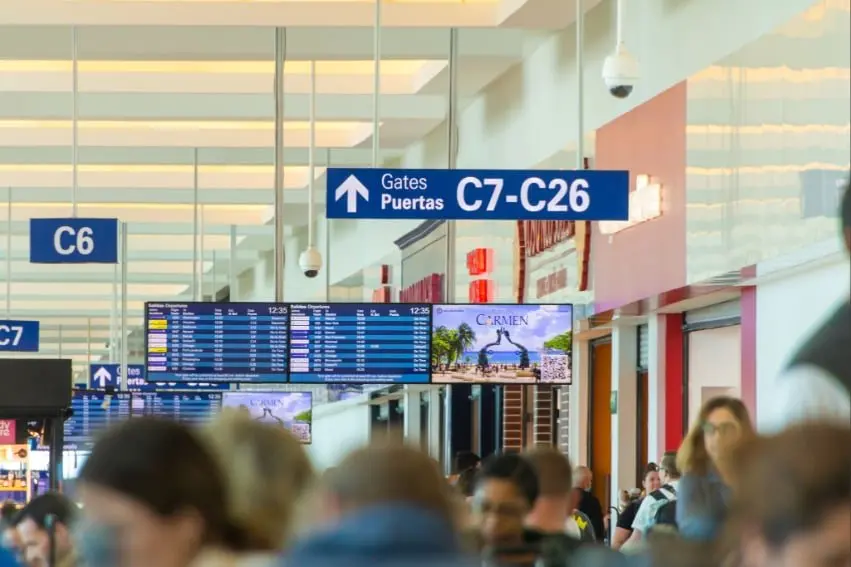
Cancún International Airport handled 1.19 million international passengers in August, a 15% drop compared with the same month last year. It's the steepest decline yet in what has become a six-month slump for Mexico's busiest tourist gateway.
The numbers come from STARC, the tourism research centre at Anáhuac University of Cancún. Its data shows the airport has lost 845,714 international passengers between January and August, with that market falling 6.1% to 12.9 million travellers. Domestic traffic slipped too, down 4.8% to 6.3 million. In total, Cancún has moved 19.2 million passengers this year, about 5.7% fewer than the same stretch of 2025.
The slide accelerated through the northern summer. May was down 11.1% year-on-year, June 13%, July 12.7% and August 15%. Counting both domestic and international travellers, August saw 2.1 million passengers versus 2.3 million a year earlier — a 9.3% overall drop.
Why the sudden cool-off? A STARC analysis back in July predicted U.S. airlines would cut nearly a million seats to Mexican beach destinations across July and August, with Cancún, Cozumel and Tulum alone losing over half a million. Industry watchers pointed to a mix of factors: pricier jet fuel, beaches fouled by sargassum seaweed, and traveller safety concerns. Airport director Carlos Trueba Coll told El Economista that the bankruptcy of U.S. carrier Spirit also played a part, though he noted airlines like JetBlue have been adding back capacity and that the return of seasonal winter routes in December should help turn the numbers around.
The pattern isn't uniform across Mexico. ASUR, the airport group that operates Cancún, said its Mexican airports averaged a 13.6% decline in international traffic — but Mérida, its second-busiest hub, bucked the trend with a 4.5% increase, welcoming just over 280,000 international travellers this year.
For holidaymakers, there are a couple of takeaways. First, if you've been put off by headlines about sargassum or safety, know that airlines are actively rebuilding capacity for the winter high season, which usually means deals and route options returning. Second, quieter shoulder months have historically meant better hotel rates and shorter lines — the current downturn could translate into value for anyone flexible on timing. And if Cancún feels oversaturated to you, Mérida's growing popularity is a nudge to look at the Yucatán's colonial capital, with its food scene, cenotes and easy day trips to Chichén Itzá, instead of the hotel zone.