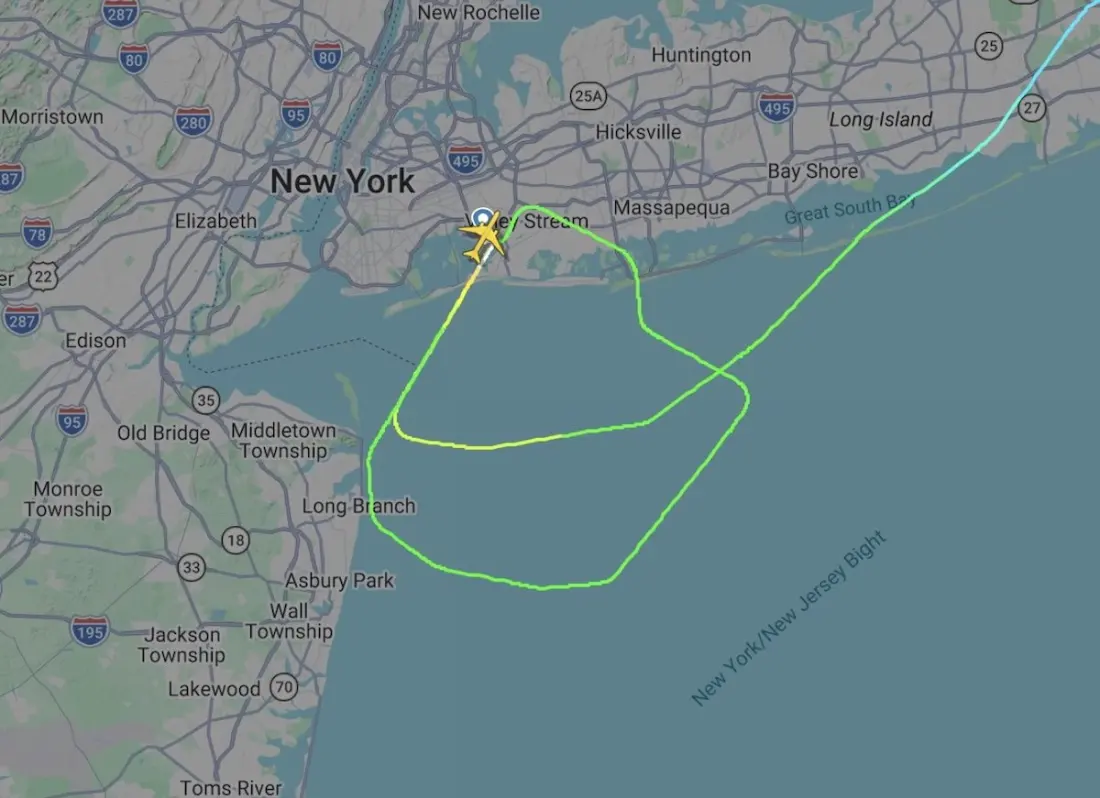
A routine landing at New York's JFK Airport turned into a textbook example of what happens when both sides of the radio have a bad day. On Sunday, October 11, an EL AL Boeing 777-200ER arriving from Tel Aviv (flight LY7) approached runway 4R in gusty conditions, and the exchange that followed has aviation watchers shaking their heads.
The trouble started early. The pilots accepted a landing clearance without reading back the runway or their own callsign, and the controller didn't push back. When the crew asked for a wind check, the controller's response was, remarkably, "Who's asking?" He then handed over winds of 100 degrees at 13 knots gusting 22 — only after being prompted, despite gusty crosswinds on the runway. That might sound pedantic, but failing to pass wind information has been cited by the NTSB as a contributing factor in the fatal Amazon Air 767 crash in Miami.
Then it got worse. A pilot on frequency reported a dead animal, likely a goose, on the runway, and the controller offered the EL AL crew a go-around, which they accepted. What should have been a well-drilled manoeuvre unravelled. The controller issued a right turn to heading 130 and a climb to 2,000 feet, but the pilots seemed unprepared — they asked which heading to fly, the controller replied "I don't know, I'm not sure," and the crew went on to climb to 4,000 feet while questioning the turn. They delayed the turn so long that it nearly created a conflict with another departing aircraft. The plane eventually landed, and the crew was presumably asked to phone the tower — often a precursor to a pilot deviation report.
The commentary around the incident makes a fair point on both sides: a go-around is a busy time, but a properly briefed crew should be ready to fly an immediate heading and altitude, since that quick turn is often what keeps everyone separated. And a controller answering a safety-critical question with "I'm not sure" falls well short of the phraseology standards the FAA expects.
Why should holiday travellers care? Because JFK's airspace is famously congested and its tower culture famously loose, and this exchange shows how quickly non-standard communication can eat into safety margins. It's also a reminder that a go-around, while startling to passengers, is a routine and usually uneventful manoeuvre — the drama here wasn't the missed landing itself, but how it was handled. Most controllers and crews do this dance flawlessly every day; this was the exception that proves the rule.
The underlying issue isn't new to anyone who follows US aviation: American controllers are often criticised for casual, non-standard phraseology compared to their counterparts elsewhere, and accountability is rare. Until that changes, expect more audio like this to surface.
One Mile at a Time