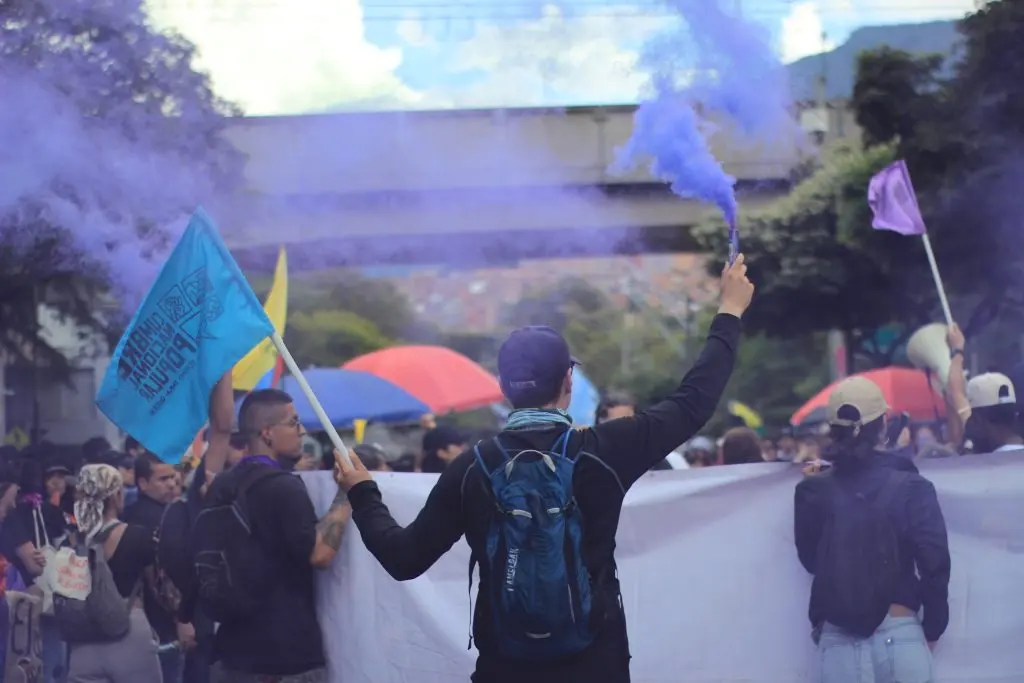
Tens of thousands of Colombians filled the streets on October 14 in the country's first major national strike against President Abelardo de la Espriella's government. Around 62,000 people joined demonstrations, by the president's own count, in cities spanning the whole map: Bogotá, Medellín, Cali, Cartagena, Medellín, Bucaramanga, Manizales, Santa Marta, Valledupar, Popayán and Cúcuta. The government says 98% of the protests were peaceful.
The mobilisation was called by unions, teachers' associations, collectives and social movements. Demands ranged widely — better healthcare for teachers, defence of public education, food and national sovereignty, environmental protection, and women's sexual and reproductive rights, which protesters argue are under threat from the new administration. Jesús Villa of the Antioquia Teachers' Association framed the day as the start of a new period of political struggle, while opposition Senator Iván Cepeda Castro, who lost June's presidential run-off to de la Espriella by a narrow margin, said the marches marked the beginning of sustained nationwide opposition.
The strike came a day after the president signed Decree 1525, which regulates demonstrations and allows police to act immediately against individuals committing violence during a protest, rather than waiting for dialogue processes to conclude. Critics — including human rights lawyers and opposition politicians — say the decree weakens the constitutional right to peaceful protest and could be used to justify heavy-handed policing. Activists reported detentions and excessive force by security forces in Popayán, Ibagué, Medellín and Bogotá.
For anyone travelling in Colombia or planning a trip, the practical takeaway is straightforward: further demonstrations are likely, with organisers explicitly calling this the start of ongoing mobilisation. Protests in Colombia are usually concentrated in city centres — around Plaza de Bolívar in Bogotá and central Medellín in particular — and can snarl traffic and public transport even when calm. If you're in a city on a day of announced strikes, steer clear of large gatherings, check local news and your embassy's advisories, and build buffer time into any airport transfers. Colloquially, most visitors experience these days as logistical annoyances rather than danger, but the new decree and reports of police pushing back against crowds mean it's worth keeping more distance than you might have a year ago.
Colombia remains one of South America's most rewarding destinations, and a single day of marches doesn't change that. But with a charged political cycle underway and both sides dug in, travellers should expect protest days to keep appearing on the calendar — and plan city itineraries with a little flexibility.