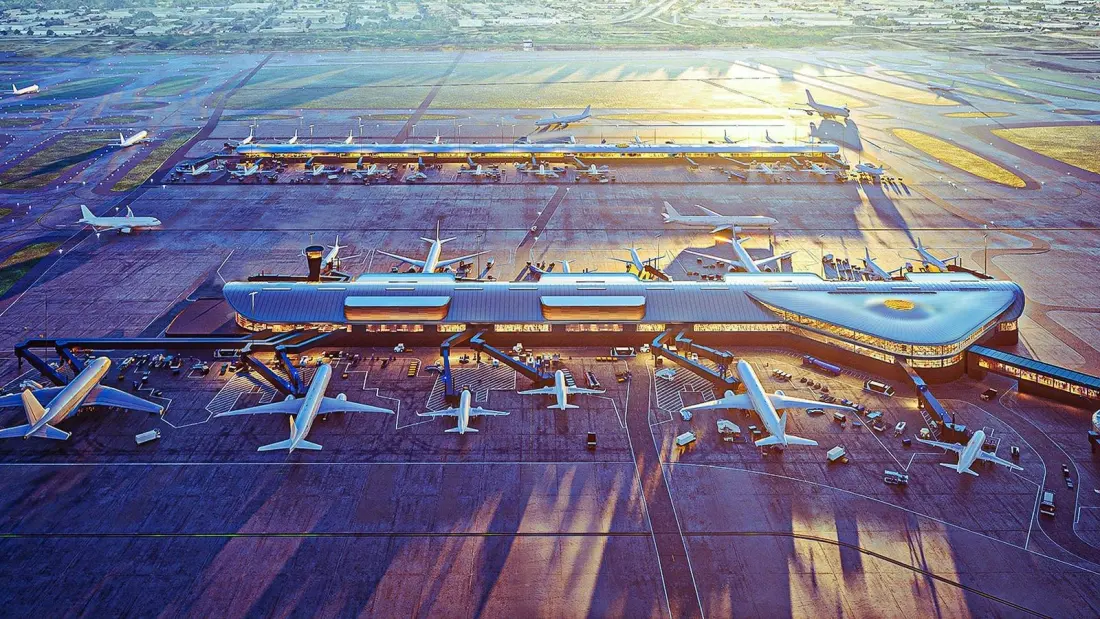
When travellers compare airport size, land area usually wins the argument. But the real measure of how smoothly a mega-hub runs is how many runways it can put to work. By that count, five airports sit at the top of the pile — and Chicago O'Hare leads them all with eight.
O'Hare's eight active runways are the product of a multi-billion-dollar overhaul that replaced a tangled, intersecting layout with six east-west parallel strips plus two diagonal crosswind runways. The longest, 10L/28R, stretches 13,000 feet to handle heavy long-haul departures. Controllers can run three independent arrival streams at once, and the airport keeps processing roughly 100 aircraft movements per hour even in grim Midwest winter conditions.
Dallas/Fort Worth comes next with seven runways spread across more than 17,000 acres. Five parallel north-south runways — four of them an identical 13,400 feet — plus two diagonal crosswind strips let the airport cope with brutal Texas summer heat, when thinner air demands more runway. Three control towers manage the operation, and end-around taxiways let landing aircraft skirt active departure lanes instead of crossing them, cutting both delay and incursion risk.
Three airports tie at six. Denver International, the largest commercial airport in North America by area at about 33,500 acres, arranges its six non-intersecting runways in a pinwheel around the terminal. Its 16,000-foot runway 16R/34L is the longest public commercial runway on the continent — a necessity at Denver's 5,434-foot elevation, where reduced air density robs aircraft of lift and thrust. The site was deliberately sized to one day double its runway count.
Amsterdam Schiphol's six runways sit 14.7 feet below sea level, and their spread-out, multi-heading layout lets controllers adapt to shifting Atlantic winds. Five handle scheduled traffic — including the famous Polderbaan at 12,467 feet, built for A380s and 777-300ERs — while the shorter Oostbaan serves light aircraft. There's a catch for passengers: strict noise rules force runway rotation through the day, and a taxi out to the Polderbaan can take up to 20 minutes.
Detroit Metropolitan completes the list, also with six. Four parallels in one direction and two crosswinds make it one of North America's most weather-resilient hubs — when Great Lakes storms force a wind switch, controllers simply pivot to the 09/27 pair rather than grinding to a halt.
For flyers, this matters more than it might seem. Runway count is a decent proxy for whether your connection will survive weather delays, and why some hubs — Denver, Dallas, Chicago, Amsterdam, Detroit — keep moving when others stack up in holding patterns.