
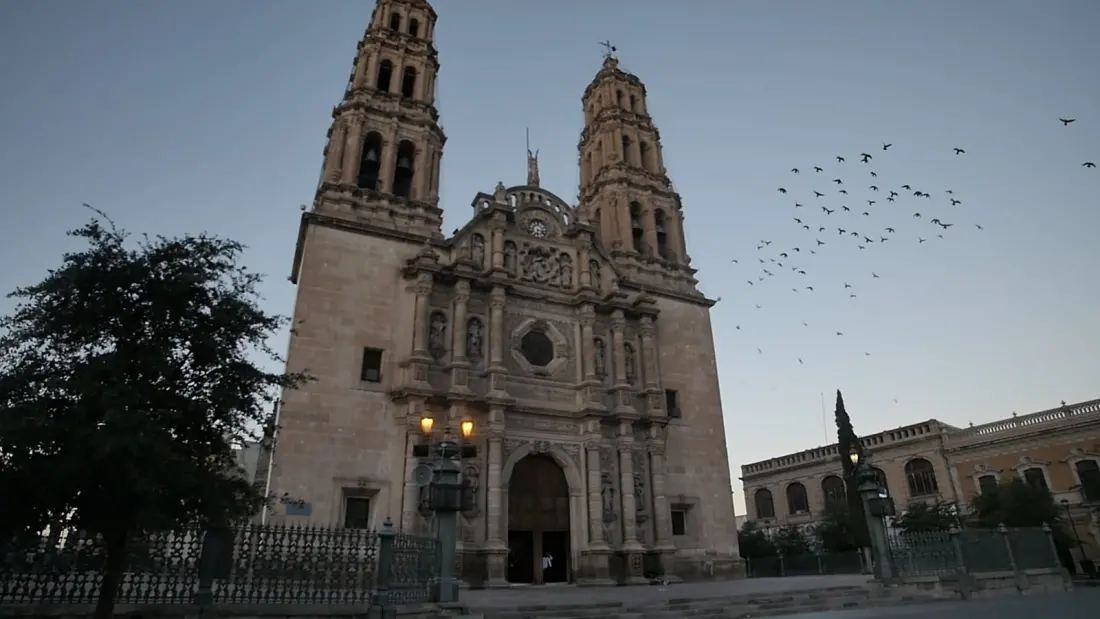
Mexico's largest state is also its least visited, and that's exactly the appeal. Chihuahua, sprawled across the country's northern frontier, packs in canyons deeper than the Grand Canyon, a legendary rail journey, living Indigenous culture and a coast break most travellers never connect with the state at all.
Start in Chihuahua City, founded in 1709 and heavy with national history. The Baroque Metropolitan Cathedral anchors the old town, while the Casa de Chihuahua Cultural Centre holds the basement cell where Padre Miguel Hidalgo — the father of Mexican independence — was imprisoned before his 1811 execution, depicted in murals at the nearby Government Palace. Revolution fans can see the bullet-riddled Dodge in which Pancho Villa was driving when he was assassinated in Parral in 1923, now displayed at the Museum of the Revolution. Food-wise, this is burrito country: flour tortillas stuffed with machaca (dried beef) and Mennonite cheese, plus a lesser-known local spirit called sotol, distilled from a desert plant rather than agave.
The headline act is the Copper Canyon, a UNESCO-protected system of six canyons in the Sierra Madre that is deeper and four times larger than Arizona's Grand Canyon. The cliffside viewpoint at Divisadero delivers 100km panoramas, and the Barrancas Adventure Park there adds a cable car, a via ferrata on the canyon walls, and a ZipRider that drops 442 metres at up to 85 mph.
The best way in is the Chepe Express, routinely ranked among the world's great train rides. It crosses 37 bridges and burrows through 86 tunnels on a nine-hour run from Los Mochis on the Pacific up to the pine-forested town of Creel — a line that took nearly a century to build. Tickets allow up to three stopovers, so a week-long trip can weave in colonial El Fuerte, the mission town of Cerocahui, and Divisadero. In Creel, the heart of Rarámuri (Tarahumara) country, local guides lead quad-bike trips to cave dwellings, Lake Arareco, the stone formations of Monks' Valley and the 18th-century San Ignacio Mission. The Rarámuri — 'People with Light Feet' — are famed ultramarathon runners, and their traditions are showcased at the Museo Tarahumara de Arte Popular in Creel's old train station.
Chihuahua even has a coastline kicker: from Los Mochis, a ferry or short flight across the Sea of Cortez lands you in La Paz, Baja California, where Jacques Cousteau's 'Aquarium of the World' delivers blue and humpback whales (December to April, peaking mid-February to March), regulated whale shark swims from October to April, sea lions at Isla Espíritu Santo, and calm-water beaches like Balandra Bay.
For travellers who've done the Yucatán and want Mexico's wilder, emptier side — rail fans, hikers, history buffs and wildlife spotters alike — Chihuahua is the state that rewards the extra effort.
Original reporting: Wanderlust