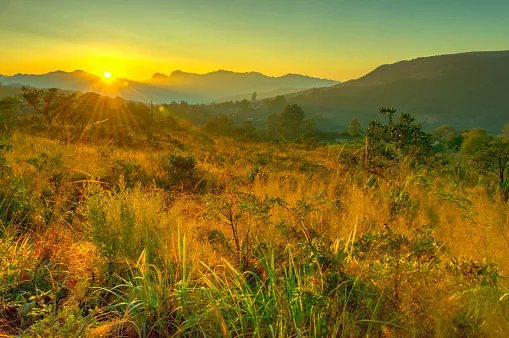
Skip the safari jeep for a moment. In Zimbabwe's Eastern Highlands, along the Mozambique border, the Chimanimani Mountains offer something the country's famous reserves can't: a rugged, walkable wilderness of quartzite ridges, waterfalls and plants found almost nowhere else on Earth.
The drama starts with the scenery. Mount Binga, on the border, tops out around 2,436m, and the terrain ranges from warm lowland river valleys to cold, exposed grasslands near the summits. Mist drifts over the higher slopes, and trails bend constantly into fresh views. Water shapes much of the experience — Bridal Veil Falls, near the village of Chimanimani in the Eland Sanctuary, drops roughly 50m into a rocky basin and makes an easy half-day outing. Deeper in the park, Muhohwa Falls and the pools and gorges of the Bundi River reward longer treks. One caution: the rainy season (roughly November to March or April) brings flash flood risk, so check river conditions before swimming or camping low.
Botanists have long had Chimanimani on their maps. The national park holds around 2,182 plant taxa — more than 30% of Zimbabwe's entire recorded plant diversity — and 74 species grow only in these mountains, according to the Zimbabwe Parks and Wildlife Management Authority. The poor quartzite soils, varied altitude and rainfall patterns have pushed plants into odd evolutionary corners: think aloes, proteas and heaths wedged into rock crevices. Standout rarities include Munch's great Chimanimani aloe (Aloe munchii) and the endangered Euphorbia rugosiflora. You don't need a botany degree to enjoy this; a local guide can point out what you're looking at, and the etiquette is simple — look, don't pick, and stay on paths, since high-altitude vegetation recovers slowly.
Hiking is the whole point here. Many attractions sit at the end of footpaths, not roads, with routes ranging from village-level waterfall walks to multi-day treks through the Bundi Valley with overnight camping or basic mountain shelters. Wildlife is subtler than the savanna version — eland, bushbuck, blue duiker, and a bird list strong enough that the area is designated an Important Bird Area. Woodland, forest and grassland meet within short distances, so birders can work several habitats in a day.
The region's importance was recognised internationally in 2022, when UNESCO designated the wider Chimanimani Biosphere Reserve, spanning mountain and lowland ecosystems on both sides of the border. For travellers, that translates into a practical argument for going slowly and spending locally: hiring guides and staying in the village channels money into communities who live alongside this landscape.
Who is this for? Travellers who've done Zimbabwe's big parks and want its wilder, quieter side; hikers after serious terrain without crowds; and anyone who finds a rare mountain aloe as exciting as a lion. March–April and August–September are the sweet spots for weather, sturdy boots and warm layers are non-negotiable in the mountains, and the village of Chimanimani makes a natural base for arranging guides, park fees and routes.