A Zimbabwean biologist who spent more than a decade helping farmers and lions share the same ground has been named a 2026 Animal Action Award winner by the International Fund for Animal Welfare (IFAW). Liomba-Junior Mathe will collect the honour in London at a ceremony marking the 26th year of the awards, which recognise contributions to wildlife conservation and animal welfare worldwide.
Mathe's story starts in Hwange, the Zimbabwean town beside the country's largest national park, where a primary school visit to see elephants, giraffes and zebras set him on his path. He went on to earn first-class honours in Biological Sciences at Midlands State University, then studied International Wildlife Conservation Practice at the University of Oxford's WildCRU on a Recanati-Kaplan scholarship.
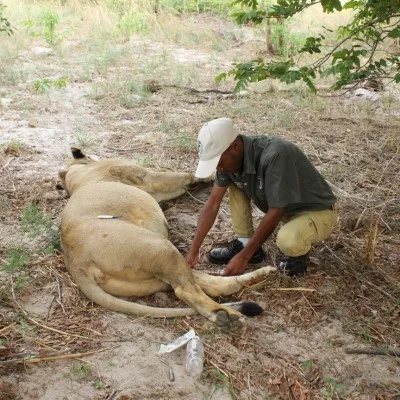
His real impact came on the ground. Working with Oxford's Trans-Kalahari Predator Programme for 11 years, he rose from field assistant to lead the Long Shields Lion Guardian Programme, which tackled the conflict between lions and communities farming around Hwange National Park. When livestock are killed, farmers often retaliate by poisoning, spearing or shooting predators — so the programme focused on prevention. Community-based Lion Guardians and early-warning systems alert villagers to approaching lions, while vuvuzelas have proved a surprisingly effective deterrent.
One of the smartest tools is the predator-proof mobile boma: a portable livestock enclosure that moves between agricultural fields. Cattle sleep safely at night, and the manure left behind enriches the soil — a direct farming bonus. Mathe estimates he has trained around 150 rangers and community guardians in these methods, and his work now covers cheetahs and hyenas, protected-area management and landscape connectivity. He is pursuing doctoral research with the Cheetah Conservation Fund and at the Namibia University of Science and Technology.
What sets Mathe's approach apart is its emphasis on partnership. He argues that communities living beside wildlife should be treated as active collaborators, not passive beneficiaries — especially when they absorb the financial cost of losing livestock. IFAW Zimbabwe's country director, Alleta Nyahuye, framed it the same way: protecting wildlife cannot come at the expense of the people who live alongside it. Next, Mathe hopes to shape conservation policy across the Kavango-Zambezi Transfrontier Conservation Area, the enormous five-country park that straddles southern Africa.
For travellers, this matters because Hwange remains one of Africa's great lion destinations, and the future of those lions depends on the people living at the park's edge. Choosing lodges and operators that support community-based conservation — the model Mathe champions — is one of the simplest ways a visitor can keep the species thriving. IFAW's recognition also signals growing momentum behind African-led conservation, something the region's safari industry and its visitors both stand to benefit from.