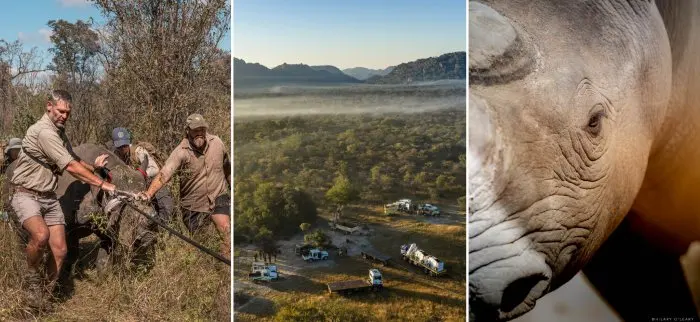
For the first time in over three decades, black rhinos are roaming Matusadona National Park in northern Zimbabwe — and travellers staying at Bumi Hills Safari Lodge now have three new ways to get involved.
The backstory is a proper rewilding success. In the late 1980s and early 1990s, organised poaching wiped out what was once Zimbabwe's largest contiguous black rhino population in the Sebungwe region. The survivors were moved to safer ground by the Zimbabwe Parks and Wildlife Management Authority. Now, more than 30 years later, descendants of those animals have been returned from Imire Rhino and Wildlife Conservancy, Matobo National Park and another protected site. The reintroduction came together through a partnership between ZimParks, African Parks, local communities and conservation organisations — and it landed neatly in African Bush Camps' 20th anniversary year.
The rhinos live in a secure 175-square-kilometre Intensive Protection Zone and are tracked with monitoring technology around the clock. Because their safety comes first, this is not a guaranteed-sighting safari. Instead, the emphasis is on hands-on conservation education — knowing a species driven from these hills is home again, rather than ticking it off a list.
So what can guests actually do? All three experiences start with a boat ride across Lake Kariba from Bumi Hills, which sits above the water. The Matusadona Game Drive crosses to the far shore, where a Conservation Trust vehicle takes over for Big Five country, complete with a snack-and-cooler pitstop along the way. The Guided Walking Safari lands wherever conditions are best that morning — the only time walks are permitted — and goes eye-level with wildlife, tracking animals, spotting fossils in the hills and learning which plants locals use medicinally. The Conservation Experience is the rarest of the three: guests visit the conservation centre to see the drone technology guarding the rhinos, meet the team running a wild dog rehabilitation programme, and quiz the people who made the homecoming happen.
The rhinos aren't the only returnees. In February 2026, 20 African wild dogs were translocated into Matusadona as two established packs, released gradually and now monitored via GPS collars, backed by community early-warning systems to reduce human-wildlife conflict.
Who is this for? Anyone who wants their safari dollars to do visible work. If guaranteed rhino sightings matter more to you than the conservation story itself, other parks may suit better. But if you'd rather watch drone patrols in action and hear the rewilding story from the people living it — all from a lodge above one of Africa's great man-made lakes — Bumi Hills is one of very few places with access to this unfolding chapter. Bookings and itinerary details are available via African Bush Camps.
Story credited to Breaking Travel News.