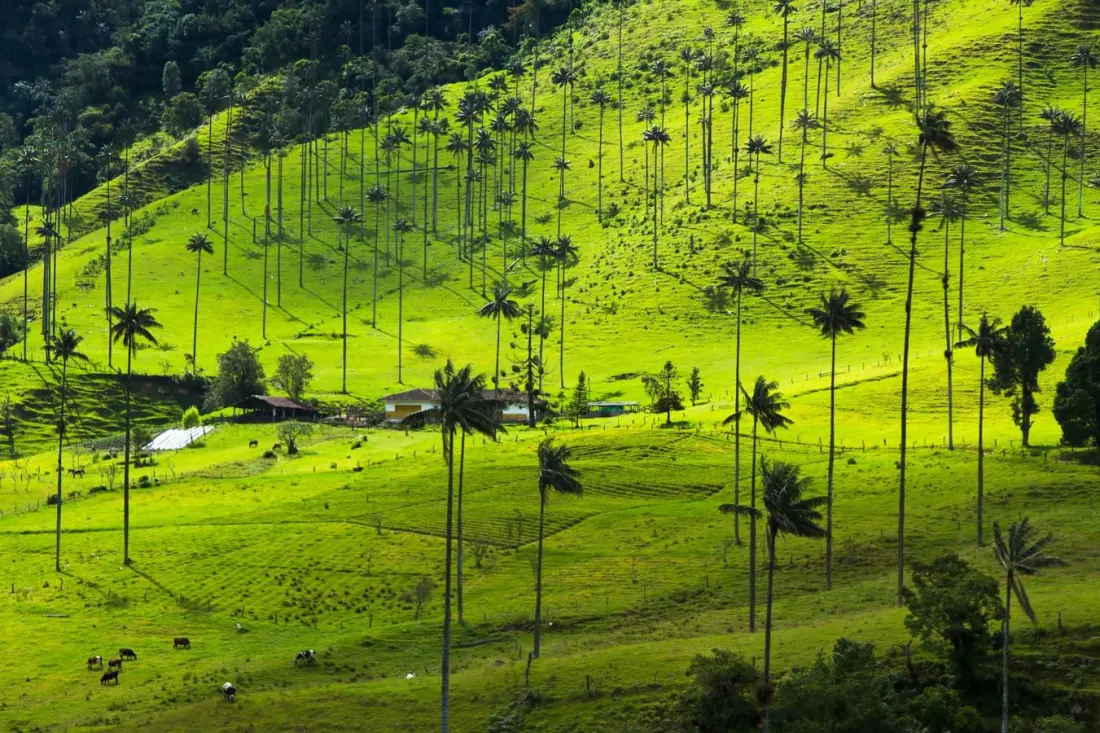
Colombia's Cocora Valley, in the Quindio department near the town of Salento, is famous for one thing above all: the Quindio wax palm, the country's national tree, rising from open green hillsides in the heart of the Coffee Region. The good news for travellers is that you don't need a full-day trek to see it — but if you do have the legs and the time, the longer circuit rewards with cloud forest, stream crossings and hummingbirds.
Getting there is half the charm. Shared Willys jeeps — old, open-sided farm vehicles — leave from Salento's main square for the roughly 11km ride to the valley entrance, taking 20 to 30 minutes. They depart when full rather than on a fixed timetable, generally operating between 6am and 9pm, with several early-morning runs. Fares start around COP 5,000 to 10,000 per person each way, so budget for the round trip and confirm the price before boarding. In high season, arrive early to skip the queue.
Two route options dominate. The short walk heads straight to the open palm-filled viewpoints and back — 30 to 60 minutes out, or up to two hours if you add side paths. It's ideal for anyone short on time, travelling with kids or non-hikers, or watching the weather, since you can turn around whenever rain or fog rolls in.
The full circuit runs about 12 to 13km and takes five to six hours, crossing cloud forest, bridges and muddy slopes. Many hikers add a detour to Acaime Nature Reserve — nicknamed the House of the Hummingbirds — which adds time and a separate entrance fee. Don't underestimate it: humidity, elevation and slippery ground slow things down, so start early and keep the day clear.
On money: entry to the main palm area starts around US$6.30, while the full circuit with its various private access points and reserves typically totals US$8 to 17 per person, plus the jeep fare. Guided packages from local agencies range from roughly US$79 for a short hike to US$89–158 for fuller excursions, usually bundling transport, fees and a guide. Going independently is fine for the main viewpoints, as long as you stick to authorised trails and carry cash for the various access points.
Weather is the wildcard. Salento can start sunny and the valley can be fogged in an hour later, with rain making trails slick and bridge crossings tricky. Ask staff at the entrance which sections are open that day, wear shoes with grip, pack a waterproof layer, and confirm what time the last jeeps run back to Salento. Bring water, snacks, sunscreen and a bag to carry your rubbish out — the wax palms are protected natural heritage, and the landscape is worth keeping that way.
If you want photographs of the palms without committing a whole day, take the short route; if you want the full Cocora experience, build a day around the circuit and the hummingbird stop at Acaime.