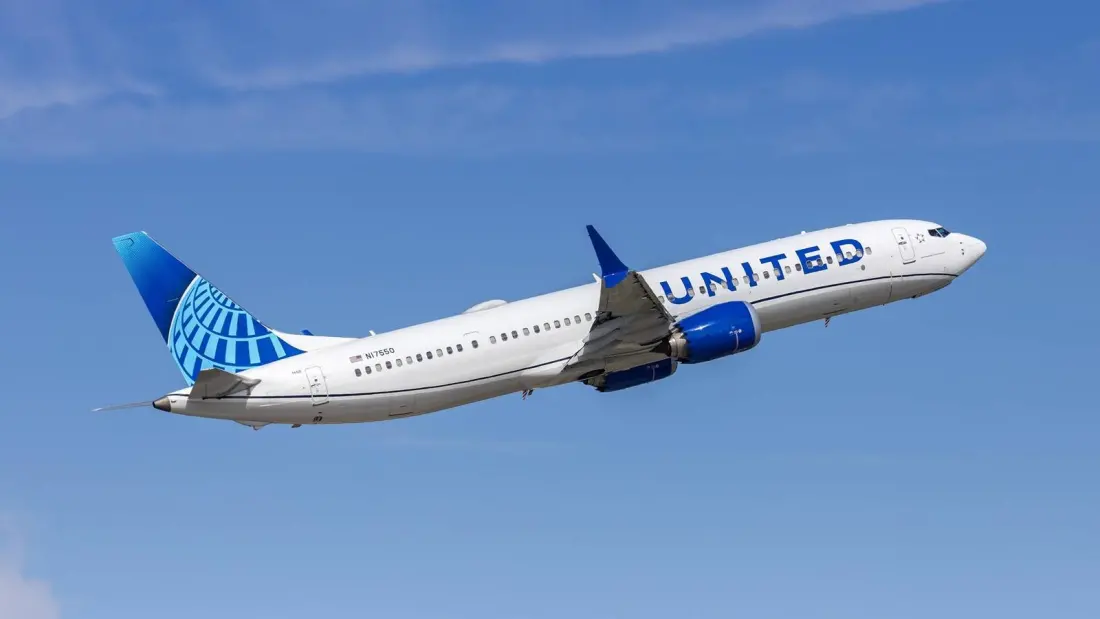
A routine flight from the Caribbean to Texas turned into a double emergency earlier this week, after a United Airlines Boeing 737 MAX 9 failed to lower its landing gear on approach to Houston — and then revealed it was running dangerously low on fuel.
United flight 1854, a twice-weekly service from Grand Cayman to Houston George Bush Intercontinental, departed Owen Roberts International on Sunday, October 25 at 4:28 PM, slightly ahead of schedule. The roughly three-hour flight proceeded normally until descent, when the crew could not get the right main landing gear to deploy.
The pilots declared an emergency and told controllers there were 90 souls onboard. Houston controllers arranged a low pass over the airport so observers on the ground could visually check the gear, and the crew of another aircraft in the area confirmed the right main gear was still retracted. Then came the second problem: with the jet holding while the situation was worked out, the pilots reported just 10 to 12 minutes of fuel remaining. Fire trucks and emergency services were requested to meet the aircraft.
In the end, the right main gear finally extended during the final holding pattern, and the aircraft touched down safely at 8:24 PM. United confirmed all 83 passengers and six crew deplaned normally at the gate, with no injuries reported. First responders met the plane on the runway to clear it for taxi.
The jet involved, registration N27474, was almost brand new — delivered to United on August 26 after its first test flight on August 5, and configured with 20 business seats, 48 Economy Plus and 111 standard economy seats.
For holidaymakers, the story is a useful reminder rather than a reason to worry. Landing gear issues sound dramatic but are among the most rehearsed scenarios in commercial aviation, and this crew did everything by the book: troubleshoot, declare, verify visually, and manage fuel. The system worked exactly as designed, and flights between Grand Cayman and Houston continue to operate as scheduled. If anything, it's a nod to the value of nonstop Caribbean–US routes and the crews who run them week in, week out.