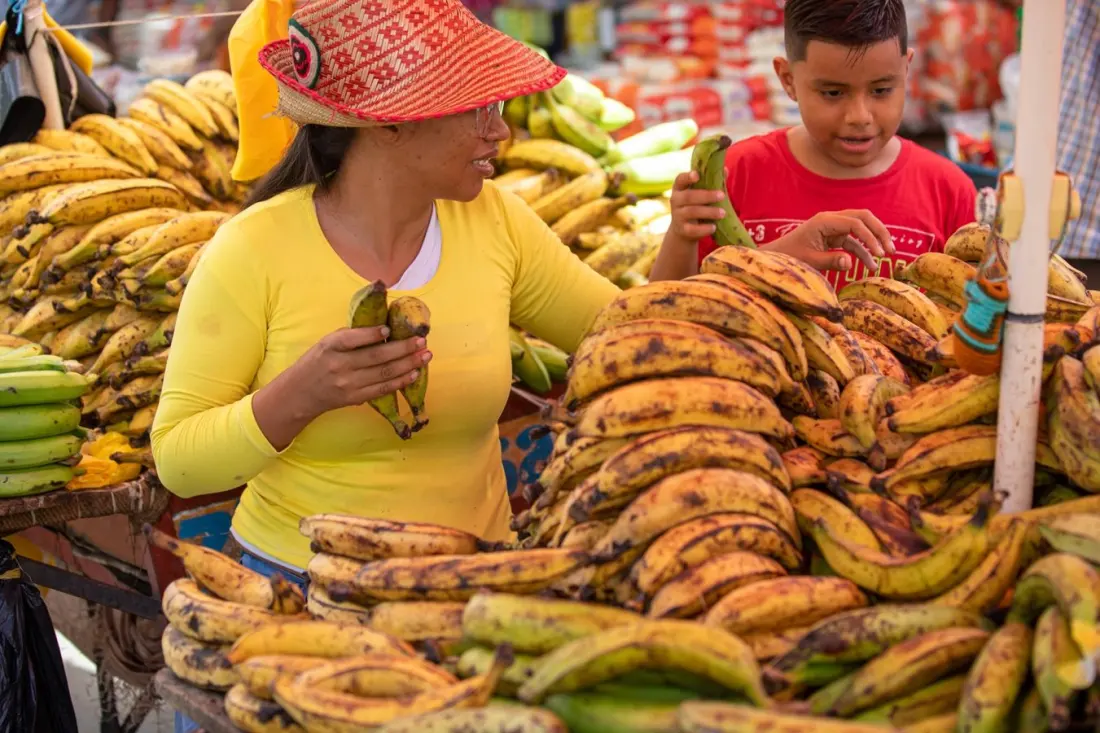
Bananas are having a moment in Colombia. The country shipped out US$1.5 billion worth of the fruit in 2025, landing it third in the global export rankings behind only Ecuador (US$4.3 billion) and the Philippines (US$1.7 billion), and ahead of heavyweights Guatemala and Costa Rica. For a traveller, that means the bananas on your breakfast plate in Medellín or Cartagena almost certainly came from one of the most productive growing regions on earth.
The numbers behind the record are striking. Colombia exported 133 million 20-kilo boxes in 2025 — roughly 2.5 million tons, up 22% on 2024. What makes it interesting is how the growth happened: not by planting more land, but by squeezing more fruit out of existing fields. Productivity hit 2,516 boxes per hectare, a 21.6% jump, which the growers' association Augura credits to better fertilisation and favourable weather.
The story is rooted in two very distinct regions. Urabá, in Antioquia near the Caribbean coast, covers 32,465 hectares and produced 82 million boxes, while the Caribbean zone spanning Magdalena, La Guajira and Cesar shipped another 51 million from 20,478 hectares. Together they support around 53,000 formal jobs in areas that, until the banana industry matured, were among Colombia's most troubled. Today, plantations here are increasingly marketed on their compliance with European sanitary, environmental and labour standards.
Where the fruit goes matters too. The European Union bought nearly two-thirds of it (65.8%), with the United States taking 17.3% and the UK 13.6%. That concentration is both a strength and a worry. In 2026 the sector faces a double squeeze: heavy rains and flooding could cut exports by around 5%, and a stronger peso is shrinking what growers earn on every dollar of sales. Holding onto third place, Augura's leadership admits, will depend on weather, exchange rates and finding new buyers.
Why should a traveller care? Because these banana zones are quietly becoming part of Colombia's beyond-the-usual-cities appeal. Urabá's Gulf of Urabá coastline — Playa Belén, Turbo, Sapzurro and Capurganá near the Panama border — offers a genuinely off-grid Caribbean experience, and the surrounding banana country gives the region its economy and identity. Food-focused visitors will also find the fruit everywhere: fried plantains (patacones), mango-banana smoothies, and the humble banana as a side dish on nearly every bandeja paisa. Next time you peel one in Europe, there's a decent chance it grew on a Colombian plantation within sight of the Caribbean Sea.