A 19th-century Cotswolds manor that once counted Charles Dickens, Charles Darwin and Elizabeth Gaskell among its guests has reopened as a hotel following a multi-million-pound, two-year restoration. Dumbleton Hall, a Grade II* listed house built in 1830, has been returned to its grand English roots with interiors that mix Belle Époque refinement and Roaring Twenties glamour across 34 individually designed bedrooms and suites.
The house has serious pedigree. After its literary heyday, it passed to the Eyres-Monsell family, whose visitors included the Mitford sisters, poet John Betjeman and travel writer Patrick Leigh Fermor. The new design leans into that history rather than smoothing it over: archive photographs line a history wall by the grand staircase, portraits of figures connected to the house greet arrivals, and the painted animal heads by Carola van Dyke are a playful nod to taxidermy seen in old photos of the property.
Design details are richly specific. The grand staircase is painted a darkened historic blue with white cornicing under a Victorian-style skylight. Enter a reception dressed in Victorian-exotic touches — gilded lion wallpaper by Cole & Son, black lacquered Chinese-style coffee tables, blue-and-white porcelain and Kentia palms. William Morris looms large, fittingly for the Cotswolds: fabrics from The Huntington (a set of previously unfinished Morris sketches) and the famous Strawberry Thief print appear throughout, alongside Watts 1874 damasks — including one used as wallpaper in the Cedar 1905 restaurant that echoes the JW Anderson suit Harry Styles wore on tour.
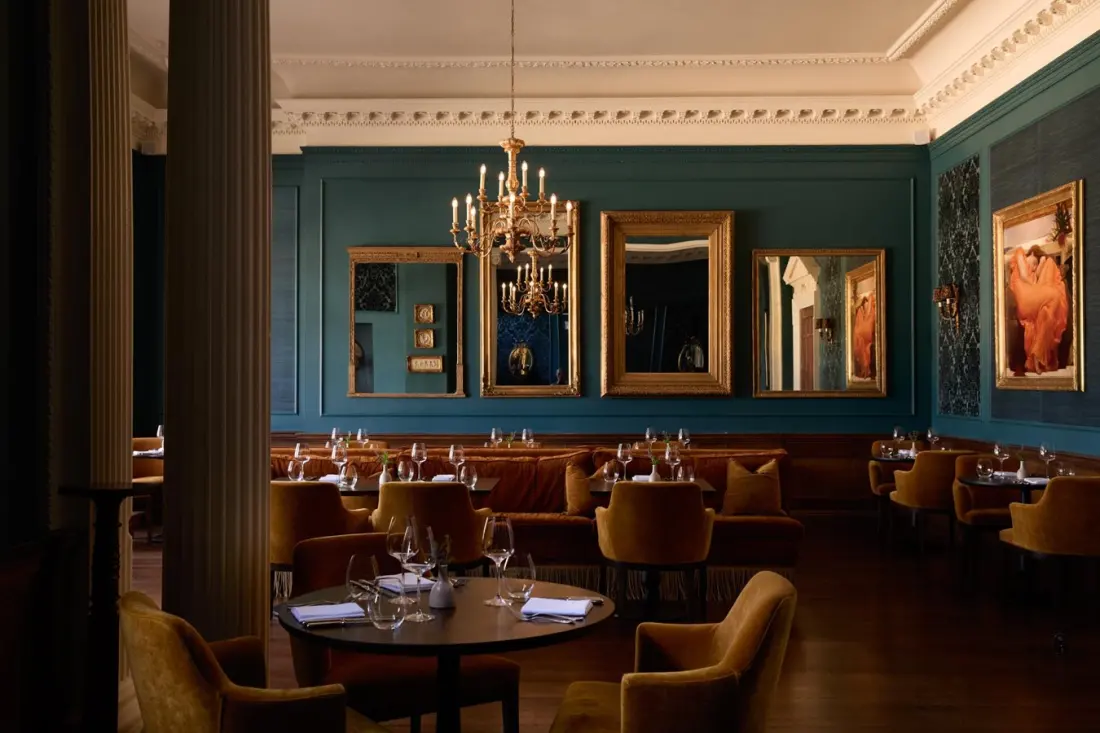
Cedar 1905 is the dining centrepiece and the only room to go full Neoclassical, with Roman columns, plaster cornices, gilded mirrors, glass chandeliers and a copy of Flaming June by Frederic Leighton. Elsewhere, the Drawing Room, Library Bar and Pheasant Lounge centre on original log-burning fireplaces, built for afternoon tea, evening cocktails and unhurried conversation.
Bedrooms split into two families: painted rooms in soft greens and blues or warm pinks and yellows, and papered rooms with bold floral and fruit wallpapers, tweed curtains and natural-fibre herringbone carpets — a quiet tribute to the Cotswolds wool trade. Hand-painted British game birds keep the countryside theme going.
For travellers, this is a proper heritage stay rather than a generic country-house spa conversion: a place to sleep surrounded by genuine archive history, arts-and-crafts detail and design that references the building's real past. It suits weekenders from London or Oxford wanting countryside walks plus a serious dining room, design enthusiasts chasing Morris prints at the source, and anyone planning a Cotswolds itinerary around villages like Broadway and Chipping Campden.