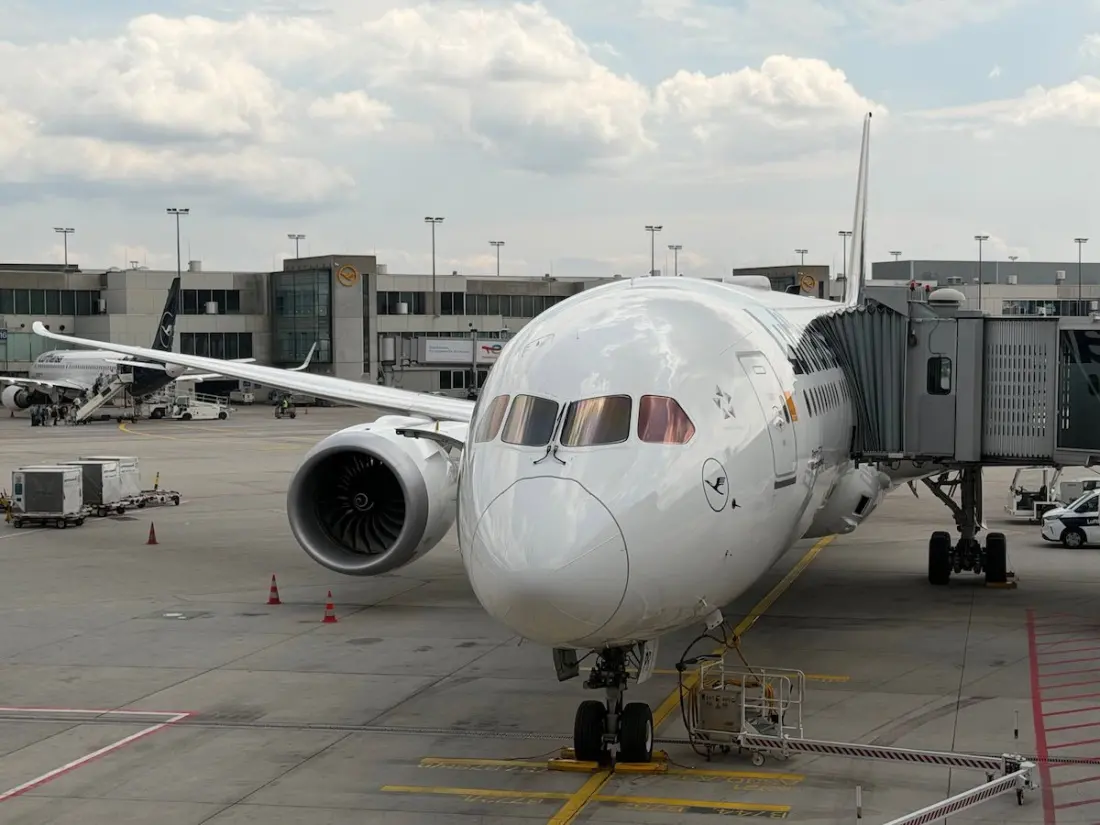
Columbus, Ohio is about to lose its awkward status as a major US city with no intercontinental flights. From May 5, 2027, Lufthansa will operate three weekly nonstops between Frankfurt and Columbus — the airport's first-ever long-haul service.
The route runs Wednesdays, Fridays and Sundays in both directions. The westbound leg leaves Frankfurt at 11:15am and lands in Columbus at 2:00pm; the return departs at 4:20pm and arrives in Germany early the next morning. Block times are roughly nine hours westbound and eight hours east over the 4,248-mile route. Lufthansa is assigning a 287-seat Boeing 787-9 with its new Allegris cabins: 28 business seats, 28 premium economy and 231 economy. Tickets go on sale October 20, 2026.
Until now, Columbus travellers wanting Europe have had to connect through a US gateway, and the airport's only international service amounts to Air Canada flights to Toronto and Montreal plus Cancun routes on American, Southwest and Viva, much of it seasonal. The Frankfurt link plugs Columbus straight into Lufthansa's global network, with one-stop access to dozens of cities beyond Germany. Lufthansa's Americas sales chief Dirk Janzen framed it as part of the group's expansion in the US, its biggest market outside its home countries.
Why Columbus, and why Lufthansa? The region hosts 38 German-based companies, which makes Frankfurt a logical first European destination. But the honest answer involves money — a lot of it. The route is underpinned by JobsOhio's Air Service Restoration program, created after a 2019 statewide listening tour found Ohio's air service had slipped versus competitor states. Since 2020, that program plus local partners has committed $46.9 million in revenue guarantees ($36.8 million from JobsOhio, $10.1 million locally), helping deliver 32 new routes and 15 expansions at five Ohio airports — over 590,000 new seats and an estimated $230 million in annual economic impact. The JobsOhio share is funded indirectly by taxpayers through state liquor sales.
Revenue guarantees mean the airline is compensated if the route underperforms, so Lufthansa's downside here is minimal. Spread across all those subsidised seats, the incentive works out to roughly $80 per passenger — generous by industry standards, though airport incentives for new routes are themselves routine. The real test, as observers have noted, is whether the Frankfurt flight survives once the guarantees expire and it has to stand on genuine demand.
For travellers, this is the news that matters: from next May, central Ohio gets one-stop access to virtually all of Europe without driving to Chicago or Detroit. Business travellers with German corporate ties benefit most immediately, but leisure flyers gain too — Frankfurt is a powerhouse hub for connections and Star Alliance redemptions, and the Allegris 787 is among Lufthansa's newest hardware. If you live in Columbus and have ever priced out the drive-and-connect alternative, this one's worth watching when bookings open.
Story via One Mile at a Time.