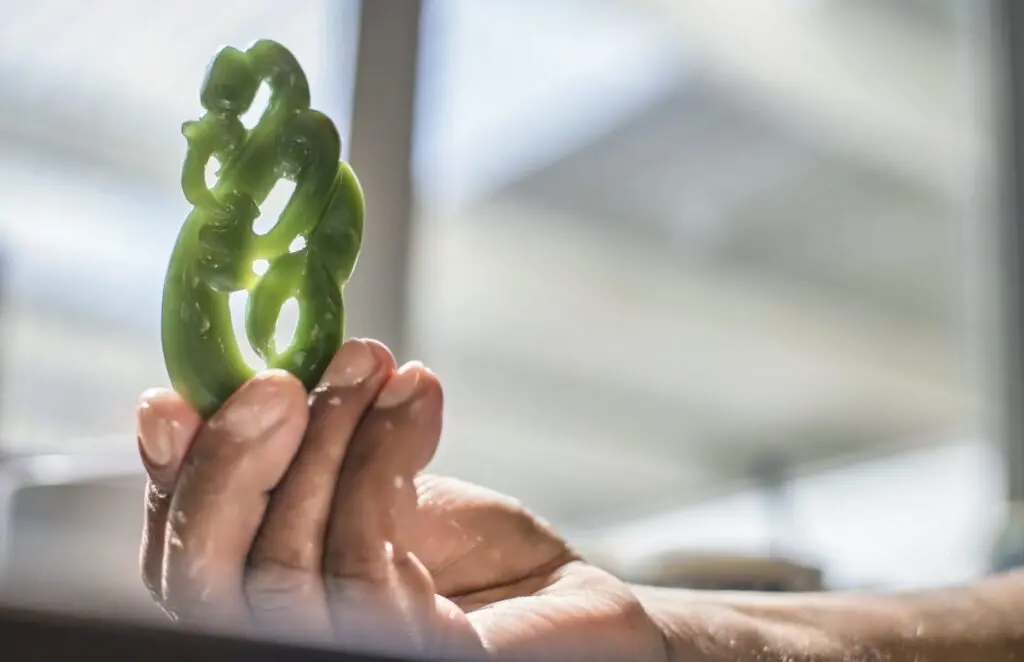
Robert Louis Stevenson loved Polynesia enough to leave Scotland for Samoa, and it's easy to see why once you start looking at the region the way its people do — through design, material and movement. A recent feature in Porthole Cruise and Travel Magazine makes the case that Polynesian culture reads like a language of geometry and flow, and two stops on any South Pacific cruise illustrate it beautifully: Rotorua in New Zealand and Fiji.
Start in Rotorua, home of the New Zealand Māori Arts and Crafts Institute (NZMACI). The institute runs three training schools for Māori artists drawn from iwi (tribes) across the country: Te Takapū for bone and stone, Te Rito for weaving, and Whakairo for wood carving. The work coming out of them isn't decorative in the throwaway sense — carved beams hold houses up, record ancestral history and shape ocean-going canoes from native timber. Even typography carries weight: the institute commissioned a custom typeface, Hae Whakarewa, designed by Stacy Gordine and rooted in te taiao, the natural environment.
Then there's pounamu, the semi-translucent blue-green stone found only on New Zealand's South Island — a region Māori call Te Wai Pounamu, literally 'the waters of greenstone'. Pounamu isn't just jewellery material. Each piece is believed to absorb the mana, or spiritual power, of its owner, growing stronger as it passes down generations. That's why old adzes and fishhooks are often recarved into ornaments rather than discarded. One classic motif is the manaia, a guardian spirit depicted with a human profile, a bird's head and a fish tail.
Shift west to Fiji and the story continues in performance. The traditional warrior dress you'll see at a meke — the Fijian men's warrior dance — isn't costume for show. Like its Māori cousin the haka (performed before matches by both countries' national teams), it descends from combat gear, engineered island-style for actual fighting. Watching a meke, you're seeing practical history kept alive through rhythm and movement.
For cruise travellers, this is the payoff of a South Pacific itinerary: the region isn't just beaches and lagoons, it's a living design culture you can watch being made. Rotorua's institute lets you see artists training in centuries-old disciplines, and Fijian village performances turn dance into a history lesson. Even if you board the ship knowing nothing about Māori carving or Fijian meke, you'll come home able to read a manaia, spot pounamu, and understand why a haka still stops a stadium.
Story via Porthole Cruise and Travel Magazine.