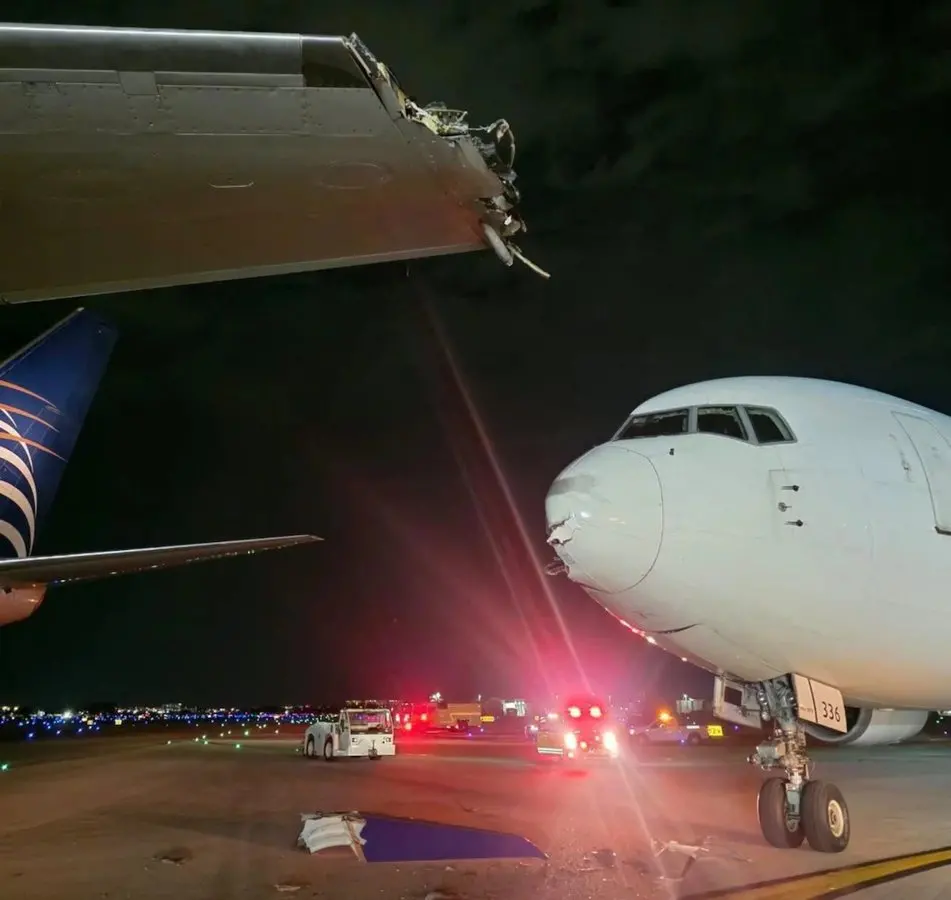
Miami International Airport had a rough couple of weeks on the ground. On Saturday, November 14, 2026, shortly after 9PM, a Copa Airlines Boeing 737-800 arriving from Panama City (flight CM427) was clipped by a UPS Boeing 767-300 that was taxiing out for a departure to Bogota (flight 5X358). Air traffic control had told the UPS crew to give way to the Copa jet. They didn't, and the 737's wing struck the 767's nose.
The radio exchanges make the sequence fairly clear. The Copa pilot reported "somebody hit us," and the controller confirmed the UPS aircraft had been instructed to hold. The UPS crew explained they were "running checklist, runway change" — in other words, working through procedures after a last-minute runway switch — and admitted they "went too far." Two passengers on the Copa flight reported minor back pain, but there were no serious injuries. The aircraft weren't so lucky: the Copa 737 lost a chunk of its left wing and the UPS 767 took significant damage to its nose, which will likely keep both out of service for a while.
What makes the incident more notable is the context. Just nine days earlier, on November 5, a Lufthansa Boeing 747-8 departing to Frankfurt had to brake hard at taxi speed after an American Airlines 787 arriving from Philadelphia turned across its path despite being told to give way. The Lufthansa captain radioed that it was "very close to an accident in the making" and said he'd file a report, adding dryly that the airport needs to "make sure stuff like that doesn't happen too often." Two serious taxiway lapses at the same airport within ten days is the kind of pattern investigators — and airlines — will be watching closely.
The runway-change distraction cited by the UPS crew is a reminder of how busy the ground phase of a flight can get. Modern cockpits are highly automated in the air, but taxiing remains a manual, head-down task, and a checklist plus an unfamiliar routing is exactly when mistakes happen. Runway incursions and taxiway collisions have been a focus of aviation safety scrutiny in the US over recent years, and this event will only add to that conversation.
For travellers, there's nothing here that should change your plans — no one was seriously hurt, and incidents like this are rare given how many aircraft movements happen daily at a hub like Miami. But if you're connecting through MIA, expect the usual knock-on effects after any ground collision: delayed inbound and outbound rotations, possible aircraft swaps, and the odd rebooking as Copa and UPS work around the lost planes. The bigger takeaway is simply that ground safety at busy US airports is under the microscope, and the next few months of investigation and procedural tweaks are worth following if you fly the Latin America or Caribbean routes out of Miami regularly.