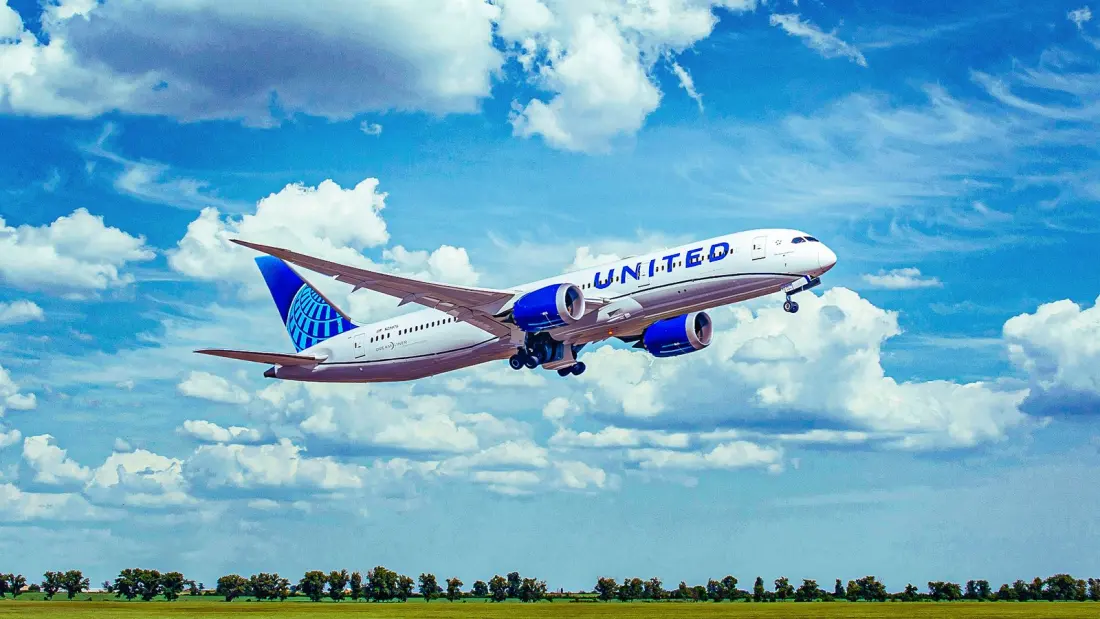
Booking a domestic hop in the US and finding a widebody Dreamliner on the schedule? That's no routing accident. United Airlines regularly puts its Boeing 787-9s — aircraft built for crossing oceans — onto trunk routes between its big hubs, and the logic behind it is actually pretty interesting for passengers.
The main reason is simple economics: a widebody can't sit idle. When a 787-9 lands at San Francisco from an overnight flight from Asia or Europe, its next transoceanic departure might not be until late evening. Rather than park a multi-million-dollar plane on the tarmac, United slots it onto high-demand domestic legs such as San Francisco–Houston or San Francisco–Newark. The flight earns revenue, covers fuel and crew costs, and conveniently positions the aircraft exactly where it needs to be for its next international bank — no empty ferry flights required.
There's a second, passenger-facing benefit: new aircraft get their shakedown runs on domestic routes. When United introduced its latest 787-9s with the premium-heavy 'Elevated' cabin and updated Polaris business class suites, the first revenue flights were domestic. That gives pilots and cabin crews time to learn new galleys, seat controls and entertainment systems on shorter hops, close to major maintenance bases — so by the time the jet flies to London Heathrow or deep into Asia, the product is polished. Travellers on those early domestic rotations effectively get a long-haul lie-flat suite on a two-hour flight, often at standard domestic fares.
Money is the third driver. Routes like San Francisco–Newark carry heavy corporate traffic, and dozens of business-class suites plus premium economy seats on a single departure can pull in yields a narrowbody simply can't match. Add the 787-9's huge belly-cargo capacity — ideal for express freight feeding international connections — and a domestic widebody rotation becomes genuinely profitable.
Finally, there's the slot problem. At congested hubs, adding another daily flight isn't always possible thanks to gate limits and hourly caps. Swapping a single-aisle jet for a 787-9 adds well over 100 seats per departure without consuming an extra takeoff or landing slot. These deployments are fluid too: during shoulder seasons when transatlantic and transpacific demand dips, widebodies drift onto domestic routes to keep earning.
What does this mean for you? If you're flying United between major US hubs — especially transcontinental or SFO–IAH routes — check the equipment before booking. Snagging a 787-9 means lie-flat business seats, a quieter cabin, bigger entertainment screens and extra legroom options on what would normally be an ordinary narrowbody flight. It's one of the easiest premium upgrades in US domestic travel, and you didn't even have to pay for it.