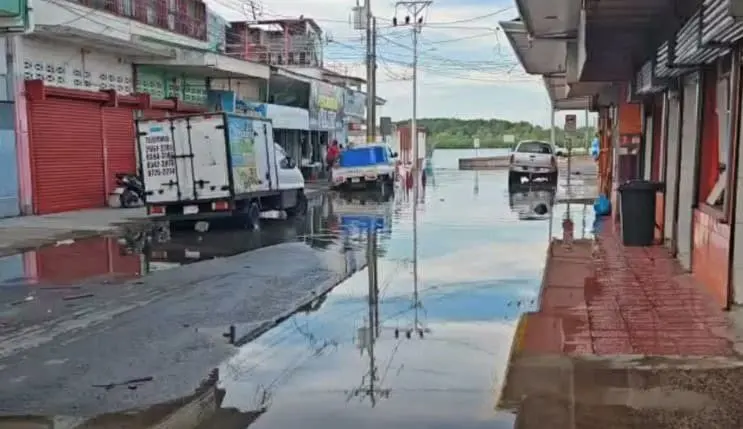
Puntarenas, the port city on Costa Rica's central Pacific coast, spent Thursday 29 October dealing with seawater in the streets and in people's homes. The National Emergency Commission (CNE) reported flooding in Barrio El Carmen and in the 20 de Noviembre community in Chacarita, with photos from the area showing patios and corridors underwater and furniture sitting in floodwater. No official count of damaged homes or financial losses had been released at the time of reporting.
This wasn't a one-off. Residents of El Carmen told local media they'd been moving appliances off the floor and staying up at night to watch the water come in after repeated high tides earlier in the week. The problem also stretched well beyond Puntarenas: flooding was reported at Playa Zancudo in Golfito and Playa Preciosa near Puerto Jiménez on the southern Pacific coast. The Puntarenas Municipal Emergency Committee has been visiting affected neighbourhoods to assess damage and coordinate help.
So what's going on? Two things stacking up. First, spring tides — the naturally higher tides that occur around new and full moons when the Sun's and Moon's gravity line up. Nothing to do with the season, and they happen every year. Second, El Niño. Rodney Mora, coordinator of the University of Costa Rica's oceanographic monitoring unit MIO-Cimar, explained that warmer Pacific water expands, pushing sea levels higher and letting these tides reach further into low-lying neighbourhoods. El Niño doesn't cause spring tides, but the combination raises the flooding risk significantly.
MIO-Cimar warned that unusually high tides could persist through Saturday 31 October, and the CNE urged residents of flood-prone coastal communities to keep an eye on conditions and protect their belongings. Mora also flagged that similar episodes could return in November and December, so this may not be the last round.
If you're travelling to Costa Rica's Pacific coast in the coming weeks, this is worth factoring in. The main tourist hubs — Manuel Antonio, Tamarindo, the Nicoya Peninsula beaches — sit on higher ground and haven't been part of these reports, but low-lying coastal communities in Puntarenas province and the southern zone around Golfito and Puerto Jiménez can see water on streets at peak tide. If your itinerary includes homestays or small guesthouses in those areas, it's sensible to ask hosts about tidal flooding, keep valuables off the floor and check local advisories, especially over new and full moon dates in November and December. Coastal walks, beachfront restaurants and boat trips around peak high tide may be briefly disrupted rather than cancelled outright — this is nuisance flooding more than danger for visitors, but it's the kind of thing that can soak a planned evening on the malecón.
For locals, it's a more serious picture: repeated saltwater intrusion damages homes and belongings in communities that flood often, which is why the CNE is taking it seriously. Travellers passing through should expect some disruption, pack a bit of patience, and maybe enjoy the spectacle of an extremely full sea — from dry ground.