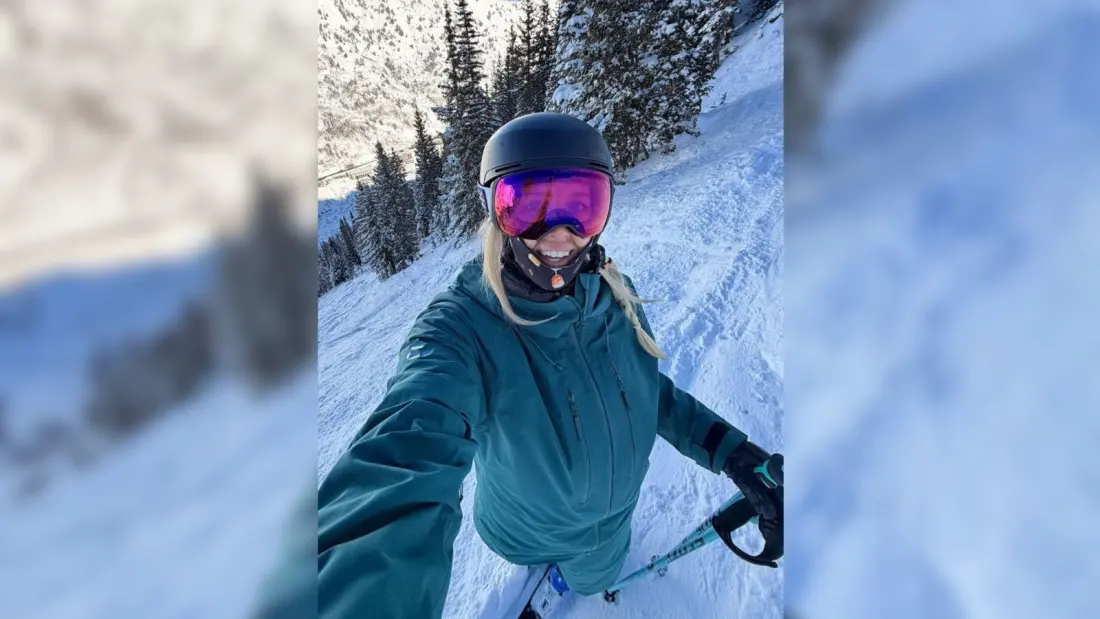
A ski writer's brand-new helmet absorbed one hard hit last February and is now headed for the bin — and her story is a useful lesson for anyone about to click 'buy' on winter gear. During a ski test on variable snow, she caught an edge and landed directly on her head. The next day came the tell-tale signs; days later, a doctor confirmed a concussion and a neck injury, followed by months of headaches, light sensitivity and unpredictable flare-ups. Her helmet, meanwhile, showed no visible damage. She's still throwing it away.
That's because most ski helmets rely on a layer of expanded polystyrene (EPS) foam that absorbs impact energy by permanently compressing. Once it has taken a serious hit, that foam can't do the job again — and the deformation is often hidden by the outer shell and undetectable from inside. As Madelen Fahlstedt, a biomechanical specialist at helmet-safety firm MIPS, puts it: a helmet is essentially a one-hit-wonder. If it has cushioned a significant impact, replace it, even when it looks perfect.
Fahlstedt also explains why helmet design has evolved beyond simple shock absorption. Traditional helmets target linear forces — the abrupt stop when your head strikes something. But angled crashes add rotational motion, which stresses the brain differently because of its gel-like shear properties. MIPS addresses this with a low-friction layer inside the helmet that shifts roughly 10 to 15 millimetres during angled impacts to reduce the rotation transferred to your head. No technology eliminates concussion risk — the CDC is explicit that no helmet is concussion-proof — but the protection is real: a 2022 American Academy of Pediatrics review found helmeted skiers and snowboarders have about 34 percent lower odds of head injury.
The practical takeaways: replace your helmet after any significant head impact, not just when you spot a crack; inspect it regularly for dents, compressed foam or damaged parts; check the maker's guidance — some brands offer crash-replacement discounts; and swap it out every three to five years, as protective materials degrade with age. When buying new, fit comes first, and the helmet should meet a recognised standard such as ASTM F2040 (US) or EN 1077 (Europe). For comparing models, Fahlstedt recommends Virginia Tech's Snow Sport Helmet Ratings, which score 56 helmets from one to five stars based on lab tests of both linear and rotational motion.
One more thing worth remembering: concussion symptoms can take hours or even days to appear, so how you feel straight after a crash isn't a reliable gauge. If you suspect one, stop skiing and get checked.
For winter-sports travellers, this is gear advice that actually matters — a helmet that has already saved your head once has done its job, and sending it to the bin is part of the cost of that save. Credit: Ski Magazine.