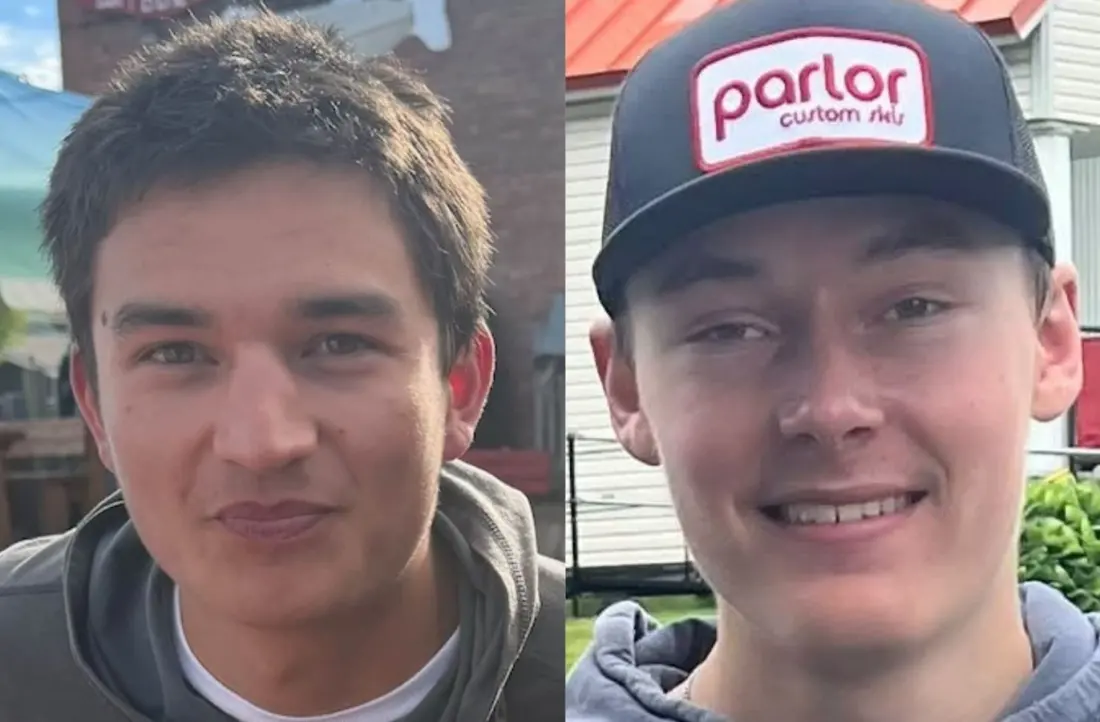
Chaffee County authorities have closed the loop on a mystery that gripped Colorado's climbing community for a week in late October. Kaden Matsuda, 19, and Jackson Donlon, 20 — both students at Colorado Mountain College's Leadville campus — set out to climb West Apostle Mountain, a 13,597-foot peak in the Sawatch Range, on October 23. They never came back. Their bodies were found on October 28 in a snow-filled basin below the mountain, after a search involving several agencies that had to push through up to two feet of fresh snow from an early-season storm.
The joint report from the Sheriff's and Coroner's Offices, released November 3, points to a single cause: a catastrophic anchor failure during the descent. Donlon was rappelling off a rope fixed to a rock anchor while Matsuda was clipped into the same system via his personal anchor device. The setup wasn't sloppy, either — investigators found it appeared to include two backups, among them a piton driven into the rock. Both men died instantly from blunt force injuries, and officials have not yet determined why the anchor gave way or how far they fell.
What the report does rule out is the weather. The storm that buried the range during the search was not a contributing factor in the deaths — a notable finding given how quickly assumptions spread when climbers go missing in bad conditions.
Perhaps the most sobering detail is what Sheriff Andy Rohrich told the public: his staff found no obvious mistakes to point to. He described the two young climbers as an example of what preparation looks like, noting that in most similar investigations there are easy errors to identify. Here there weren't.
For anyone who climbs, skis or hikes in the backcountry, that's the uncomfortable takeaway. Redundant anchors — the kind these two students were using — are taught as the gold standard of roped descent, and even a system with apparent backups can fail for reasons that may never be fully explained. It's a reminder that mountain terrain carries risk that gear checklists can't entirely erase, and that winter ascents of Colorado's high peaks demand humility even from experienced, well-equipped parties.
This story is a tragedy first, but it's worth reading for anyone planning shoulder-season trips into the Sawatch or elsewhere in the Colorado high country: conditions can turn fast in October, rescue operations can take days in deep snow, and honest self-assessment belongs on every route plan alongside the gear.