For every 1,000 people who actually live in Croatia, tourists rack up 24,465 nights in local beds each year. That's the highest ratio in Europe, and it puts the country at the top of a Eurostat-based ranking it has been climbing for a decade.
The figures compare overnight stays in tourist accommodation with resident population, so small countries punching above their size tend to dominate. Croatia now leads comfortably: Malta sits second on 20,091 overnight stays per 1,000 inhabitants, and Cyprus third on 18,533. Croatia overtook both back in 2016 and has stretched the gap since — its 2025 figure is roughly 1.22 times Malta's.
The rest of the top ten is a roll call of Europe's holiday heavyweights, though none come close on intensity. Greece records 14,741 overnight stays per 1,000 residents, Austria 14,619, Spain 10,390 and Italy 9,084. Slovenia (8,366), Montenegro (8,339) and Portugal (8,319) cluster just below, with the Netherlands (8,102) and Ireland (7,788) rounding out the list.
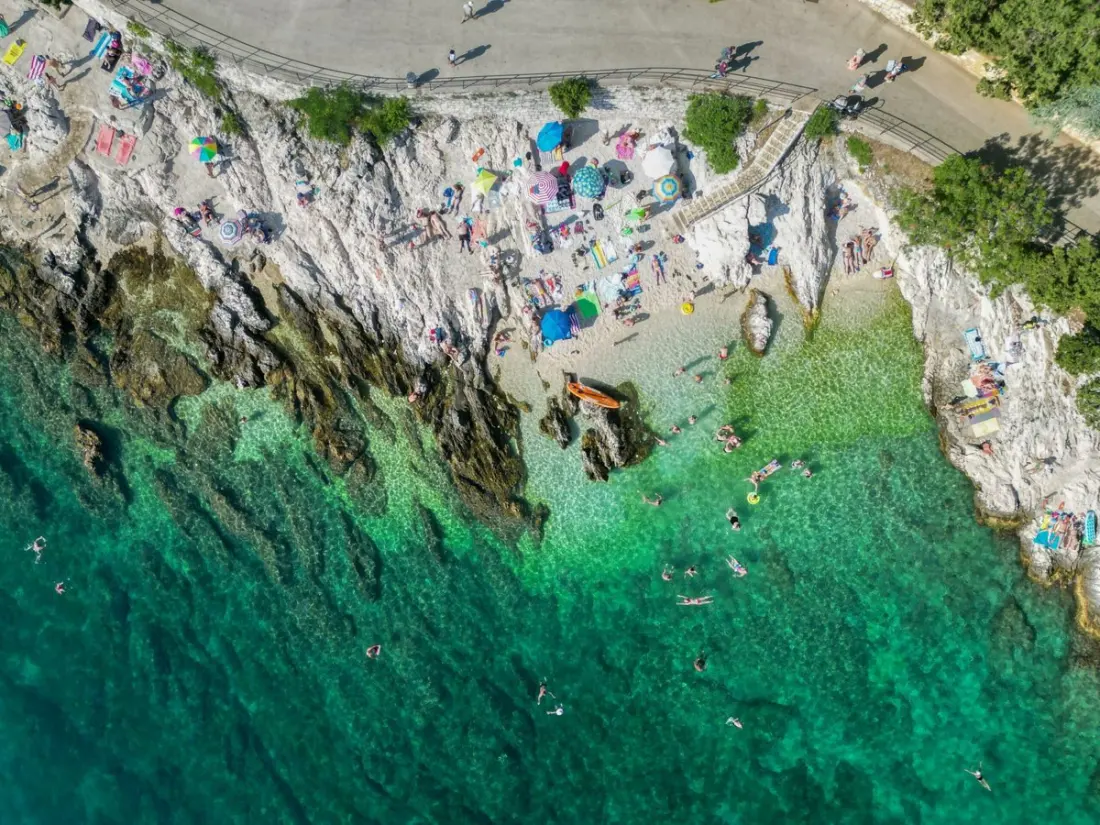
Croatia's rise has been driven by the boom in Adriatic coastal holidays, better air and road links to the big European source markets, and a healthy dose of screen fame — the Dubrovnik locations used in Game of Thrones did plenty to put the country on the map for travellers who might not otherwise have considered it.
What does this mean in practice? In summer, coastal towns see their populations multiply many times over. Dubrovnik, Split, Hvar and the smaller Dalmatian islands can feel transformed between June and September, which is exactly the point: the same streets that are calm in October are packed in August. For travellers, that cuts two ways. High season delivers the buzz, the beach weather and the full calendar of events, but also crowds, higher prices and the need to book accommodation well ahead. Shoulder months like May, June and late September offer a fair compromise — the sea is warm, the weather is usually kind, and the towns breathe again.
It also hints at where there's still room to explore. With visitor numbers so concentrated on the coast and in a handful of star attractions, inland regions like Istria's hilltowns, Plitvice and Krka beyond the peak hours, and the continental heartland around Zagreb offer the same country with a fraction of the pressure.
Who should care about this ranking? Anyone planning a Croatian holiday who wants to time it smartly. The numbers confirm what regulars already know: this is one of Europe's most visited countries relative to its size, so a little planning — booking early, travelling in shoulder season, or looking beyond the obvious hotspots — goes a long way.
Story based on reporting by Total Croatia.