
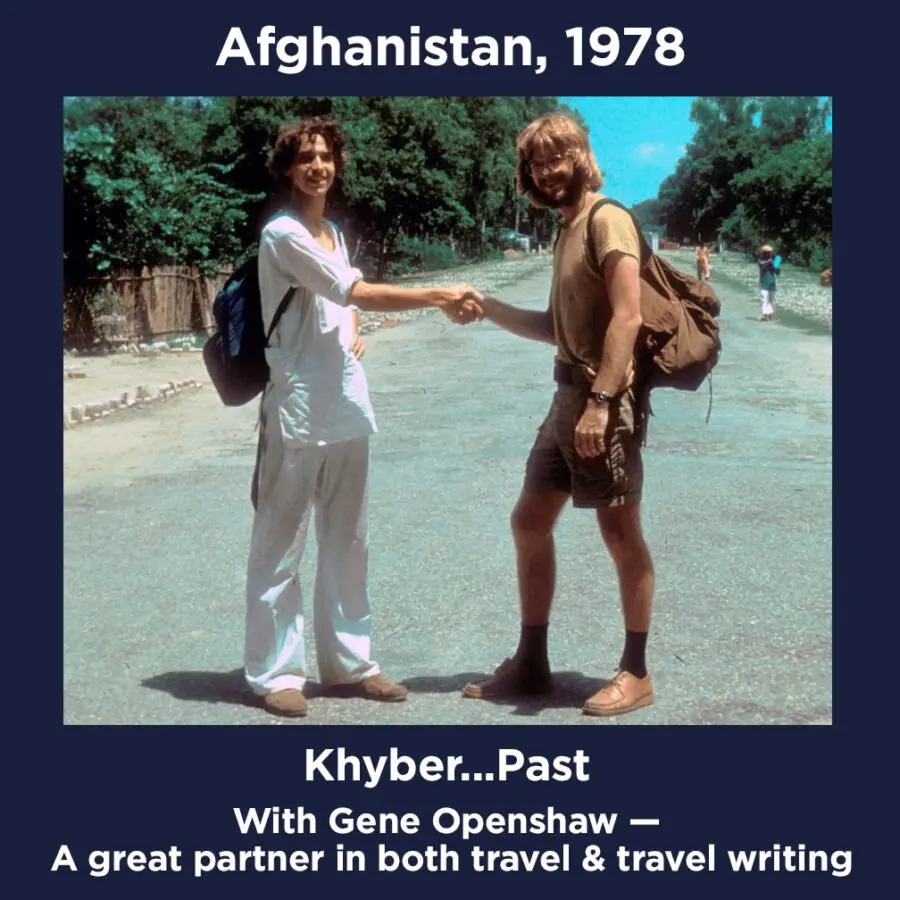
Before Afghanistan became a country most of us know only from news bulletins, it was a stretch of the famous 'Hippie Trail' — the overland route young travellers followed from Istanbul to Kathmandu in the 1970s. Travel writer Rick Steves has been publishing his 1978 journal from that route, and the final entry describes a day he'd ticked off a lifetime bucket list: a bus ride from Kabul over the Khyber Pass into Pakistan.
On the morning of 4 August 1978, Steves and his friend Gene tucked into a big breakfast at Kabul's Sina Hotel and boarded an 8:30 local bus to Pakistan. The vehicle was exactly what you'd picture — garishly painted, crowded with Pakistani locals and other 'Road to India' backpackers, and blessed with windows wide enough to lean half your body out of.
The road out of Kabul turned out to be the greenest stretch of Afghanistan they'd seen, with a mountain pass, a lake, and a rushed lunch stop in Jalalabad. At the Afghan border post the routine was calm enough — passports stamped, bags searched, a shared melon while they waited. Pakistan's side was another story: a chaotic scrum of forms, hawkers, black-market money changers openly selling rupees, hash sellers at the windows, and one persistent man offering cocaine at $30 for four grams. The two travellers simply skipped the baggage check and got back on the bus.
Then came the pass itself. Steves had dreamed about the Khyber for years — it ranked in his top five life goals — and his verdict was honest: physically it's just a rocky mountain road, but the weight of history makes it feel extraordinary. Fortresses perched on hills, wind-torn flags fluttering over dry graveyards, armed tribesmen trading stories in villages, and a toll paid for the privilege of crossing through tribal territory.
By evening they were in Peshawar, buying a first-class train ticket to Lahore for the princely sum of $3.50 — first class here just meant padded seats and cost $1.50 more than second. They rode as far as Rawalpindi, broke the journey overnight in a $1 hotel room (complete with unannounced lizards), and planned to catch the 5:15 train to Lahore at dawn. Bugs, hot muggy air and a dim, speed-dependent train light all featured.
Why does this read so vividly now? Written months before the Soviet invasion and published again after the 2021 Taliban takeover, it captures an Afghanistan and a border crossing that no traveller can experience today. The Khyber Pass is effectively closed to foreign tourists, and the free-and-easy overland trail from Europe to South Asia is long gone. Steves' own reflection is that Afghanistan is a poor but formidable country that outside powers keep underestimating — a view formed, in his case, from a bus window at 23 years old.
For anyone curious about how overland travel used to feel — cheap, slow, slightly lawless and utterly absorbing — this journal is a small time capsule of a vanished route.
Rick Steves