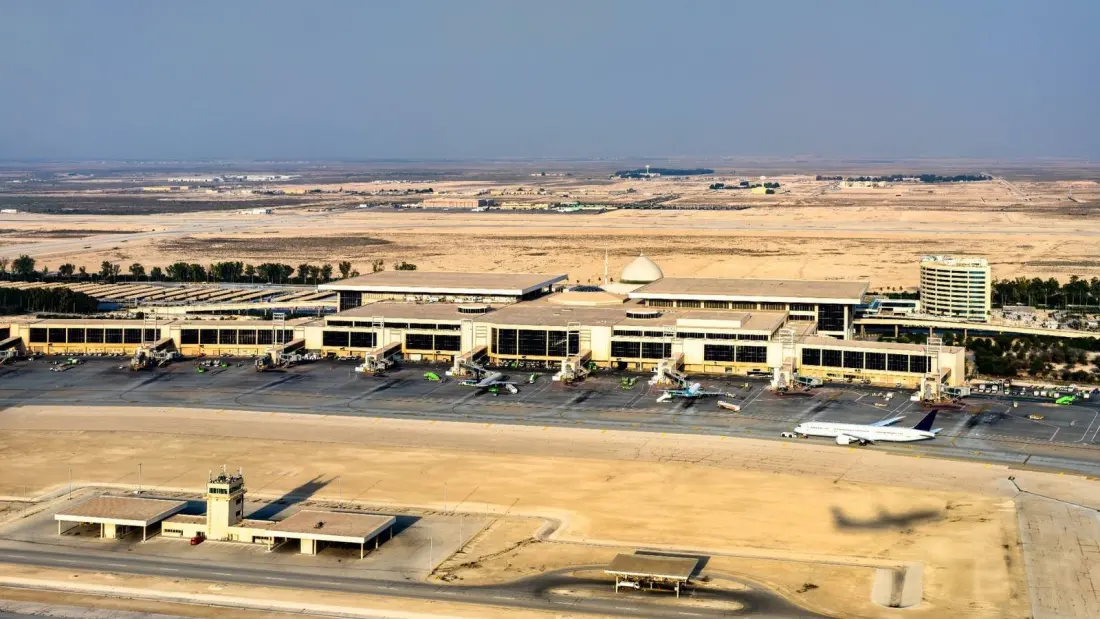
Saudi Arabia's second and third-largest airports have been hit in back-to-back attacks, throwing flight schedules across the kingdom into disarray. On Sunday, October 11, a projectile struck the tarmac at King Fahd International Airport in Dammam around 8:30 p.m. local time, igniting a fire near parked aircraft. An eyewitness said their plane returned to its gate and passengers were ordered to leave the terminal. Saudi Arabia's civil aviation authority confirmed the incident and began damage assessments, while flight-tracking data showed waves of delays and cancellations that evening.
The Yemeni Houthi movement claimed responsibility for the Dammam strike, alongside attacks on Saudi Aramco facilities in the oil-rich Eastern Province. Authorities also reported intercepting a drone in the region, though it's unclear whether that was the same projectile that hit the airport.
The Dammam incident came just a day after a far deadlier strike on Riyadh's King Khalid International Airport on Saturday, October 10. Thirteen people were killed — including an Indian citizen confirmed by India's embassy — and more than 300 injured, making it one of the deadliest attacks on Saudi Arabia in recent years. It was the third attack on the Riyadh facility within a week; earlier strikes killed four people and destroyed a parked Saudia Airbus A320. The airport stayed closed into Sunday as investigators worked through the aftermath.
The disruption has rippled well beyond the two cities. Flights bound for Riyadh were diverted, and the closure derailed travel plans for high-profile visitors, including German Economy Minister Katherina Reiche, whose return to Berlin was left in doubt. A major international energy conference went ahead in the capital despite the chaos.
The Houthis have shown they can deploy a mix of ballistic missiles, cruise missiles and drones, a combination that analysts note is difficult even for advanced air defence systems to fully neutralise. Saudi Arabia has escalated its military campaign in Yemen, and the Houthis have threatened further retaliation — so the risk to aviation infrastructure could persist. For anyone with flights booked through Riyadh or Dammam, or connecting through the kingdom, the practical advice is to monitor airline updates closely, expect diversions and cancellations, and check your government's travel advisories before flying. Dammam matters more than its profile suggests: it serves the Eastern Province's energy industry and handles significant domestic and international traffic, so a prolonged closure would squeeze schedules across the region.
Credit: Simple Flying