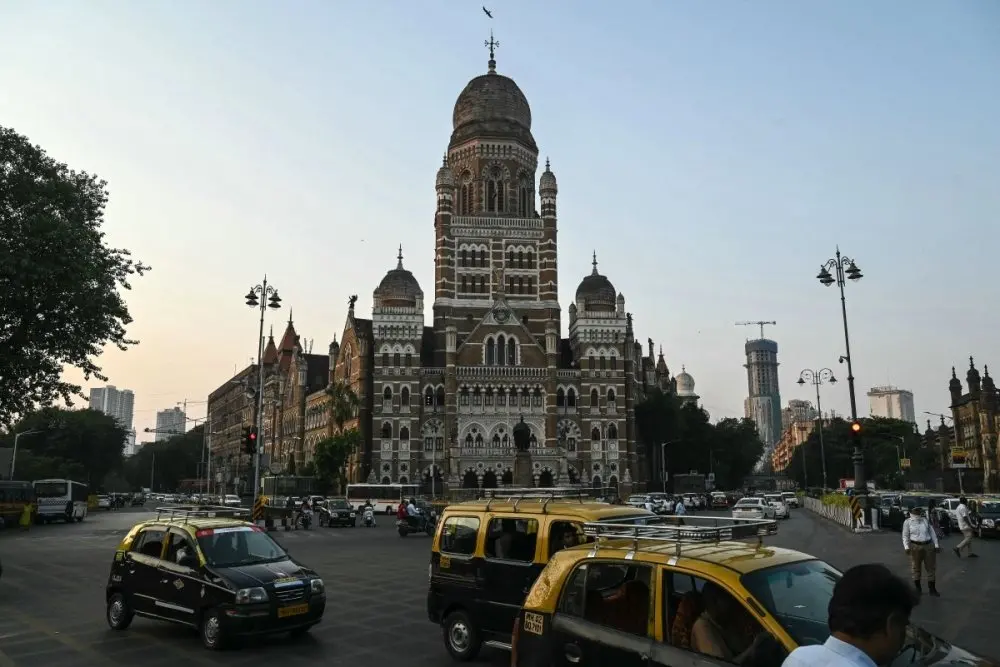
Mumbai's most famous skyline — Victorian Gothic facades, Art Deco apartment blocks, the Gateway of India facing out over the Arabian Sea — survives thanks in large part to conservation architect Abha Narain Lambah, who has spent three decades rescuing buildings that India's laws often leave unprotected.
Lambah started out as an activist frustrated by the decay of historic sites. After moving to Mumbai in 1995, she found a city where hundreds of historic buildings fell outside national monument status — colonial-era structures were technically "too young" for central government listing. Heritage regulations exist only in a handful of cities, including Delhi, Mumbai, Hyderabad and Kolkata, and most historic buildings get no state funding at all.
Her fix has been to rally private donors, foundations and local communities. When restoration of the 19th-century David Sassoon Library and the blue-and-white Keneseth Eliyahoo Synagogue stalled for lack of money, she brought those groups together to finish the job. At Bandra railway station, restoration proceeded around live trains and daily commuters — many of whom, she recalls, stopped to tell her the work was for them. The Royal Opera House, once slated for demolition, has been restored with its gilt interiors intact and now hosts regular performances.
Her portfolio reaches well beyond Mumbai: a 15th-century Hindu temple at Hampi, Le Corbusier's modernist landmarks in Chandigarh, Rajasthan's Amer Fort, and Bodh Gaya, the site where Buddha is said to have attained enlightenment. She has advised on conservation plans for more than 20 world heritage sites.
One question comes up often: why preserve buildings from British rule at all? Lambah's answer is blunt — the landmarks were built from Indian stone and Indian labour, and they sit within 6,000 years of continuous built heritage that cannot be cherry-picked. The Gateway of India, though a product of colonial rule, draws on Indian architectural traditions and has been fully embraced since independence.
There's progress to report: when Lambah began in Mumbai, only two qualified conservation architects worked in the city. Now a generation of young architects is entering the field. But with India urbanising faster than almost anywhere else, she calls the task ahead long and arduous.
For travellers, this matters more than it might seem. Mumbai's historic core is a walkable open-air museum — Victorian Gothic courthouses beside Art Deco cinemas, a restored opera house staging shows, and a waterfront arch that anchors the city's identity. Many of these buildings are alive precisely because people fought to keep them that way. Visiting the Sassoon Library or catching a performance at the Opera House doesn't just fill an itinerary; it supports the model of community-funded conservation that Lambah pioneered. Next time you're in Mumbai, look past the Gateway crowds and into the side streets — the city's story is written across buildings that very nearly didn't make it.
Malay Mail Life (via AFP)