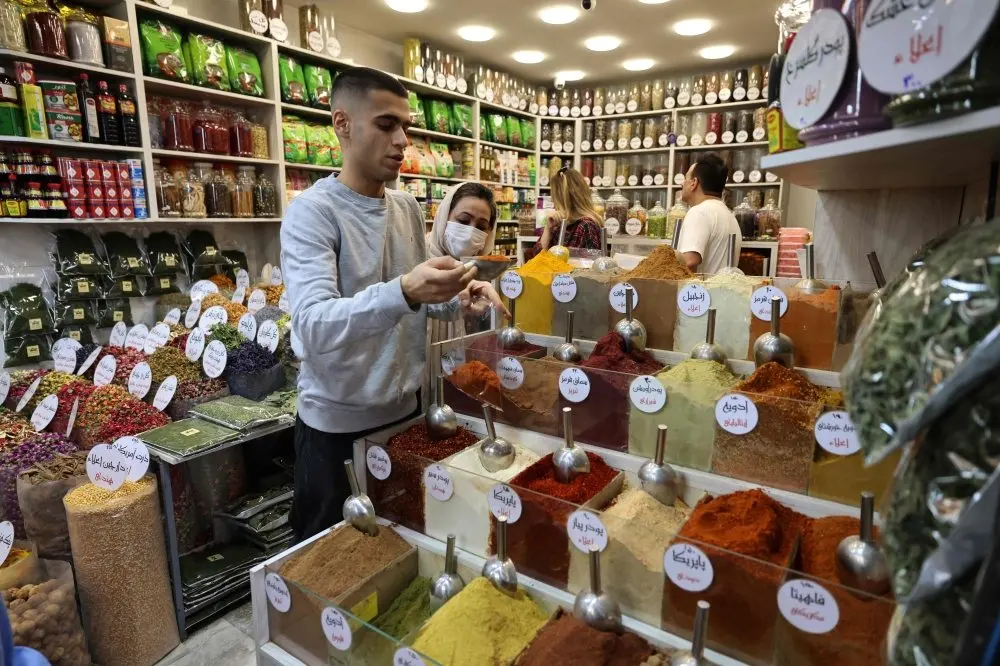
The covered bazaar at Tajrish square in northern Tehran is one of the city's great sensory stops — pyramids of nuts and dried fruit, saffron and spice stalls, jewellery shops and racks of traditional garments under Persian signage. These days, though, the narrow lanes are quiet. Shopkeepers who once sold nuts by the kilo to browsing families say customers now buy half a kilo at most, and many visitors leave without buying anything at all.
The reason is an economy in freefall. Iran has endured years of sanctions, but the conflict that began in February — sparked by US-Israeli attacks and an American blockade of Iranian ports — has pushed daily life beyond what most households can bear. Official figures put inflation at nearly 90 per cent year-on-year in September, and food prices have more than doubled in a year. The rial slid from about 1.7 million to the dollar on the unofficial market before the war to roughly 2.7 million in recent days, and the minimum monthly wage has halved in dollar terms, from around US$120 to US$65.
The human arithmetic is stark. One shopper recalls buying a kitchen cloth months ago for about 22 cents; the same item now costs US$1.10. A sportswear retailer keeps his shelves almost bare because his warehouse is empty and demand has collapsed, with rising rent and utilities finishing the job. A car mechanic says his customer numbers have dropped to a tenth of what they were — people walk in, ask the price, and walk out. Iran's GDP shrank 10.1 per cent year-on-year between late March and late June, while the economy minister rejects talk of imminent collapse, blaming enemies of the state for stoking anxiety and currency speculation.
Beyond the numbers, the story is about what disappears from ordinary life. Iranians at the bazaar describe cutting out clothes, meals out and holidays entirely. A 45-year-old woman out of work says she visits just to look at the shops. "We aren't meant to just exist, we're meant to actually live," she told AFP.
For travellers, this is the context behind any trip to Iran right now. The country's historic sites, hospitality and bazaars remain, but practical realities have shifted hard: card payments from abroad don't work, so visitors carry cash, and the collapsing rial can actually make Iran strikingly cheap for those holding dollars or euros — even as local businesses, squeezed between bankrupt suppliers and absent customers, struggle to survive. Anyone planning a visit should watch exchange-rate movements closely, expect prices quoted to change between the quote and the sale, and be aware that the security situation and port access remain affected by the conflict.
Stories like this one matter because they show the human side of a destination in crisis — the sellers, mechanics and shoppers behind the headlines — and a reminder that the best travel writing always listens to the people who actually live there.