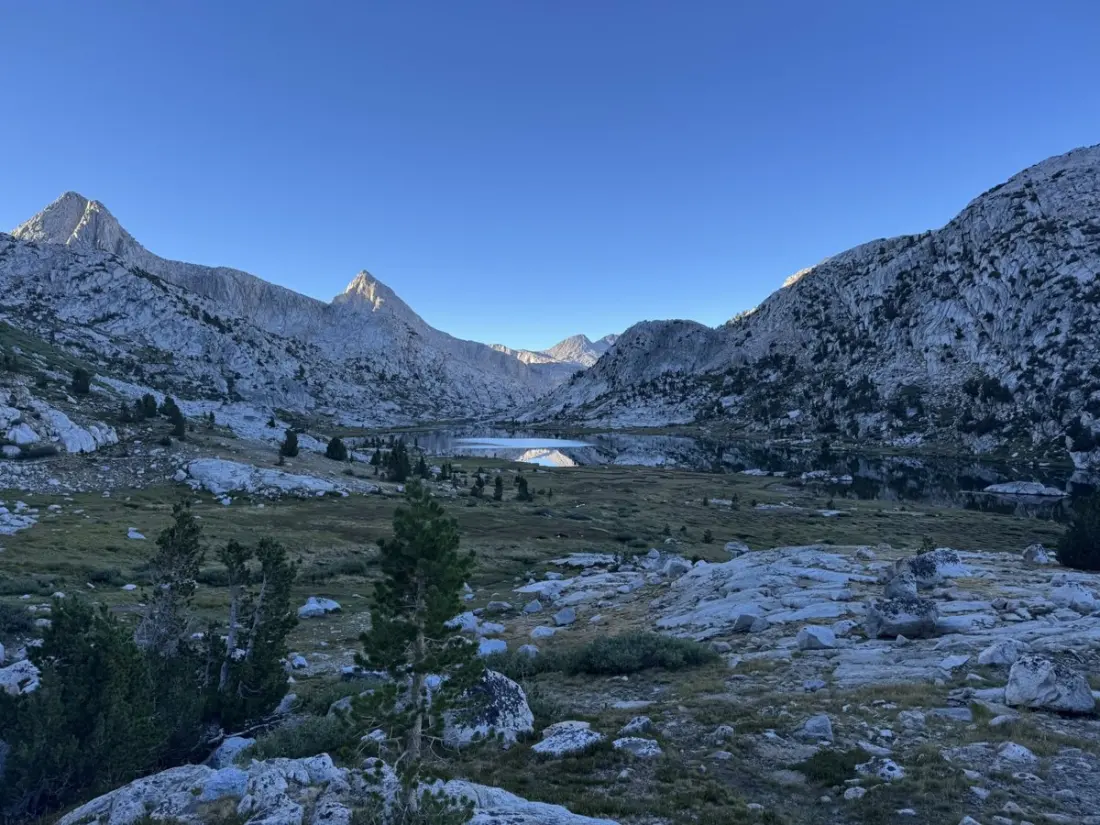
Waking at 5:30am on the edge of McClure Meadow might sound brutal, but on the John Muir Trail it's the price of admission to one of the Sierra Nevada's best morning shows. Two thru-hikers, writing in their day 11 trail diary, pushed out of camp by 6am and timed their arrival at the Evolution Lakes for sunrise — where the still water mirrors the surrounding peaks in a way that makes the early alarm worth every yawn.
The day's big objective was Muir Hut, the stone shelter sitting below Muir Pass at roughly 11,900 feet. The approach is a long, steady climb through Evolution Valley and past the lakes, and the reward is a rare bit of roof in the high country: the hikers ducked inside to eat oatmeal and swap notes with other trekkers before heading back down. Anyone who has descended the pass with lingering snow will appreciate the writer's aside that their June descent had strayed wildly off the actual trail line.
The descent delivered one of those trail surprises that make thru-hiking diaries fun to read. The pair crossed paths with Eric Hallsten, who was attempting to run the entire 211-mile John Muir Trail in just three days as a fastest known time (FKT) attempt — unassisted, meaning even accepting a snack would have disqualified him. He didn't finish in time, though he came through it fine, and the writers were struck by how generous he was with his time mid-challenge. (He also became, briefly, the subject of a centaur-related debate that is best left to the trail.)
Camp that night came at an unmarked horse camp complete with a bear box, reached only after a descent that ran longer than expected. It also settled a running wager: with a minor slip onto some gravel, one hiker earned the honour of buying dinner in Lone Pine for their fall-free companion, who finished the day with zero falls.
Why should a regular traveller care? Because this stretch of the JMT — Kings Canyon National Park's Evolution Basin and Muir Pass — is arguably the trail's scenic peak, and you don't need 211 miles to see it. Hikers short on time can sample Evolution Valley via a shorter in-and-out from the Sabrina Basin trailhead near Bishop, or link into the JMT at various Sierra passes with a permit. Even day hikers and section hikers can visit Muir Hut, and the trail towns at either end — Lone Pine to the south, Bishop and Mammoth to the east — make solid bases with real food waiting when you come off the mountain.
The practical notes from this leg: an early start earns you the best light on the lakes, snow can linger well into the season and blur the trail on descents, and bear-proof food storage is part of the deal in the backcountry. The falls bet is optional, but a celebratory dinner in Lone Pine at the end of the trail sounds like a tradition worth stealing.
Original source: The Trek