The Peaks of the Balkans is a roughly 190km loop linking mountain villages across Albania, Montenegro and Kosovo, and most hikers give it around 10 days. One Th Trek writer set themselves a tighter challenge: just six and a half days, front-loading the miles so the final stretch could be taken slower. Their day five account gives a good feel for what the trail actually involves — and what to expect if you compress it.
The day began cold enough for a down jacket at breakfast, an early sign of how much temperatures swing in the Balkan highlands even in season. From a campsite near the Kosovo border, the route followed a river down into the valley, then moved through forest and onto a stretch of road. That road walking is why some hikers skip this section entirely, but it turned out to be short-lived. From there the trail climbed to a flat grassy plateau where a nearly dried-up lake was the only water source — a reminder that reliable water can be patchy on this route and a bit of planning goes a long way.
The defining feature of the day was the descent: over 1,000 metres of steep, continuous downhill, much of it through bushy undergrowth before the path dropped into woods and finally met the road at the bottom. The writer notes finding this harder than climbing, which is worth remembering if you're packing — trekking poles and trail shoes with decent grip earn their keep on days like this.
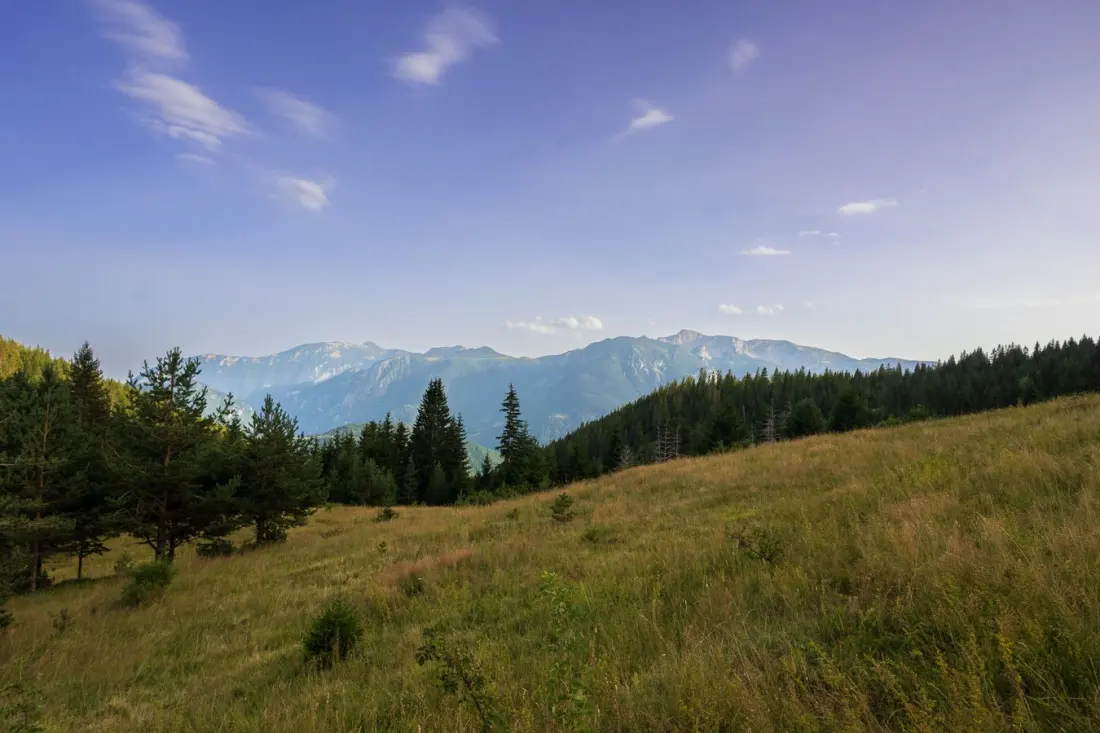
The afternoon offered a slice of typical trail life. A village restaurant at the bottom of the descent doubled as a recharge stop for phones, and a hot meal was shared with a German hiker walking the route hut to hut rather than camping. Guesthouses in the small mountain villages are the standard alternative to tents here, and many hikers mix the two. After topping up water and swapping notes with other trekkers at the guesthouse, the writer climbed one more pass — with wide views from the gravel path — and pitched camp beside a grassy clearing, watching cows cross at dusk as temperatures fell.
For anyone considering the trail, this day captures its character well: it's remote but not empty, with enough village infrastructure (guesthouses, restaurants, resupply chances) to keep it manageable, plus genuinely big mountain scenery. It crosses borders, so you'll need the trail's permit and should carry your passport, but the border crossings themselves are informal trail checkpoints rather than full border posts. Solo hikers meet plenty of others on route, so it's a sociable trek even if you start alone.
It's a strong pick for fit hikers who want a multi-day European adventure without Alpine prices or Alpine crowds, and the flexible hut-or-tent setup means you can tailor it to your budget and comfort level. Just don't underestimate the descents — or the cold mornings.