Scientists have finally put a firm date on one of archaeology's thorniest puzzles: the fall of Babylon. An international team led by Charlotte Pearson of the University of Arizona combined over 1,300 years of tree-ring data from Anatolia with radiocarbon measurements and traces of a colossal volcanic eruption in Alaska. Their study, published in PNAS on 3 November, places Babylon's capture by the Hittite king Mursili I at around 1587 BCE.
Why the fuss? Historians have long reconstructed Mesopotamian history from king lists and administrative tablets, which fix the order of rulers but not their exact calendar years. That gap spawned rival systems — the high, middle, low and ultra-low chronologies — with dates differing by more than a century. Pinning down Babylon's fall to a specific year lets researchers synchronise the histories of the Near East and eastern Mediterranean in one go.
The dating trick hinged on preserved timber from sites like Kultepe, Acemhoyuk, Porsuk and Gordion in modern-day Turkey. Each tree ring marks a year, and by measuring carbon-14 in individual rings the team anchored an Anatolian chronology running from 2072 to 744 BCE. The dates it produced are impressively concrete: the Warsama Palace at Kultepe was first built around 1837-1836 BCE, while the Sarikaya Palace at Acemhoyuk dates to 1778 BCE.
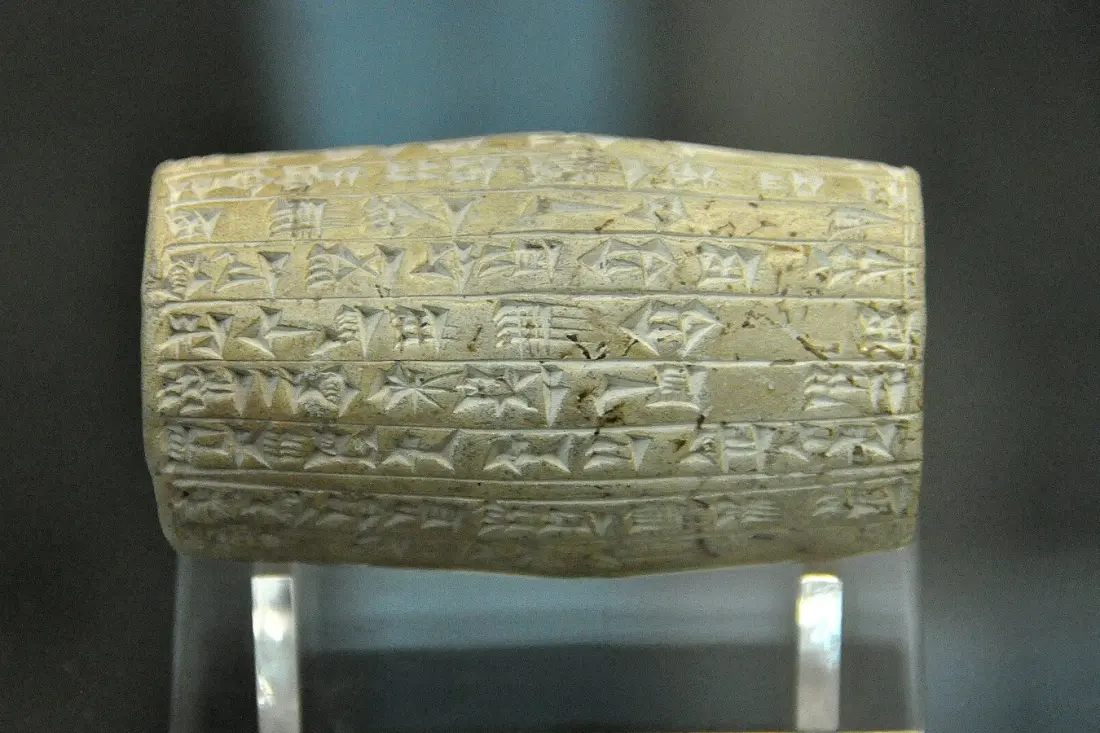
An unexpected Alaskan twist clinched the argument. Cuneiform tablets record observations of Venus from the reign of Babylonian king Ammi-Saduqa, including periods when the planet was hard to see — likely because of atmospheric haze. The strongest match for that haze is the Aniakchak II eruption in Alaska around 1628-1627 BCE, one of the five biggest eruptions of the past four millennia, whose sulphur traces show up in polar ice cores. That alignment supports the middle-low chronology and the 1587 BCE date.
The tree rings also tell an environmental story. A dry spell gripped Anatolia between 1228 and 1188 BCE, punctuated by a severe multiyear drought from 1194 to 1192 BCE — roughly two years before Hattusa, capital of the Hittite Empire, was sacked and burned. The timing strengthens, though does not prove, the idea that drought and agricultural disruption contributed to the Late Bronze Age collapse.
For travellers, this matters more than it might seem. Hattusa, near modern Bogazkale in central Turkey, is a UNESCO World Heritage site where you can walk among the ruins of a superpower that once rivaled Egypt — and now you know the climate stress it faced. Kultepe, near Kayseri, is likewise inscribed by UNESCO as the heart of the Assyrian trade network that linked Anatolia to Mesopotamia. If ancient history shapes your itineraries, these freshly dated sites make a compelling route through central Anatolia, and the study's framework promises to refine dates at many other ruins you might visit.