
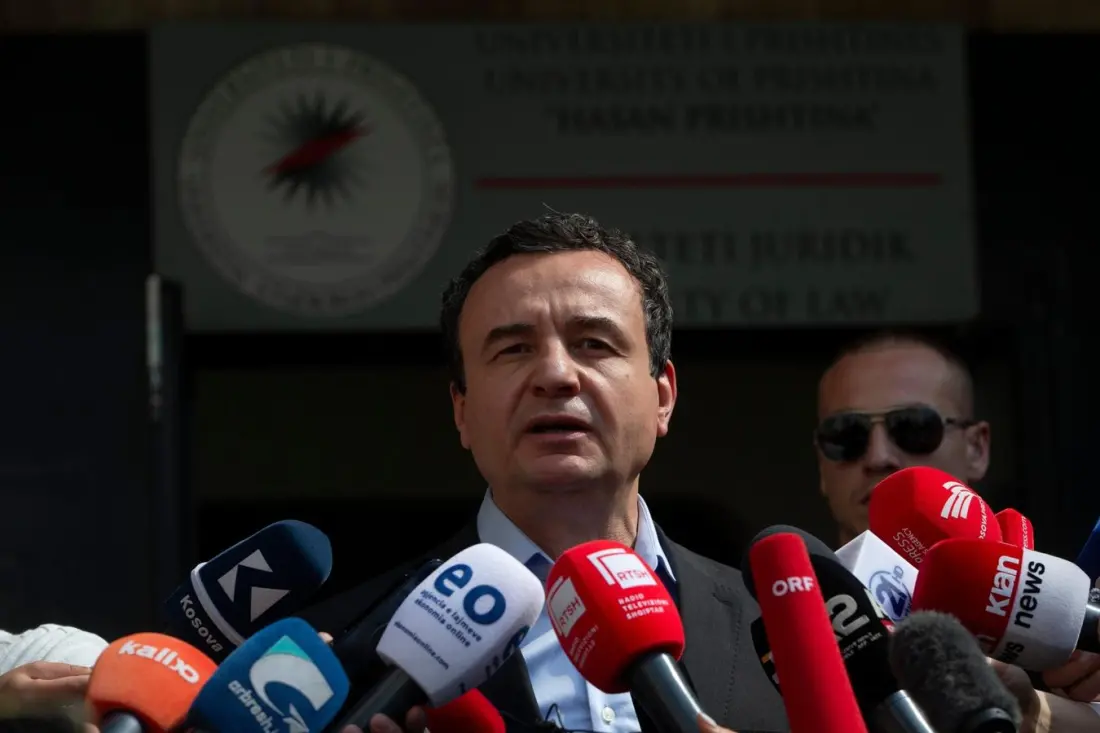
More than 18 months of political gridlock in Kosovo may be easing, though not by much. Lawmakers in Pristina voted on Sunday to install a new government under Prime Minister Albin Kurti, but the margins and mood suggest the country's troubles are far from resolved.
Kurti's administration scraped through with backing from 62 of the assembly's 120 members — the slimmest possible majority. Opposition deputies boycotted the vote entirely, alleging procedural violations in the post-election process, and they now plan to take their complaints to the Constitutional Court. On top of that, parliament failed to elect its deputy speakers, because opposition parties insisted that happen before any confidence vote. The new government therefore starts life without a fully functioning assembly.
The roots of the crisis go back to February 2025, when no party won enough seats to govern. An early election followed in December 2025; Kurti managed to form a cabinet then, but parties couldn't agree on a president. Choosing one requires a quorum of at least 80 lawmakers, a number Kurti couldn't muster. A third ballot in June again saw his center-left Vetevendosje party win the most votes — though with a visibly reduced share, a sign of growing voter frustration. Officials warn that if the impasse continues, Kosovo could face yet another snap election.
Context matters here. Kosovo is one of Europe's youngest and poorest states, with a predominantly ethnic Albanian population. It declared independence from Serbia in 2008 after the 1998-99 war, which ended when NATO bombing pushed Serbian forces out. The US and most EU members recognise it; Serbia, along with Russia and China, does not. Brussels has made clear that Pristina and Belgrade must normalise relations before either can advance toward EU membership.
For travellers, Kosovo remains a genuinely rewarding and inexpensive corner of the Balkans — think Ottoman-era streets in Prizren, hilltop walks around Pristina, and Rugova Canyon on the doorstep of Peja. Daily life continues normally despite the political wrangling, and visitors have so far been untouched by the standoff. Still, if you're planning a trip in the coming months, keep an eye on the news: a Constitutional Court ruling, a fresh election or protests in the capital are all plausible, and these could occasionally affect travel around government buildings or city centres. The realistic takeaway is simple — go, but stay informed.
Story reported by Japan Today / Associated Press.