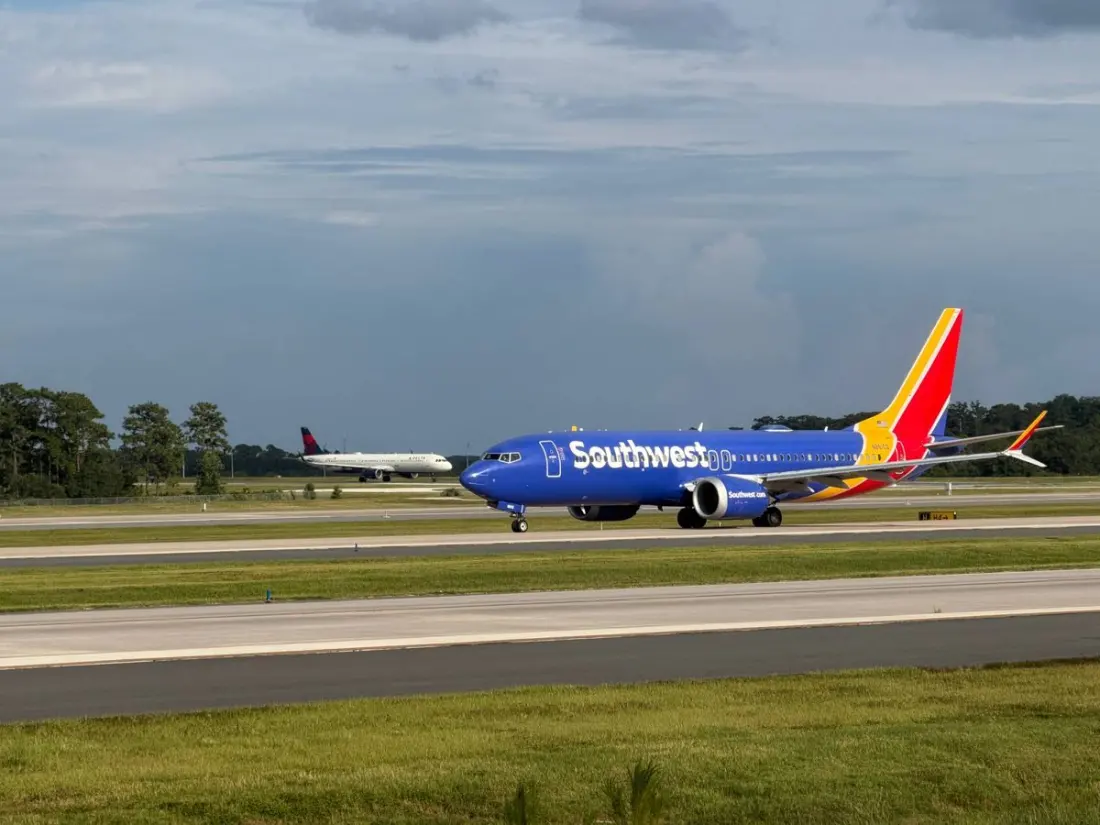
Two big US passenger satisfaction studies landed within weeks of each other this year, and they picked different winners. The American Customer Satisfaction Index Travel Study, released April 21, put Delta Air Lines first industry-wide at 79 on its 100-point scale. Fifteen days later, J.D. Power's North America Airline Satisfaction Study named Southwest the top economy and basic economy carrier for the fifth year running, at 670 out of 1,000. Both results are legitimate — they just measure different things.
The ACSI story is really about Southwest's slide. The Dallas carrier dropped from 80 to 77, losing the industry lead it held in 2025, while Delta rose three points to take the exact score Southwest vacated. ACSI tied the fall to reputational damage from two announcements: the shift to assigned seating and a policy requiring larger passengers to buy a second seat. Service scores — flight crew courtesy, gate staff, call centres — all slipped. Delta's win came in an industry that improved overall to 76, with American Airlines posting a notable gain thanks to its loyalty programme.
J.D. Power's picture looks different because it splits results into cabin segments and surveys recent flyers — 10,914 of them, questioned between March 2025 and March 2026. Southwest topped economy and basic economy at 670, but Delta was only three points behind at 667, the narrowest margin of Southwest's five-year streak. JetBlue came third at 655. In premium cabins, where Southwest doesn't operate at all, Delta won premium economy (736, a fourth straight year) and was second in first and business (750) behind JetBlue, with a 26-point year-on-year jump.
The structural mismatch matters for anyone comparing the two carriers. Southwest runs a single-class cabin, so it can only appear in one J.D. Power segment — the one it won. Delta competes in all three and placed first or second in each. A 736 score from Delta's premium economy flyers isn't rating the same product as a 670 from a Southwest economy seat, so no clean overall verdict is possible.
For travellers, the timing wrinkle is the most interesting part. J.D. Power's survey window covers a year in which Southwest was mid-transformation: checked bag fees, assigned and extra-legroom seating, and a new segmented fare structure have all replaced the open-seating, bags-fly-free model the airline built its brand on. Assigned seating only took effect for flights from January 27, 2026, near the end of the survey period. In other words, Southwest's fifth consecutive win describes a plane that no longer quite exists. The 2027 studies will be the real test of how passengers respond to the new Southwest — and whether Delta finally closes that three-point gap. Expect fares and seat-selection choices on both carriers to keep shifting as the two chase each other's customers.