Some trails look like social-media-friendly day hikes and hide serious consequences. Islands has rounded up scenic US destinations where solo hiking — or hiking with someone you can drift away from — is genuinely risky, and the list is a useful reality check for anyone tempted by a famous trail.
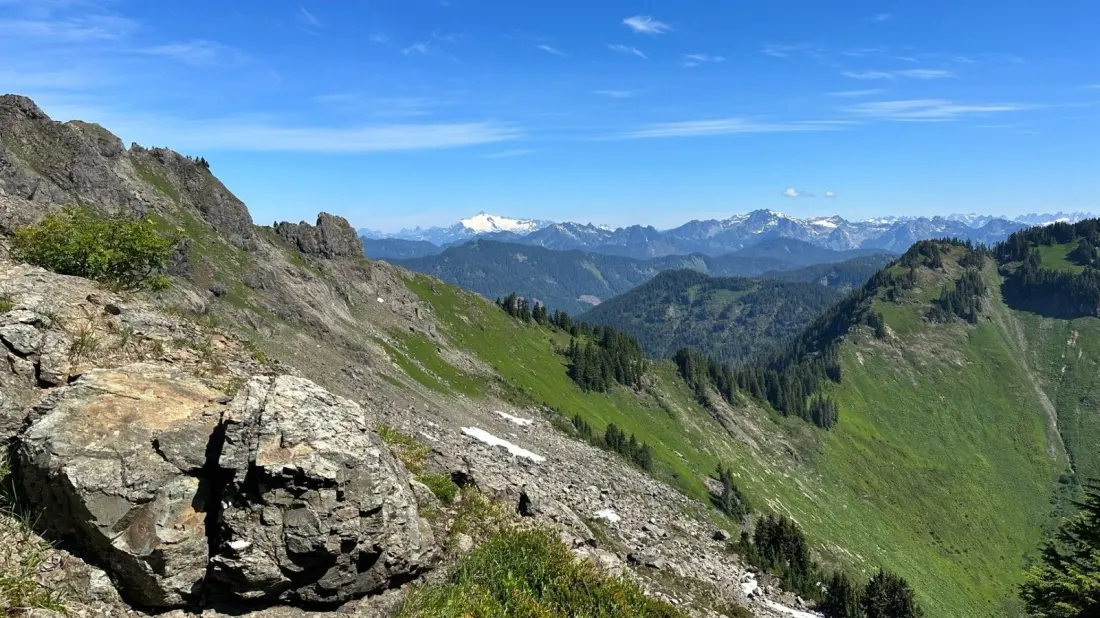
The common thread is that each place has a specific hazard that turns a minor mishap into an emergency: exposure, isolation, wildlife, or weather. Take Sauk Mountain in Washington's North Cascades — a short 4.2-mile climb with huge views of Mt. Rainier and the Skagit Valley — where two hikers died in falls in 2026, one a soloist who dropped 1,000 feet off a switchback. In the Grand Canyon, the gorgeous Nankoweap Trail is an 11-mile, water-free descent with sections barely a foot wide and stretches where the trail simply vanishes; the National Park Service explicitly advises against solo attempts.
Wildlife and weather feature heavily too. Glacier National Park rangers suggest hiking in groups of at least three, since chatter warns grizzlies of your approach — and even a group was mauled in May 2026 when a rushing creek masked their noise. Colorado's Capitol Peak, arguably the deadliest of the state's 14ers, claimed a record five lives in summer 2017, several of whom left companions to summit alone. New Hampshire's 23-mile Presidential Traverse crosses five exposed peaks including Mt. Washington, where winds have hit 231 mph; early hypothermia causes confusion, so a partner can spot trouble before you do.
Even day-hike terrain can bite. Kauai's Kalalau Trail along the Nā Pali Coast triggered at least 69 rescues in 2025 thanks to rain-slicked mud and collapsing track. Utah's slot canyons — the Spooky Gulch and Peek-a-Boo loop narrows to 10-12 inches — can trap a lone hiker with no one to fetch help (yes, the 127 Hours story is real). Quick sand mired a veteran thru-hiker on the 800-mile Hayduke Trail in 2025; only his GPS beacon saved him. And Mt. Baldy above Los Angeles, usually a fair-weather solo hike, saw 23 deaths between 2016 and 2025, including experienced mountaineer Julian Sands in January 2023.
There's also a lesson about hiking with others: Glacier rangers say separated parties account for more than 75% of search-and-rescue incidents there. A partner only helps if you actually stay together.
The takeaway isn't that these places are off-limits — most are spectacular and doable with planning, the right season, and honest self-assessment. It's that none of them should be treated as a casual photo op. If a trail involves exposure, fording, narrows, big mammals or volatile weather, bring company, carry a satellite communicator, and tell someone your route.
Credit: Islands