A thru-hiker preparing to climb Kilimanjaro has shared a detailed packing breakdown that doubles as a useful reality check for anyone used to lightweight backpacking. The lesson: a guided Kili trek has its own logic, and some trusted ultralight habits need rethinking.
Everything on the mountain is split across three bags. One stays behind at the lodge, one travels on your back each day, and a duffel with camp gear is carried between camps by porters, subject to a strict 15kg (33lb) limit. The duffel trick also pays off before the trek: pack your day pack inside it and you can check a single bag on the flight over. Add the fact that some regional African flights cap total luggage at 15kg too, and packing light becomes a logistical necessity rather than a preference.
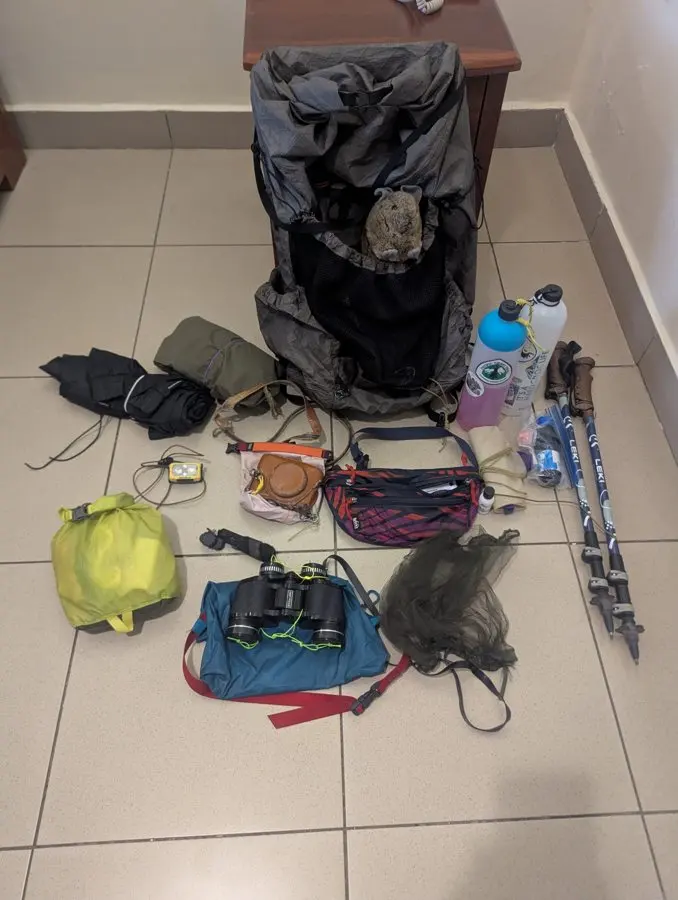
A few surprises stand out. Tanzania bans disposable water bottles, so your usual Smartwater bottles may not pass muster with officials — reusable bottles and a water bladder are the safe play. Clothing colour matters as well: blue and black attract tsetse flies, and bright neutrals that blend in are frowned upon on safari, so tans and greens are the recommended palette. The writer had to replace much of a post-trail wardrobe in those shades.
The tour company's cold-weather warnings deserve respect even if you're sceptical. Summit morning is genuinely frigid, so beyond a usual fleece balaclava and liner gloves the writer added a fleece, extra long-sleeve shirt, cycling tights, winter gloves and chemical hand warmers. On sleep systems, the company supplies a pad and rents sleeping bags, but reports on their warmth are mixed — the writer packed an 11°F comfort-rated down bag and a high R-value pad rather than risk a cold night.
Other adjustments are specific to East Africa. Waterproof trail runners and gaiters, strongly advised for Kilimanjaro, are also considered essential for gorilla trekking, a common add-on after the climb. Delicate ultralight rain shells gave way to a heavier-duty jacket and pants suited to pushing through wet brush. Permethrin-treated clothing, a head net and diligent repellent use are non-negotiable where mosquito-borne illness is a concern, and travellers should sort vaccinations (typhoid, yellow fever) plus anti-malarials and Diamox for altitude before departure.
What you can happily leave behind: tent, cooking kit and all meals — guides prepare food on the mountain — and a full first aid kit, since guides are Wilderness First Responder trained. Downsizing toiletries into small containers keeps porter loads reasonable, and the writer notes that porter wages on the mountain tend to beat alternative local work, so the system supports the local economy.
For travellers, the takeaway is straightforward: take the operator's gear list seriously even if you're an experienced hiker, plan around the 15kg duffel limit, buy reusable bottles, dress in earth tones, and don't gamble on rental sleeping gear. If gorilla trekking is on your itinerary, buy your waterproofs and gaiters with both trips in mind. Full credit to The Trek for the original account.